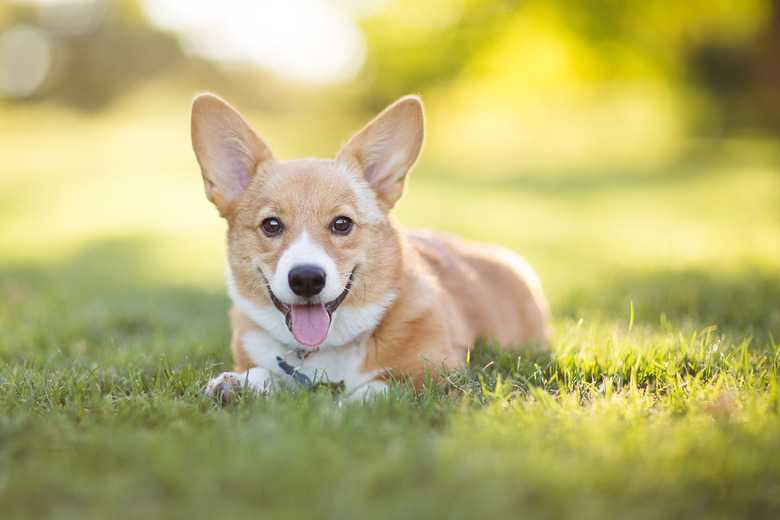
How To Get Corgis To Stop Barking
DogsDog TrainingHow To Get Corgis To Stop BarkingBySusan ParettsUpdated Aug 30, 2021Purple Collar Pet Photography/Moment/GettyImagesWith long backs, short legs and an abundance of personality, corgis are a popular breed in the dog world. But one trait you may not know about that this breed is that they are prone to excessive barking. Corgis have a tendency to bark at every new sight and sound they encounter due to their watchdog instincts as herding dogs. This can be troubling if you are gone for long hours of the day and have neighbors who do not appreciate the constant corgi barking. Therefore, you must train your corgi to curb her barking. Fortunately, there are a few ways in which to do so.Corgi barking reasonsCorgi barking reasonsWondering, "at what age do corgis calm down?" The answer is that they don't. Corgis bark for a variety of reasons due to their guarding instincts. The Cardigan Welsh Cori and Pembroke Welsh Corgi were originally bred as herding dogs to look after and guard livestock. That's why they bark when they see strangers outside or hear someone ring your doorbell. It's important to determine what is causing your corgi's barking to help stop it.For dogs who bark at strangers out the window, close your curtains so that the dog can't see outside anymore. Place your dog's crate away from the front of your home where street sounds may set off his barking. When outside playing in your yard, if your dog starts barking at strangers, immediately take him back inside. This puts a stop to the fun play so your dog will be less likely to continue barking.Keep your corgi exercisedKeep your corgi exercisedExercise your corgi daily because dogs that don't bark a lot get plenty of exercise to keep them calm. While exercising doesn't directly train your corgi to stop barking, it does wear off any excess energy your pooch may have. An abundance of energy running through a dog that isn't let out often results in frustration, which can lead to nuisance barking.Corgis are extremely active dogs. Therefore, walk, run, or swim with your corgi daily to burn off the energy. Canine agility training is a great activity for corgis too. Remember, an exercised corgi will be too tired to bark every time she sees or hears something new.Training to reduce corgi barkingTraining to reduce corgi barkingIgnore your corgi when it barks at an action you are displaying. Corgis love to be involved in all aspects of their owners lives, including barking sometimes at what they're doing, whether it's vacuuming, exercising, or washing dishes. This is often your dog's way of becoming a part of your activity. If you ignore your corgi, you are showing her that barking means she is left out. Once your corgi stops barking, even if it's just for a few moments, give your dog a treat as a reward. Doing this shows your corgi that silence is rewarded, while barking is not.Teaching the "quiet" commandTeaching the "quiet" commandThe "quiet" command lets you silence your dog when his barking is unwarranted. With your corgi on a leash so he can't run to the door, trigger your dog to bark by having a friend ring your doorbell. Wait for your dog to stop barking, even momentarily. Say "quiet," then place a treat in front of his nose. The dog will not bark as he sniffs the treat.During this time of silence, say "good dog." After three seconds of silence, give your corgi the treat. The next time you try this method, lengthen the silence period by five seconds and continue to lengthen the amount of time before you give the treat in every training session. Eventually, take the treat away. Once this step is achieved, your corgi will likely stop barking at everything when you give the command.ReferencesYour Pure Bred Puppy: Cardigan Welsh Corgi InformationAmerican Kennel Club: Pembroke Welsh CorgiAmerican Kennel Club: Cardigan Welsh CorgiThe Humane Society of the United States: How to Get Your Dog to Stop BarkingSan Francisco SPCA: Dog: Quiet Command
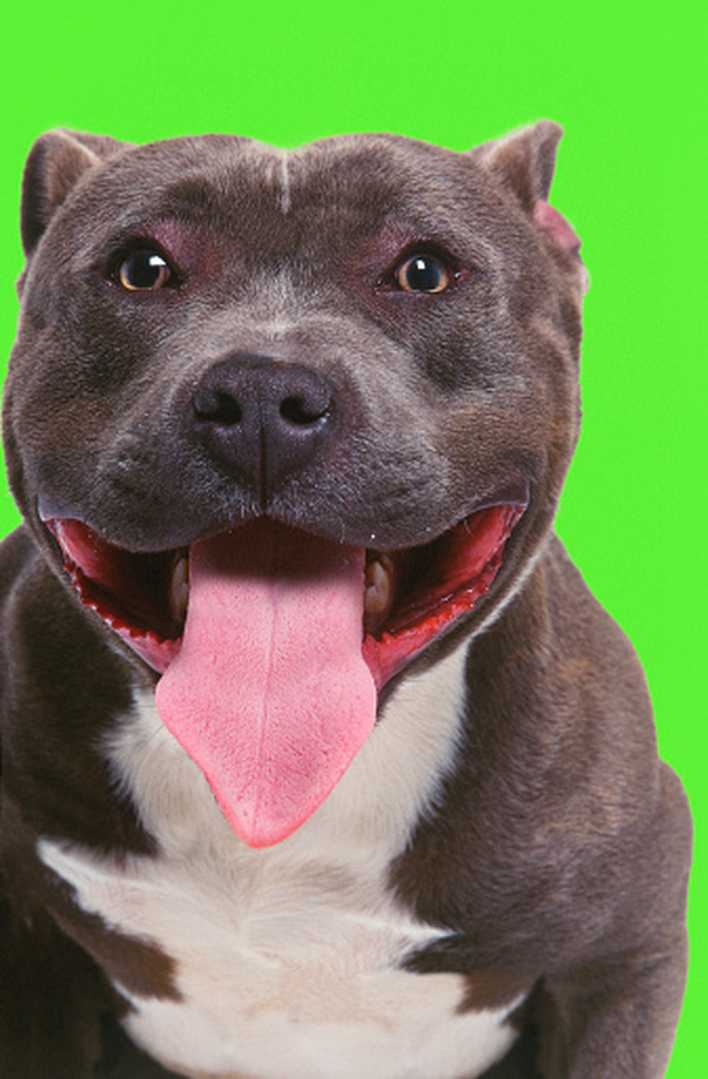
How To Properly Raise A Blue Nose Pitbull
DogsDog TrainingHow To Properly Raise A Blue Nose PitbullByLauren HerringtonUpdated May 24, 2011Blue nose pit bulls are a handsome color variation of the American pit bull terrier, with charcoal gray noses, blue eyes and blue-gray coats. Just as with any pit bull, it is important to raise your dog with consistency, patience, love and leadership. This breed grows into a large and energetic dog, so proper training and obedience during your dog's puppy-hood is crucial to giving it a bright future with your family.Step 1Socialize your pit bull puppy as much as possible by exposing it to lots of people, places, sights, sounds and other animals, making sure the experiences are positive and enjoyable for your dog. Between the ages of seven to 16 weeks is the most important period for this, since the experiences your dog has at this stage will affect how it reacts to new situations for the rest of its life.Step 2Train your dog consistently from the first day you bring it home. Always use gentle, positive training methods, but be firm in your leadership. This teaches your dog to trust you and listen to you, which will be of great value as it grows into a large, rambunctious dog.Step 3Spay or neuter your pit bull at the age recommended by your veterinarian. Even the unique blue coloring of your pit bull can be found on homeless dogs in shelters everywhere. Do not add to the overpopulation of pit bulls. Spaying and neutering will also reduce your dog's hormones, making it easier for your dog to stay focused on you.Step 4Exercise your blue nose pit bull as much as possible. Doing this will drain your dog's extra energy, making it less likely to engage in negative behaviors like excessive barking or chewing around the house. This will keep your relationship with your dog harmonious and happy.Step 5Set your pit bull up for success by keeping its safety and the public's safety as a priority. Even the most well-socialized pit bull can get into trouble, and the breed already has a negative reputation. Never leave your dog unsupervised with other animals or young children, and don't use your dog for fighting or intimidation.ReferencesASPCA: Virtual Pet Behaviorist: The Truth About Pit BullsPitbulls.org: How to Raise a Happy and Healthy Pit Bull
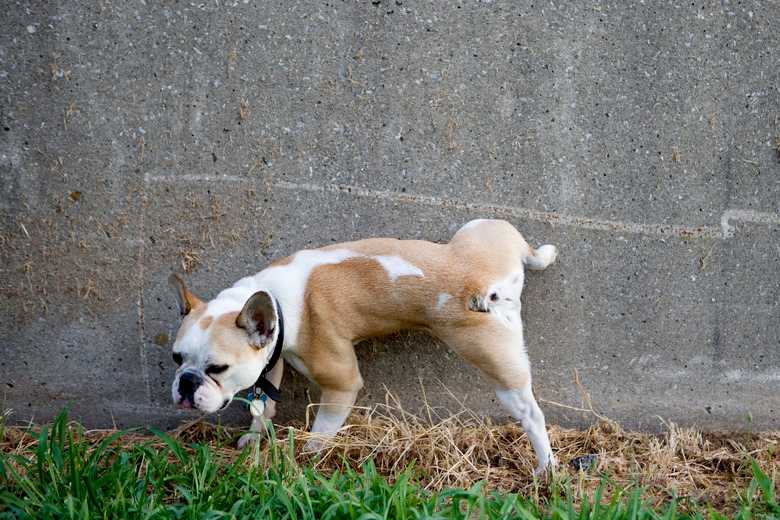
How To Stop Your Dog From Urinating On Concrete
DogsDog TrainingHow To Stop Your Dog From Urinating On ConcreteByKrissy HowardUpdated Oct 16, 2020Sean Murphy/Stone/GettyImagesImagine this: You've just cleaned and stained your concrete front patio and you take a step outside with your canine in tow when she pees all over it, leaving a puddle all over your handiwork. Even if you don't need to stop your dog from peeing on a patio, you may wish she wouldn't pee on concrete sidewalks or the corners of buildings while on your daily walks. Training a dog to go outside rather than in your home is what every dog guardian strives for, and if you wish to encourage your dog to go in preferred spots, like grass, it can be done with a bit of focus and practice.Positive reinforcement pee trainingPositive reinforcement pee trainingPositive reinforcement training is an effective, reward-based training style that allows dogs to associate positive reactions with desired behaviors. Positive reinforcement training is often used to teach dogs basic commands, like "sit" and "off," as well as leash training on walks, by redirecting their focus from their surroundings back to you. This training style is also often used when dogs are learning to be potty trained to use the bathroom outdoors, and can be implemented to teach a dog to eliminate in a specific spot.To use positive reinforcement training to stop your dog from urinating on concrete patios, walkways, or door stops, the American Kennel Club suggests finding a reward that your dog will consider to have high value, like small bits of a hot dog. Next, offer your dog the reward only when he exhibits the exact behavior you're working toward — in this case, peeing in the yard over the concrete. Each time your dog pees in the grass, or other designated area you prefer, offer the reward to help him associate peeing in grass with a tasty treat. Finally, positive reward is called positive for a reason, it discourages the use of punishment or withholding to train a dog, so do your best to resist scolding your dog for peeing on concrete, and instead praise him for doing what you prefer.Teaching incontinent dogsTeaching incontinent dogsIn some cases, it may be hard to stop a dog from peeing on the patio because they are, quite simply, incapable of holding it until they reach greener pastures. Young puppies often struggle to even make it to the door, let alone several paces to the yard or a patch of grass that skirts the street. Older dogs can sometimes struggle with this too, as do dogs with underlying medical issues that may result in frequent urination, like a bladder infection, kidney disease, or diabetes, says VCA Hospitals. To make things easier on dogs who struggle to hold it, try increasing the number of times they go out, and do your best to time bathroom breaks to coincide with when they tend to drink more water, like after meals or a long walk.Peeing in the cityPeeing in the citySometimes, a concrete sidewalk is just about the only option for a canine to relieve herself, which is the case for dogs who live in cities and densely populated neighborhoods that don't feature grass lawns. While you can't exactly expect a dog to go where there is no grass, there are areas you can train her to eliminate that won't force people to step over or rinse away with a hose. One option is to train your dog to go along the edge of the street, which should be done on leash and with extreme care and caution for passing cars and bikes.ReferencesAKC: 4 Tips for Training Your Dog with RewardsVCA Hospitals: Urinary Incontinence in Dogs
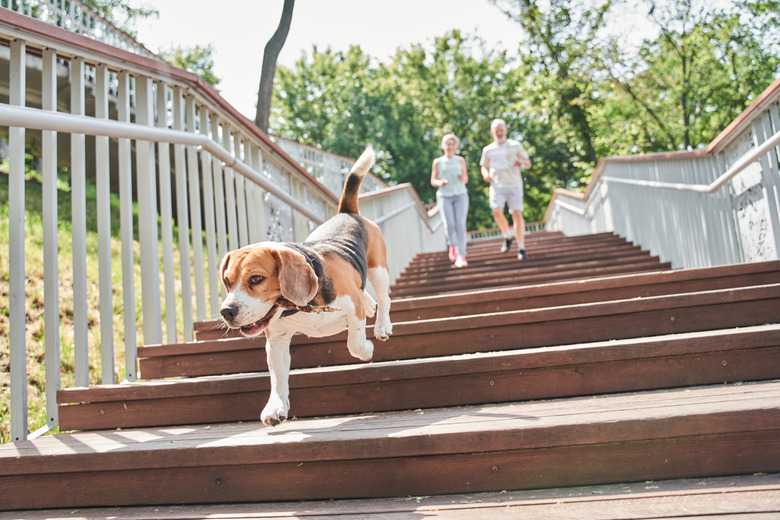
An Easy Way To Prevent Dogs From Going Upstairs
DogsDog TrainingAn Easy Way To Prevent Dogs From Going UpstairsByJodi "Jato" ThorntonUpdated Nov 2, 2021It might be that your dog is getting older and has a hard time climbing down the stairs once he gets to the top, or perhaps you want to keep your heavy shedder's hair out of the bedroom areas. No matter what your reasons, simple solutions, like a pet gate for stairs combined with positive reinforcement training, can keep your pup on the ground level.Banepx/iStock/GettyImagesYour safety is most importantYour safety is most importantIt's not unusual for dogs to enjoy curling up for a nap or having a relaxing chew session with a toy on a carpeted stair step. This can create a hazard if your dog suddenly tries to scoot out of the way or leaves her chew toy behind.When blocking stairs from a dog, keep in mind that human safety is most important. Solutions such as laying tinfoil, sticky-side-up shelf liner or pointy-side-up carpet runners on the bottom four to five steps can create tripping hazards for humans trying to navigate the stairway.Large dogs can sometimes jump over such blockades, risking injury from an unnatural landing on the slanted footing, not to mention the hassle of trying to detach shelf paper from your dog's coat. A pet gate for stairs can offer an easy solution provided that you can walk through the barrier without creating a further hazard to yourself or your dog. Pet gates for stairs come in a wide range of styles and colors. Be sure to consider more than just the price tag when picking out your barrier.Choosing a pet gate for stairsYakobchukOlena/iStock/GettyImagesChoosing a pet gate for stairsIf you've trained your dog to respect a baby gate to keep her out of certain rooms, a free-standing pet gate might be all you need. A trifold gate is easy to stand up at the bottom of the stairway and presents a visual barrier to remind your pet that going up the stairs is off limits. Dogs might be able to hop over or push down the barrier if they don't respect the boundary, however.A retractable mesh gate can provide an easy way to present a visual boundary to your dog to limit her access to the upstairs. Mesh fabric allows your dog to see you as you talk to her from the other side of the barrier but is small enough that she won't get her nose stuck in it. Look for a retractable gate that's certified for safe use at the top and bottom of the stairs and that has claw-resistant mesh for durability. Washable fabric can help you keep it looking fresh.Metal walk-through gates that attach to the wall at the base of your stairwell are the most secure way for you to prevent your dog from climbing the stairs. Look for products with a metal mesh screen to prevent worries of noses, legs, or nails getting caught in the fencing. Some gates will close shut when opened partway but stay open when pushed wide to allow you to pass through with your hands full and can withstand up to 200 pounds of pouncing pressure.Reinforce with trainingJosef Lindau/Stone/GettyImagesReinforce with trainingA gate can provide a physical barrier, but positive reinforcement training will help your pet accept the change. Set up your dog's world so that there is no need to go upstairs. Provide food, water, treats, and a cozy, soft bed downstairs. Spend time with your dog cuddling in the living room while you watch TV. Make downstairs the happiest place in your dog's life, where he gets to spend time with you, fill his belly, and take a snuggly nap, and you'll find that he'll respect the boundaries you set.ReferencesTop Dog Tips: 10 Best Dog Gates for StairsMichigan State University Extension: A Caregiver's Guide to Fall Prevention AwarenessSpiritDog Training: Old Dogs and Stairs
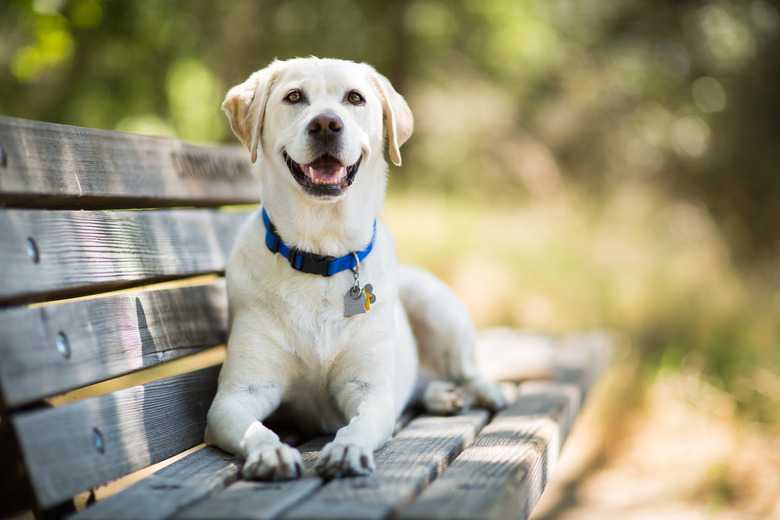
Why Do Dogs Freak Out When You Take Off Their Collar?
DogsDog TrainingWhy Do Dogs Freak Out When You Take Off Their Collar?BySteve MilanoUpdated Sep 30, 2021Dogs often get excited about certain routine behaviors because they associate the behaviors with what comes next. In other cases, dogs become happy when you perform certain acts because it's the end of something they don't like. Getting excited about dog collars may mean she's either excited about what's coming up or she's glad to have the collar off. Either way, if you look for patterns, you might find out why your pooch is happy to have the collar come off.Janie Airey/Lifesize/Getty ImagesWhat is operant conditioning?Whatis operant conditioning?One reason your dog might be freaking out when you take off his collar is because he associates this act with something else. This is known as operant conditioning. For example, it's pretty obvious why dogs get excited when you take their leash off the wall and get ready to attach it to their dog collar — they know it's time to go for a walk or engage in outdoor play that they like.When you take off your dog's collar for a specific reason, such as a bath or grooming, the dog knows what's coming. That's because each time you've taken off his collar, you've bathed or groomed him. So, he associates the removal of his collar with bathing or grooming.If you randomly take off the collar for no particular reason and only do this once in a great while, the reason your dog might be getting excited has nothing to do with operant conditioning. It might simply be that he dislikes the collar.Negative associations with dog collarsPurple Collar Pet Photography/Moment/GettyImagesNegative associations with dog collarsIf your dog gets excited about her dog collars coming off and you don't follow this act with another regular act (such as grooming), the dog might be happy that the collar is coming off because she doesn't like the collar. It might be that the collar is too tight or too loose. When was the last time you cleaned the collar? Does it smell bad?If the material of the collar scratches her, she'll get used to it, but she will be happy when it comes off. If your dog is a puppy, she might not be used to the collar or has grown more quickly than you realize, and the collar is now too tight.One way to see if your dog has negative association with dog collars is to look at how she reacts when it's time to put it back on. If she hesitates or needs to be called twice, you know there's a problem with the collar (or any collar). Consider loosening the collar to see if that helps. Take a close look at the collar to see if there are any frayed ends, items that have lodged inside, metal or plastic tags that might dig into the dog, or if the collar smells bad. Try buying a new collar to see her reaction to it.Positive associations with dog collarsPositive associations with dog collarsIf you only take the collar off when the dog is going to be inside the house for a while, the dog might be happy knowing he's staying inside for a while, or the dog might feel freer now that the restraint is gone. The dog might associate the collar with a regular act that follows.Do you rub the dog's neck and give him a short massage, words of affection, and a kiss or hug when you remove his collar each time? If so, that might be the reason the dog gets excited when you start removing the collar.When to see a veterinariandamedeeso/iStock/GettyImagesWhen to see a veterinarianSearch your dog for an injury if you can't figure out why he becomes excited when the collar comes off. If you can't find an external cut or bruise, call your vet and explain the situation and see if you need to bring in your pet. If your dog has started exhibiting this behavior only recently after being fine with wearing a collar, this might indicate a medical problem. The same is true if your dog resists you taking off the collar.ReferencesGlamorous Dogs: Why Dogs Get Excited When You Take Their Collar Off?Canine Scholars: Operant Conditioning
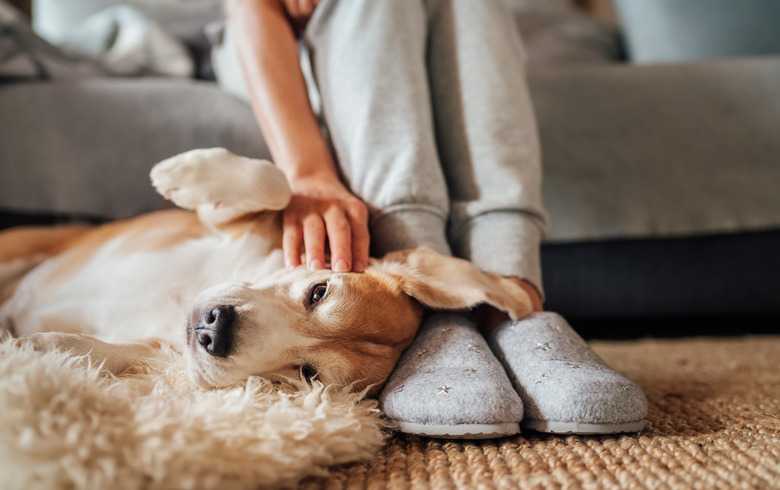
How To Keep Male Dogs From Peeing On Furniture
DogsDog TrainingHow To Keep Male Dogs From Peeing On FurnitureByBetty LewisUpdated Jun 28, 2021To you, your dog's urine simply stinks, but to your dog, it's a dossier of information he shares with other dogs. Dogs urinate inappropriately for many reasons, including marking, anxiety, and medical issues. If you have a problem with a dog peeing on furniture, be patient and work with your dog to teach him the proper time and place to let go.dohlongma – HL Mak/Moment/GettyImagesDog peeing on furnitureDog peeing on furnitureUrine marking is different from urinating. A dog who urine marks deposits small amounts in strategic spots to mark his territory for other dogs. In your dog's mind, your home, couch, rugs, yard are all his territory. If something changes or he detects the presence of another dog, he may feel the need to assert his authority.You might have noticed this if you share your house with more than one dog. One dog urinates and the other often urinates over the spot his dog pal just peed on. Other dogs mark in social situations, such as meeting new people or visiting other dogs, while others are anxiety markers, responding to stress, such as change or conflict. Intact dogs tend to urine mark more than neutered and spayed dogs. The scent of a dog in heat can prompt urine marking from male suitors.Potential medical causesPotential medical causesNot all urine problems come from marking behavior; there can be medical reasons for your pup's urinary missteps. A urinary tract infection will prompt your dog to pee small amounts of urine frequently, as well as lick his genitals more than normal. A dog with incontinence doesn't know his bladder is emptying as he snoozes next to you on the couch.Christina Reichl Photography/Moment/GettyImagesOther medical conditions and medication can cause frequent, sometimes difficult to control, urination. If your dog is particularly submissive or easily excited, he may be one of those guys who urinates when he's saying hello, being scolded, or engaging in some play. Separation anxiety also can cause inappropriate urination, as your dog becomes anxious when you're not around. Finally, some dogs haven't had the opportunity to learn proper house behavior and haven't been house trained.Dog marking in the houseDog marking in the houseIf a dog peeing on furniture in the house is a problem, the most effective remedy for the situation is to spay or neuter your dog. Neutering is not a guaranteed cure for marking, particularly if the behavior has been happening for some time, so proper house training is still critical.If your dog knows better, yet you're still coming across tell-tale signs he's been urinating where he shouldn't, take him to the vet to ensure there's nothing physically wrong. The vet can decide on a proper course of action; for example, there are medications available to help with incontinence.House training considerationsHouse training considerationsYou may need to engage in basic house training to teach your dog when and where he should pee. Take him outside to the correct spot and praise him when he properly takes care of business. If you catch him midstream inside the house, don't yell, but calmly tell him "no, outside," and get him outside quickly, praising him for finishing correctly.If you can't be around to take your dog out on demand, consider training him to use pads or grass sod for his indoor break spots. Have enzymatic cleaners on hand to remove the scent of previous spots where your dog was peeing on furniture, making your dog less likely to return to the scene of the crime. If you can't trust him alone in a specific room, bar his access or crate him in a crate that's large enough for him to stand, turn around and lay down in, but not so large he can soil his personal sanctuary.If your dog is peeing on furniture outside, try associating that area with food or treats to minimize the association with marking. If that doesn't work, try blocking his access to that area or give him something else to target, such as a fake fire hydrant, rewarding him when he correctly hits the mark.Praise, don't punishSolovyova/iStock/GettyImagesPraise, don't punishPunishing your dog for his urinary transgressions is fruitless, as is trying to keep him from marking. Allow him to mark on his daily walks. Keeping a dog from marking may increase his frustration and compel him to mark more at home.Don't punish or scold him if you find he's peed; yelling and rubbing his nose in it will confuse him at best and teach him to fear you at worst. Simply clean up the mess with an enzymatic cleaner. Avoid ammonia-based cleaner because it may attract him to the same spot.ReferencesThe Humane Society of the United States: Urine Marking Behavior: How to Prevent ItVeterinary Partner: Housetraining a Urine Marking Male DogAmerican Kennel Club: The Ins and Outs of Potty Pad Training
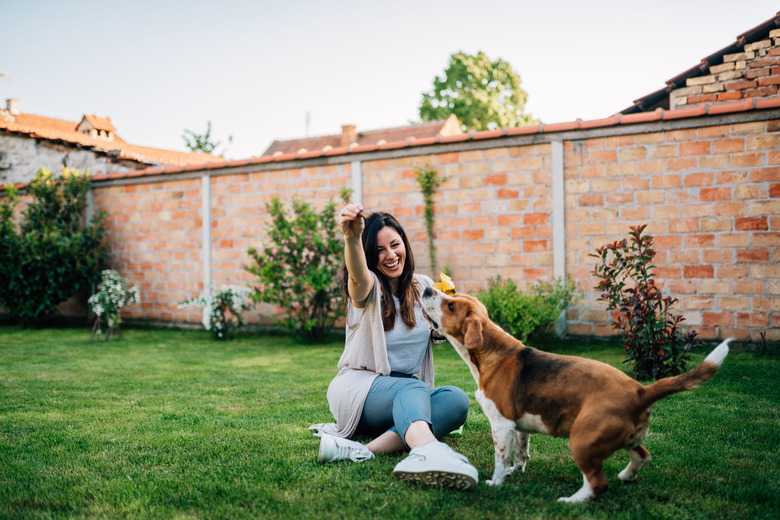
How To Build A Backyard Dog Potty Area
DogsDog TrainingHow To Build A Backyard Dog Potty AreaByVanessa SalviaUpdated Aug 30, 2019nortonrsx/iStock/GettyImagesHaving a dog-friendly backyard is part of the fun for both you and your canine friend. Even if your backyard is small, it can be a pleasant place for him to play with his toys, sleep in the sunshine, and enjoy safe plants and pleasant smells. And yes, going potty is going to happen there, too!A dog potty area is a great idea for a backyard, because dog pee and poop is hard on grass. I Heart Dogs explains that it's the nitrogen in dog urine that turns grass yellow, and it only takes one time to end up with a dry, yellow spot on your lawn. You can create a dog potty area with some simple items, and with some training, you can reduce the damage to your lawn by having your dog do his business in one area set aside just for him.Dog outdoor pottyDog outdoor pottyThe Canine Training Center had a simple solution for a dog outdoor potty. Their solution is to designate an area in your yard as the potty area. The area does not have to be large, but should be roomy enough that she can sniff around, circle, and have room to pee and poop. You could add some landscaping or something for visual interest such as a dog potty rock for your dog to enjoy.If there is any grass or plants in that area, dig them up with a shovel. Replace the grass or plants with a one- to two-inch layer of cedar mulch. To keep the mulch contained, and to allow you to easily replace the mulch later on, consider building up a small raised area, similar to a raised garden bed.More Like ThisDogsHow to Remove Dog Urine Odor with VinegarDogsThe Best Rock Flooring to Use for Dog KennelsDogsWhat to Put on the Ground in a Dog RunDog Tipper had a similar simple idea for a dog outdoor potty, but they use pea gravel. Building an outdoor dog potty area can be as simple as nailing a few boards together, placing a screen in the bottom, and filling the frame with pebbles and pea gravel.Den Garden took things to a whole new level by building a "dog patio," which included a plywood platform and PVC pipe for drainage. Once you get the platform ready, the actual surface where your dog will do her business can be either sod or Astroturf. A real grass dog potty box would mean that over time, the sod would need to be replaced with new sod to keep everything green, but at least your dog would enjoy going on a real grass surface. Astroturf can be sprayed off with a hose and washed.Training your dogTraining your dogTraining your dog to use the outdoor potty is the part that might take the longest. If your dog is used to being able to go anywhere in the yard that he wants to, limiting him to one area might be tricky. The Canine Training Center offered some key points for training, which, as you might expect, include lots of praise when he goes where you want him to.When it's time, take your dog to the potty area, on a leash, and keep him in that area until he goes. If he doesn't go right away, take him back into the house, then return again to the potty area. While in that area, say "go potty" or whatever your normal verbal cue is. When he goes, praise him as if he is just learning what to do; and, in a way, he is!ReferencesI Heart Dogs: How to Remove & Prevent Brown Dog Urine Spots on GrassDen Garden: How to Build a DIY Patio Potty for Your DogDog Tipper: The Ultimate Guide to Creating a Dog-Friendly Backyard
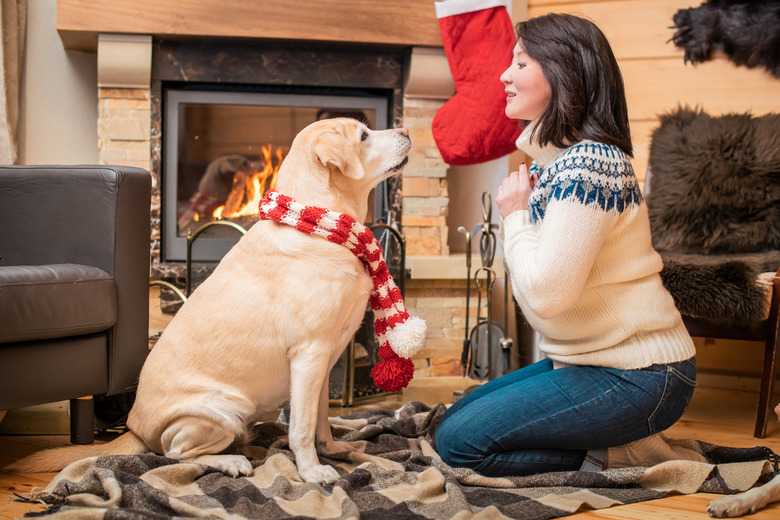
How To Train A Dog Not To Be So Clingy
DogsDog TrainingHow To Train A Dog Not To Be So ClingyBySusan ParettsUpdated Nov 2, 2021Nothing is better than snuggling with your dog on laid-back days, but if your pup constantly spends every minute of the day with you, that can lead to behavioral issues, like separation anxiety. To combat issues with separation anxiety and calm your clingy pup, you'll need to train him to tolerate being alone.Hill Street Studios/Blend Images/Getty ImagesWhile you love spending time with your dog, if he tends to destroy your home and vocalize nonstop when you're not around, that can be frustrating for you and your neighbors. Explore some ways to ensure that your pup is happy when he's by himself and that you are spending enough quality time together too so he's not starved for attention when you are around.Dealing with a clingy puppyDealing with a clingy puppyPuppies are learning the ways of the world, and when they're young, they think of you as their favorite person and leader. So, you may find yourself with a puppy who wants to spend all of her time by your side.Start countering clingy behavior by teaching your pup that she can spend time away from your side calmly. Provide your pup with a safe space, like a crate, comfortable mat, or dog bed. Give your dog a command, like "go to your spot." Then, lead the dog to the spot and treat her with something yummy. Say "stay" and wait a few seconds before treating your dog again. Continue training, extending the time between the command "stay" and the treat.Eventually, you'll want to see your pup spending time calmly in her designated spot without giving her the command. Provide your dog with a few toys in this spot to occupy her and always praise her for calm play.My dog is too clingyMy dog is too clingyWhen dealing with a clingy dog, you may notice that your dog becomes anxious when you're about to leave the home. To combat this, keep exits and returns to your home as calm as possible.You'll also want to occupy your dog just before you leave so he doesn't become upset at seeing you go. A good choice is to give your dog a puzzle toy in his safe spot, filled with his favorite food, like peanut butter, cream cheese, or kibble. To occupy his time while you're away, you can also hide some kibble or treats around your home to keep him hunting for foodWays to calm a clingy dogMaria Moroz/iStock/GettyImagesWays to calm a clingy dogClingy dogs who suffer from separation anxiety may benefit from veterinary treatment with medication. Other things, like compression shirts and synthetic dog pheromone sprays, collars, and diffusers can also have a calming effect on dogs who are anxious.Another option is to hire a dog walker to exercise your dog when you're at work, or you can drop off your pup at doggie day care so that she is not left alone in your home. Emotionally needy dog breeds, like Labrador retrievers, border collies, Jack Russell terriers, German shepherds, and toy poodles, may benefit from this kind of attention during the day.You'll also want to leave an item of your recently worn unwashed clothing in your dog's favorite spot or in her crate. This provides your scent, which can calm your dog while you're not there.Spend time with your dogSpend time with your dogWhile you don't want a pup who is unable to leave your side, you also need to understand that spending time with your dog is a necessary part of being a good owner. If you ignore your dog all the time, he may seem clingy because he is desperate for your attention.Spend time playing with your dog and provide him with at least 30 minutes of exercise each day. Not only is this a good way to bond with your dog but it helps to tire him out so he will be less likely to worry and become destructive when you're away.LuckyBusiness/iStock/GettyImagesMost importantly, keep all of your time with your dog positive. Never punish your dog for being clingy or destructive while you're away. This will only serve to make your dog fearful and more anxious than he already is.ReferencesAmerican Society for the Prevention of Cruelty to Animals: Separation AnxietyLake City Humane Society: How to Help Your Dog with Separation AnxietyAmerican Kennel Club: Dog Separation Anxiety: Causes, Prevention, and How to StopVCA Hospitals: Separation Anxiety in DogsCountry Living: 10 Dog Breeds Most Likely to Suffer from Separation Anxiety
How Do I Remove Dried Dog Urine Stains From Carpet With Vinegar?
DogsDog TrainingHow Do I Remove Dried Dog Urine Stains From Carpet With Vinegar?ByMichelle MileyUpdated Aug 12, 2019cerro_photography/iStock/GettyImagesAccidents happen, and they tend to do so with more frequency when you have children, pets, or both. Even a well-trained and completely housebroken dog can have an accident from time to time, and that means unsightly and smelly stains on your carpet. If a dog urine smell greets you when you return home, you can neutralize the odor and freshen things up with some vinegar and baking soda.Catch them in the actCatch them in the actIt's much easier to remove urine from carpet when it'sfresh.If you're dealing with a stain rather than a puddle, it's probably too late for that. If you're lucky enough to catch the spot when it's still wet, however, quickly blot the stain with paper towels to soak up the urine. Blot the carpet but don't rub it, as doing so will only spread the urine around.DIY dog urine stain removerDIY dog urine stain removerAfter blotting the carpet dry or discovering the stain too late for that, make ahomemade cleaning solutionto remove any remaining urine and its odor. To do so, mix half water and half white vinegar in a spray bottle. Vinegar neutralizes the smell of urine just as effectively as commercial cleaners and costs much less.Resoak the stainResoak the stainTo remove any lingering urine odor, spray your vinegar cleaning solution liberally on the carpet. You want the vinegar to go everywhere the urine did, including down to the matting under your carpet if necessary. Getting it there means applying it liberally, soaking the carpet until it is wet once again rather than just slightly damp.Scrub it outScrub it outFor a deep clean, grab a smallscrub brushand use it on your wet carpet. Scrubbing in small circles, apply as much pressure as you can without damaging the carpet fibers. The scrub brush will remove any remaining urine while working the vinegar solution into the carpet fibers. When you're done scrubbing, blot the carpet dry again with some paper towels or a clean cloth.The finishing touchThe finishing touchVinegar is an excellent odor remover, but it never hurts to go the extra mile when getting rid of unpleasant odors. After cleaning your carpet, allow it to dry thoroughly and then sprinkle somebaking sodaover the spot. Let the baking soda sit for at least 15 minutes before vacuuming it up.Although it's easy to understand why you don't want to invest hours in cleaning up a pet accident, be patient when waiting for your carpet to dry. Baking soda turns into a clumpy mess when it gets wet and is difficult to clean up. Make sure your carpet is 100 percent dry before applying the baking soda, even if that means waiting a few hours.Don't get steamedDon't get steamedSteam cleaners are usually a great way to keep your carpet and upholstery clean, but don't reach for yours when your pet has an accident. The heat generated by a steam cleaner can bond the protein in the urine to the fibers of your carpet, fusing them together. Once that happens, the stain and its smell are permanent residents of your carpet. No matter what the steam cleaner commercials say, you shouldnever apply heatto a pet stain.General tips and tricksGeneral tips and tricksBefore using vinegar or any other cleanser on your carpet, make sure youtest it in an inconspicuous area.If the test area becomes discolored, discard the cleaning solution and try another. Remember too that the colors in paper towels and rags aren't always colorfast. To avoid dye transfer, always use a white paper towel or cloth to clean pet stains.ReferencesThe Bark: Clean Carpet Pet Stains NaturallyAngie's List: How to Get the Smell of Pet Urine Out of CarpetDinkyDogClub: A Homemade Mixture for Cleaning Dog Pee Out of Your CarpetThe Humane Society of the United States: How to Remove Pet Stains and Odors
How To Train A Dog With German Commands
DogsDog TrainingHow To Train A Dog With German CommandsByAdrienne FarricelliUpdated Sep 17, 2021Whether you own a dog breed of German heritage or you simply like the sound of German commands, training your dog to understand Deutsche can be a mutually enriching experience. Your first step entails choosing which commands you wish to teach; your second step is learning to pronounce them correctly so that you can speak the words confidently without confusing your dog. After that, it's your dog's turn to learn that from now on "sitz" means sit in German.jarih/iStock/Getty ImagesClarity above allClarity above allA major benefit of training commands in German is that they're easily distinguishable from English. For instance, dogs often hear the words "stop," "come," or "sit" in our everyday conversations out of training contexts, which can be confusing. German commands are clear, distinct, and most likely are commands nobody else will replicate to confuse your dog. That's one reason some law enforcement officers like to stick to their imported dog's native language, whether it's German, Hungarian, Czech, or Dutch.Start dog training earlypayamona/iStock/GettyImagesStart dog training earlyThe best way to train German commands is to start with a puppy. A puppy is a clean slate and can be easily introduced to commands in any language. Simply introduce the German commands as you would with English commands, teaching "sitz" instead of sit. With older dogs who have been trained with English commands, things can get a bit tricky. You'll need to allow time to acknowledge the new commands and associate the desired behaviors of the old commands with the new ones.Lesson 1: Basic commandsLesson 1: Basic commandsYour dog's basic commands are standard commands taught in obedience classes including sit, down, stay, come, and heel. "Sitz" is the German command for sit and it's pronounced just as you read it. "Platz" in German (pronounced "plats") means down. "Bleib" (pronounced "bly'b") means to stay in German. "Hier" (pronounced "hee-er") as the word implies, means come here, and "fuss" (pronounced "fooss") means heel.Lesson 2: Advanced commandsLesson 2: Advanced commandsThese aren't your ordinary commands, but they're helpful if you're planning to do advanced training. For instance, if you're doing agility, you may be interested in training "hopp" (pronounced hup), which means jump, and if you're doing search and rescue, you may be interested in training "gib-laut" (pronounced gib-laout) to train your dog to bark to alert you of his findings.Lesson 3: Training in GermanLesson 3: Training in GermanOnce, you have chosen which commands you want to teach and can pronounce them, it's time to train your dog. Focus on one command at a time. Start by saying the new German command. If you want your dog to learn both, you can follow it with the known English command. For instance, say "platz" followed by "down" and then praise and reward your dog for complying. Repeat multiple times in different environments. When your dog gets it, give plenty of praise.Lesson 4: Testing the watersZbynek Pospisil/iStock/GettyImagesLesson 4: Testing the watersIf your dog already knows English commands, use both the German and English until he makes the association. When you think your dog is ready, you'll want remove the old command so you can rely exclusively on the German one. A good time to do this is when your dog responds to the German command even before he hears the English command.Next, test the waters by saying the German command alone to see if your dog complies. If he does, praise lavishly and reward your dog. If your dog has trouble, try practicing more using both commands.Remember that dogs don't learn language the way that we do and therefore aren't limited in the number of commands they can learn in different languages. It is up to you to be patient and consistent to teach the meaning and expected behavior associated with new words, regardless of the language. They don't know whether you're speaking English, German, or Italian. The main thing they respond to is the sound of the word and the consistency in which it's used.ReferencesDr. P's Dog Training University of Wisconsin Stevens Point: Common Dog Commands in Several LanguagesAmerican Kennel Club: How Much Language Do Dogs Really Understand?Susan Garrett and Say Yes Dog Training: Dog Training Question ~ When Do I Add a Cue?
How To Housebreak A Dog In 7 Days
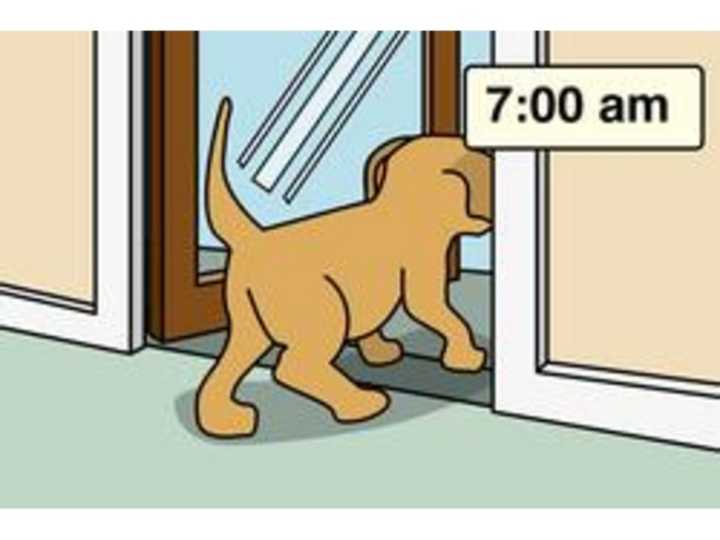
DogsDog TrainingHow To Housebreak A Dog In 7 DaysByRyan TronierUpdated Mar 15, 2018If you have recently adopted a puppy, you are faced with the somewhat daunting challenge of housebreaking your new dog. While older dogs may require a bit more time and patience, a 3- to 6-month-old dog can be successfully housebroken in just seven days. For best results, you must follow the schedule to the letter, meaning you must remain at home all day with your new pup.anurakpong/iStock/GettyImagesIn order to housebreak your dog in as little as seven days, you must follow the schedule to the letter. Once the first week is up, try to keep as much of the schedule as possible, taking the dog out and feeding at regular times. Praise and punishment are essential parts of housebreaking a dog; however, because a puppy's memory span lasts a maximum of 90 seconds, praise or punishment should occur as soon as the event passes. When the dog finishes going to the bathroom outside, give heavy verbal praise, using verbal punishment the instant you notice an accident occurring indoors.How to Housebreak a Dog in Seven DaysPaul Brittenham/Demand MediaStep 1:Start each day by waking up at 7 a.m. and immediately taking the dog outside to go to the bathroom. Wait as long as necessary for the dog to go and then return to the house for playtime until 8 a.m. During playtime, the puppy can be allowed free time; however, it is best to give as much attention to your new dog as possible.Step 2:Paul Brittenham/Demand MediaGive your new dog something to eat and drink at 8 a.m., after a good play session. Watch the dog carefully after he eats, as some dogs will have the urge to go to the bathroom immediately after eating. If your dog shows signs of need, such as sniffing or wandering to hidden areas in the house, pick him up and go directly outside. Whenever possible, wait a full half hour, until 8:30 a.m., to go outside for potty time.Step 3:Paul Brittenham/Demand MediaAllow your puppy to play freely in a small, closed room, such as the kitchen. It is best to keep the puppy in your sight during free time so that you can quickly notice signs of bathroom needs. If you are crate training your puppy while housebreaking, place the dog in her crate from 9:30 a.m. to 12:30 p.m. Remember to place toys and chewies in the crate for entertainment; however, no food or water.Step 4:Paul Brittenham/Demand MediaRelease the puppy from the crate or end free time at 12:30 p.m., giving the dog food and water. Again, wait up to half an hour if possible and then take the dog outside. After returning inside, give the dog at least 30 minutes of free time to play before placing him in the crate if you so choose.Step 5:Paul Brittenham/Demand MediaFeed the dog for the third and final time at 6 p.m., taking her outside within half an hour. This is a good time to take the puppy for a walk or play outside so that she can explore the world a bit. After at least 30 minutes of outdoor or play time, you can place her in the crate if you wish.Step 6:Paul Brittenham/Demand MediaOffer the puppy water at 8 p.m.; however, after 8:15 p.m. the dog should not drink any more water to help to make it through the night. Take the dog out within 30 minutes after he drinks. Follow up with some play time and time in the crate, if desired. Take the dog out before bed at 11 p.m., keeping him in a crate overnight to prevent accidents.
Can I Do Schutzhund Dog Training Myself?
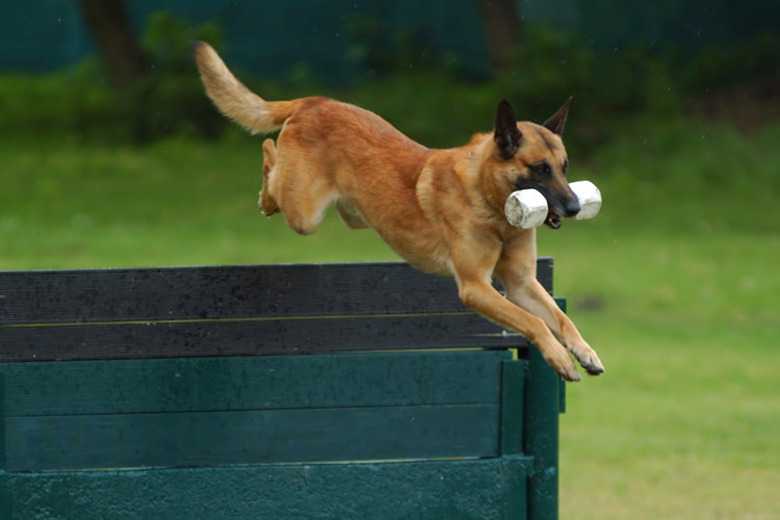
DogsDog TrainingCan I Do Schutzhund Dog Training Myself?ByCuteness TeamSep 16, 2015 3:57 am ESTSchutzhund is not the same as protection training; it is an active sport with a dog that tests three specific areas of a dog's training and behavior in tracking, obedience, and protection. It is also not only for German shepherds, though it did originate for those lines as a test of suitability for work. Schutzhund is trainable for any dog with the proper attitude for it; however, if the owner of a dog wants to go a do-it-yourself route for training in the sport, they must become a knowledgeable trainer beforehand. In order to do so, learning about the sport and about how to properly train a dog for it are necessary.Training to be a TrainerSchutzhund trainers require a basic understanding of effective obedience training with positive reinforcement. The would-be handler must not be a novice at training a dog. Schutzhund needs trainers who are advanced in their methods and who understand dog behavior, agility skills and advanced obedience. Most professional trainers suggest a novice become a member of a Schutzhund club or group in their area to learn more about it before attempting it themselves with their dogs. All of this preparation is because foundation work must be laid in training a dog to watch and listen to its handler and get used to following commands, which obedience training teaches. A dog cannot "track" without having the ability to recognize the handler's command and link it to an action to follow. Obedience training for the handler to effectively control his dog and for the dog to understand his role must happen before entering Schutzhund.Three-Part TrialsWhen learning how to train for the sport, a handler must also know what the sport entails. The tracking phase includes a temperament test, and then a tracking test to demonstrate the dog's ability to scent and indicate objects, often by lying next to it, along with being mentally and physically durable. The obedience phase includes a gunshot test for noise sensitivity, heeling exercises within a group of people, field exercises, retrieving (including over obstacles), and spot-on obedience no matter what the dog has been asked to do. The third phase is that of protection. In this phase, the handler must have complete control of his dog. A live human decoy is used to prove guarding, pursuit, protection and willingness to continue his ordered attack even when retaliated against if the handler commands it, until the handler commands the dog to back off. A judge is present for each of these phases for scoring purposes.Necessary TemperamentMany trainers begin working with Schutzhund-oriented puppies as early as eight weeks old. A good Schutzhund candidate will be the puppy who has a strong physical conformation without hip or elbow problems and who will be from working rather than show lines. Any dog can enter Schutzhund provided they have these qualities from a young age: Independence, courage, stalking instincts, curiosity, intelligence, dominance with its littermates and calm nerves. The mother of the brood should also be rated, as she's a major influence for their formative weeks; if she is nervous or otherwise ill-tempered, her pups may develop the same temperament. When in doubt, check the pedigree.ResearchEven after learning the basics of training and choosing the proper dog for Schutzhund work, a trainer should not stop learning more about how to train. Techniques may be tried-and-true, but new methods appear whenever scientific advances occur in how animals, especially dogs, seem to learn. Schutzhund is not about how tough or vicious a dog can be, but instead how far an intelligent companion will go to please its handler. Once out of the sport ring, the dog will be home with his family and will be treated as a family pet instead of a working animal in many cases. Knowing how to choose the right temperament and train the proper behaviors into such a dog is not something that happens overnight.By Dondi RatliffReferencesSchutzhund-Training.com: ObedienceLeerburg.com: More About the Dog Sport of Schutzhund; Ed FrawleyMy Dog Ate My Money: What is Schutzhund Training?DVG America: What is Schutzhund?Maine Schutzhund Club: FAQAbout the AuthorDondi Ratliff is a certified secondary English teacher in Texas. Her articles typically cover topics regarding animals both wild and domesticated. Ratliff holds a Bachelor of Arts in English from Tarleton State University, a Master of Arts in teaching from Texas Woman's University, and a Master of Arts in English from Tarleton State University.
How To Train Your Dog To Protect You
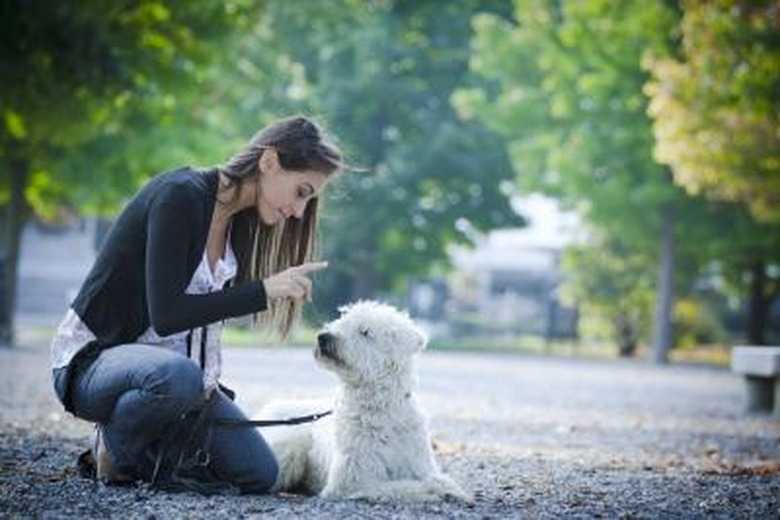
DogsDog TrainingHow To Train Your Dog To Protect YouBySteve MilanoUpdated Sep 17, 2021Many pet owners often ask, "Do dogs instinctively protect their owners?" Based on many years (up to hundreds) of breeding, some dogs are naturally prone to retrieve, hunt, dig, guard, and protect. Dalmatians, for example, were used for centuries as carriage dogs, providing protection from thieves. To this day, they are still very protective pets. Even if your dog isn't a breed that is naturally inclined to protect you, you can learn how to teach a dog to guard an object or person.Manuel Tauber-Romieri/iStock/GettyImagesProtecting vs. attackingProtectingvs. attackingBefore you begin the process of learning how to train your dog to protect you, remember that your goal is to get your dog to help you, not to attack others. This means you'll want to train your dog to get between you and a potential threat, snarling and posturing instead of immediately jumping on another animal or person.Each time your dog attacks — even if he's in the right — you might face a lawsuit. In addition, training a dog to attack can lead to the dog becoming overly aggressive. Depending on the amount of protection you want, you might decide to train your dog to attack only when barking doesn't work. That might be as simple as releasing the dog's leash and letting him attack.Research the breedResearchthe breedLearn about the behavioral instincts of your dog based on her breed. Some dogs are naturally friendly, while others are just the opposite. Some are good with children, while others are not. Perform web searches using your dog's breed and words like "protect" and "guard" to see if your dog has traits that already make her a good candidate for a guard dog.Start with bark trainingStartwith bark trainingPeople and animals will be more fearful of a barking dog than one that stares intently or even snarls. Train your dog to bark (some are not natural barkers). Pick a bark command, which can be a word or phrase, such as "Bark, Duke!" Say the phrase and then bark yourself.Keep trying the combination until your dog starts barking. When your dog barks the first time, give him praise, a pat, and a treat. After several successful tries, give the command only (don't follow it with one of your barks) and see if your dog barks in reaction to the command. If so, give praise, a stroke, and a treat.Practice this throughout the week so the dog becomes used to it and becomes conditioned to do this.Train positioning behaviorTrainpositioning behaviorIn order to protect you, your dog should get between you and the threat. After you have trained your dog to bark on command, train her to move in front of you and between you and the threat. You can practice this with a friend, keeping your dog on a leash.Have the friend approach. Give the bark command and step backward, putting the dog between you and the "attacker." After your dog sees this behavior several times, give the bark command and then stay where you are, motioning and pointing to where you want the dog to stand. The first time she moves between you and your threat, give her a big hug, a treat, and praise.As part of this training, your "attacker" should back off or start walking or trotting away after your dog gets between the two of you and barks. Give the dog praise after this happens each time so she will see what your goal is — to scare away an attacker.Use positive reinforcementUse positivereinforcementAlways use positive reinforcement training rather than negative commands. If your dog moves the wrong way, don't say, "No!" or "Bad dog!" Simply model the correct behavior and reward the dog for correct responses. Repeat this until the behavior becomes automatic during the session and continue practicing during the week.Train the opposite responsenortonrsx/iStock/GettyImagesTrainthe opposite responseMake sure your dog does not associate all strangers with threats. Your dog should only protect and defend you after you give your bark command. Practice walking and meeting strangers, correcting your dog if he starts barking at a cyclist, jogger, skateboarder, or another animal. Use positive reinforcement, including praise, caresses, and treats.ReferencesPetHelpful: How to Train a Dog for Personal Protection (5 Tips)Dog Endorsed: 4 Important Tips When Training a Dog for Self-Protection
How To Stop Your Dog From Turning Over Its Water Bowl
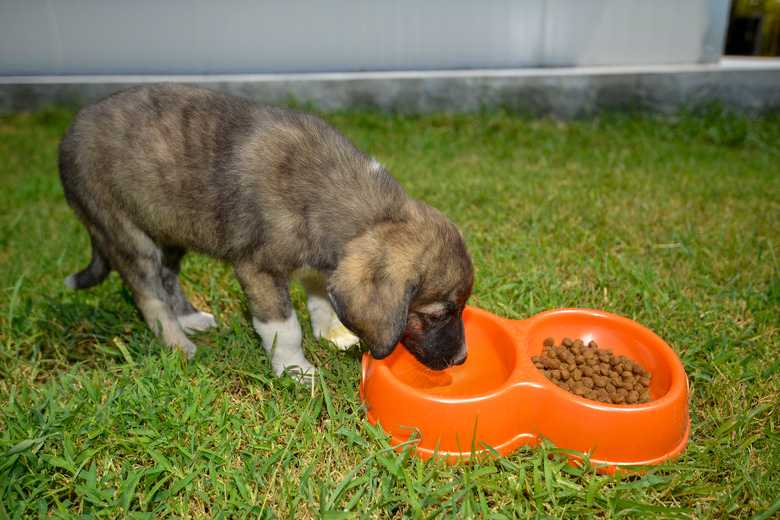
DogsDog TrainingHow To Stop Your Dog From Turning Over Its Water BowlBySteve MilanoUpdated Nov 2, 2021It's not uncommon for dogs to turn over their water bowls, even if they're thirsty and want the water. The reasons can range from mischievous behaviors to more serious problems. If your dog does this more than once or twice, you'll need to try to identify the problem, then solve it based on why your pet is acting this way. In many situations, you can solve the problem yourself. In others, you might need to get a trainer involved or call your vet.Roman_Gorielov/iStock/Getty ImagesTry to identify the problemTryto identify the problemTry to figure out why your dog is turning over her water bowl. Look for patterns. Is she doing it at the same time of day? Is she doing it right before or after being fed? Is another pet using the bowl? If you can figure out the problem, it will be a much easier fix.Some reasons why dogs turn over their water bowls include:Wateris old or has something in it (dust)Bowlis dirtyBowl was moved from its normal locationDog seesa threat or other problemShe'sbored and wants attentionIf you don't change your water once or twice daily, it can get debris in it, especially if you have a dusty house. If the water is near a vent, it can attract even more dust — a heating vent or sunny window can raise the water temperature.Dogs like routine and don't like their bed, toys, or bowls to be moved. If you've recently added a water filter to your faucet or occasionally empty the last of your bottled water into the bowl, these new sources of water might be the problem.Don’t use negative reinforcementDogan Kutukcu/iStock/GettyImagesDon'tuse negative reinforcementTelling a dog, "No!" or, "Bad dog!" is not an effective means of animal training. Never swat or fake a spank, which can stress out the dog or cause him to bare his fangs and become aggressive and possibly dangerous. Use positive reinforcement training to condition good behavior.This can include, "Good dog!" or rubs, treats, or hugs. Any time you see that your dog has drunk from the water bowl without flipping it over, reinforce this behavior with a positive response. You can try adding fresh water to the bowl, standing and watching him drink, then giving him a rub or praise if he drinks without tipping the bowl.Untippable dog water bowlUntippabledog water bowlTo help speed up the process of getting your dog to stop this particular behavior, consider using water bowls and accessories that discourage spilling. For example, you might use a weighted, untippable dog water bowl or a splash-proof dog water bowl. You can also try putting a non-skid piece of material on the bottom of the bowl. This will prevent it from sliding and make it more difficult to tip over.You can use a rack that contains the dog's water and food bowls next to each other. The bowls are placed in indentations in the material, or sandwiched between two pieces of material, making it more difficult to flip the bowl.When to contact helpCapuski/E+/GettyImagesWhento contact helpIf your dog is tipping the water bowl daily, to the point that you think she might be getting dehydrated, call your vet or a pet behaviorist. Do the same if your dog keeps spilling water, trying to flip a weighted bowl, or fussing with one in a bowl rack. You might need a behaviorist or trainer to visit your house and spend time with your dog to determine the problem. Take a couple of pictures of the area where you are keeping the water bowl and send it to the vet or trainer — they might be able to spot the problem from what they see in the pictures.ReferencesDogTime: Keeping Your Dog HydratedPet Dog Owner: Why Does My Dog Tip His Water Bowl Over?
How To Train Your Puppy To Use A Toilet
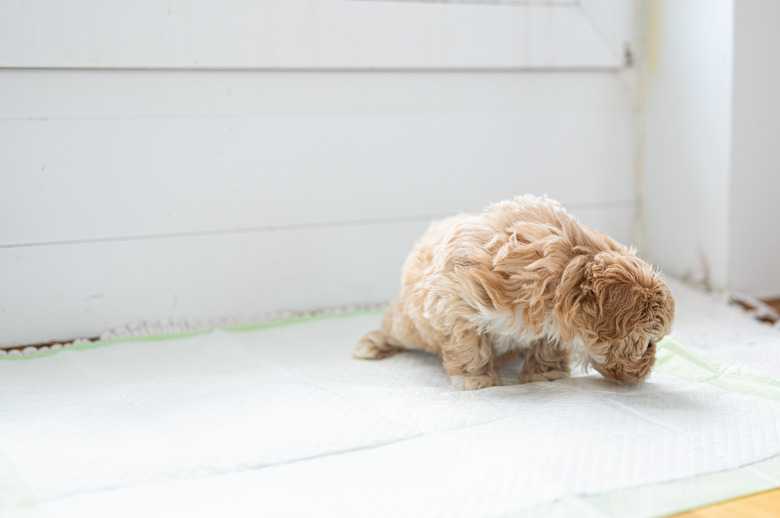
DogsDog TrainingHow To Train Your Puppy To Use A ToiletByHailey HudsonUpdated Oct 20, 2021If you're tired of picking up after your dog or you're just looking for a new trick, why not teach your dog to use the toilet? It might sound like a silly idea, but with a little patience and a lot of encouragement, you can potty train your canine and cement your bond with your favorite pet as you work through the training process together.darak77/iStock/GettyImagesTrain a dog to use the toiletTrain a dog to use the toiletNot all dogs are ready to learn how to use the toilet. If your dog isn't housetrained yet, that needs to come first. This exercise is too advanced for any dog who is still having accidents in the house. Puppies should be fully housetrained by around the age of 6 months. Teaching a dog to use the toilet is also not recommended for miniature breeds, teacup breeds, or any other small breeds. If your dog is too small to brace herself on the rim of the toilet seat, this training exercise is not for you.Take a small, plastic child's potty or a plastic tub outside into your yard. When you take your dog outside, keep him on a short leash and encourage him to go in the potty. Reward your dog with a treat and lots of praise when he goes in the potty. Continue practicing this until your dog naturally goes in the potty. Once your dog is used to going in the potty outside, bring the potty inside and put it by the toilet.Repeat the same process of encouraging your dog to use it. Over time, gradually place the small potty at a higher and higher level until it reaches the same height as the big toilet. Eventually, your dog can graduate to using the big toilet on his own with no child-sized potty seat required.Use a puppy padti-ja/iStock/GettyImagesUse a puppy padYou can follow a similar training process using a puppy pad instead of a child's potty. Place a puppy pad in the yard and use praise and treats to teach your dog to use the pad. When your dog naturally heads to the puppy pad right away, you can move the pad next to your toilet.Encourage your dog to use the puppy pad next to the toilet. Then, use something sturdy to raise up the pad over time until the pad is at toilet level. Leave the pad on the toilet bowl rim for a few days. Then, you can remove the pad and leave the toilet seat up, and your dog should balance herself on the rim of the toilet bowl and go to the bathroom in the toilet.Be patient with your dogFreshSplash/E+/GettyImagesBe patient with your dogWhat should you do if your dog has accidents? Be patient. This training exercise is advanced and can take some time. Firmly tell your dog "no" if he has an accident and you witness it. Other than that, don't punish your dog. If a child's potty or puppy pad doesn't work for your dog, you can also purchase a dog toilet seat kit online. A dog litter box could be a good fit too.ReferencesAmerican Kennel Club: Puppy Potty Training Timeline and TipsPibbles & More Animal Rescue: The Truth About Learning How to Train My Dog to Use the ToiletAmerican Kennel Club: The Ins and Outs of Potty Pad Training
How To Make A Clicker For Dog Training
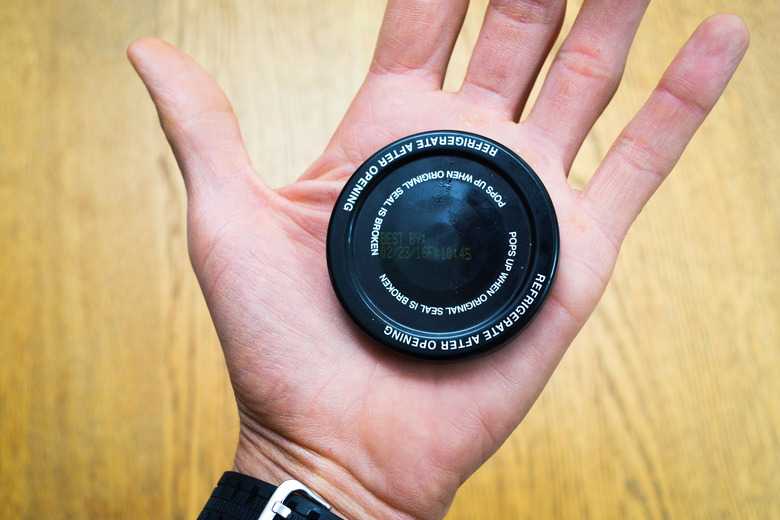
DogsDog TrainingHow To Make A Clicker For Dog TrainingByCatherine Holden RobinsonJul 1, 2010 1:03 pm ESTThings NeededJar lidFlat-head screwdriver with rubber handleRubber malletWarningKeep tools away from children.TipYou may want to visit your local pet store to determine how a clicker should sound before making your own.Clicker training is an efficient method of teaching good behavior, basic commands and tricks to your canine with a reward-based training system. This training method includes an initial command and a "click," then a treat from the trainer once the canine student completes the command. Clickers are available at many pet retailers, but you might be surprised to learn how easy it is to fashion your own.Step 1Choose your jar lid. You'll want the lid to fit comfortably in your hand. A lid from a single-serve juice bottle or baby food jar is likely to be a good size.Step 2Wash and dry the jar lid.Step 3Place the jar lid right side up, as if you are going to screw it back on the jar, on a flat surface such as a cutting board.Step 4Place the screwdriver in an upside down position — with the rounded part of the handle in the middle of the jar lid and the blade facing up.Step 5Tap the blade of the screwdriver with the rubber mallet, causing the handle end to force a depression in the top of the lid. Even with a lid that has a safety-seal button that you can depress, you'll want to indent the center of the lid a bit more to make a decisive click when you press it from the underside.Step 6Check your clicker to see how it sounds by placing a thumb on the underside of the lid and pushing the depression firmly until it pops. If necessary, repeat steps 4 and 5 until you've achieved the clicking sound you desire.ReferencesASPCA: Clicker Training Your PetYouTube: How to Make a Clicker for Dog Training
Diet For Dogs With Anal Gland Problems
DogsDog TrainingDiet For Dogs With Anal Gland ProblemsByJamie ConradOct 21, 2009 7:13 am ESTJupiterimages/Stockbyte/Getty ImagesAnal glands are scent glands located around a dog's rectum. When these become impacted they require manual expression of the fluid inside to decrease pressure within the gland and prevent bursting. Manual manipulation of the anal gland is painful for the dog. The process of extraction is also dangerous for dogs as it may allow bacteria to enter the dog's body that otherwise would not have. However, most anal gland problems are easily prevented through proper diet.FoodsMedioimages/Photodisc/Photodisc/Getty ImagesFoodsHigh fiber diets are imperative to a dog with anal gland problems, because the fiber produces a bulkier stool which puts pressure on the anal gland and causes it to express as the stool is passed. Commercial brands of high fiber foods are available and can even be purchased through your veterinarian. Certain foods which increase fiber content can also be added to the dog's food, including raw sesame seeds, ground flax seed, psyllium seed, buckwheat, whole oats, brown rice, wheat bran, whole grain cereal, or bran flakes. Dry fiber foods must be thoroughly hydrated before serving to your dog, as this will prevent choking or intestinal problems. Some dogs may have an intolerance to wheat, so these dogs should not consume wheat cereals.SupplementsComstock/Stockbyte/Getty ImagesSupplementsSupplements are another way of preventing anal gland problems in your dog. Metamucil is a commercial medication made of psyllium seeds which provides additional fiber to your dog's diet. Fatty acid supplements may be given to encourage the dog's bowel muscles to manually contract. Your veterinarian can recommend supplements and medications specifically for your dog while advising how to use them to improve anal gland health.Additional TipsKane Skennar/Photodisc/Getty ImagesAdditional TipsObesity has a negative effect on anal gland health as well as poor heart, liver, and kidney health. Refrain from overfeeding your dogs no matter what diet you choose. A daily walk (or two) is a great way to exercise your dog and prevent obesity, along with anal gland problems. Daily walks also provide an opportunity for the dog to have a bowel movement and express the anal gland. Allow the dog to go outside every 2 to 3 hours to further encourage bowel movements. Compresses made of cloth with warm water can also be placed on the anal area several times daily to help relieve stress on the anal glands.ReferencesDiseases of Modern Living: Anal Sac DiseaseAnal Glands (Sacs): Impactions, Infections & Abscesses in DogsIs Your Dog Suffering From Problem Dog Glands?
How To Make Puppy Mush
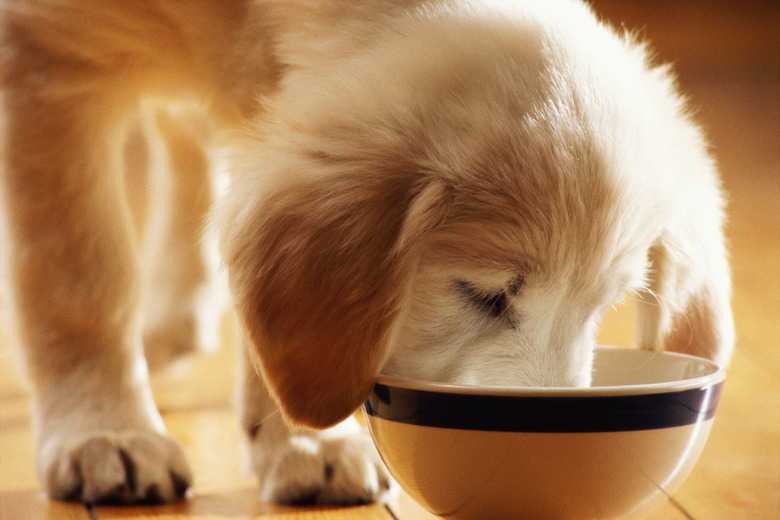
DogsDog TrainingHow To Make Puppy MushByJennifer Kelly GeddesUpdated Aug 31, 2021Gruel for puppies is the first solid food that young dogs will taste. This concoction is basically an easy to eat soft mush that's made from dry dog food and water and is fed as a supplement to the mother's milk. Gradually, gruel for puppies is fed in larger and more frequent solid meals until the dogs are weaned from their mother and no longer need to nurse.The weaning process typically begins around 3 to 4 weeks of age, though nursing puppies should remain with their mother until about 8 to 10 weeks of age, which is when they'll be fully weaned. Puppies will nurse less and less during weeks four through seven, and it's at this stage that young dogs can have supplemental mush in their diets.Choose high-quality chowChoose high-quality chowMuch the way babies smear pureed peas all over their face, the first few times that puppies eat solid food results in the same kind of mess. Indeed, most pups will end up wearing more than they eat, so you only need enough gruel for puppies to give them a small taste.It's best to wean a puppy using the same dry food their mother has been eating, which should be a high-quality puppy chow that will ensure balanced nutrition. Don't be tempted to feed adult food to a puppy, as it won't contain the important nutrients that specially formulated puppy kibble offers.Making gruel for puppiesMaking gruel for puppiesTo make your own mush at home, put a cup or two of dry dog food into a mixing bowl or pan. Note that the amount is determined by the number of puppies you're feeding and their size. You can also ask your dog's vet about how much and how often to feed your pet, but in general, puppies require four feedings a day when they're between 6 and 12 weeks of age.Add water to cover the dry food and then use a large spoon to combine the mush well. Cover the bowl and allow it to stand long enough to soften, usually about 15 to 30 minutes depending on the amount of food.After the gruel for puppies has softened, stir and mash the mush until it is the consistency of a thin porridge, adding a little more water as needed. When your puppy matures and learns to eat more successfully, you can gradually thicken the mush, but keeping it thin at first is wise. You can also add canned dog or puppy food at this point, but for the first meals, keep the amount very small or the mush will be too thick.Encourage interest in mushEncourage interest in mushDo you have a pup who's a bit skeptical of the meal you've made? You can guide your pet to his food dish and then gently place his nose into the bowl to introduce him to the food and coax him to try it. You might also warm up your puppy's bowl of mush to make it more desirable. Start with three small meals of puppy mush a day and increase to four. The consistency of the mush should get more and more solid until your pet can eat plain dry food.Remove mush after mealtimeGhislain & Marie David de Lossy/The Image Bank/GettyImagesRemove mush after mealtimePuppies are playful by nature, so to stave off a potential mess, be sure to take away whatever mush is left over after your puppy has eaten and then clean up the area. If gruel for puppies sits too long, it could spoil. Be patient as your puppy learns to eat solid food. All dogs go through the same developmental stages, but some litters or individual pups move a little faster (or slower) than others.ReferencesVCA Hospitals: Breeding for Dog Owners – Caring from Birth to WeaningAmerican Kennel Club: Puppy Feeding FundamentalsVCA Hospitals: Caring for Orphaned Puppies
How To Train A Brindle Pit Bull
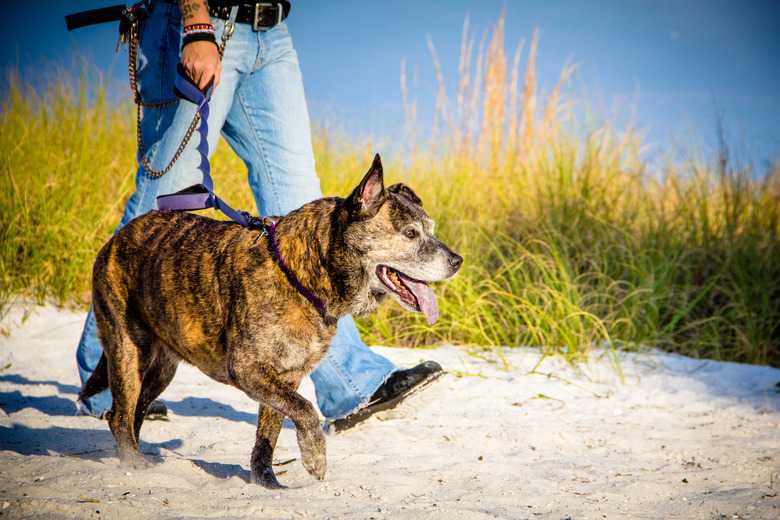
DogsDog TrainingHow To Train A Brindle Pit BullByLD WithaarUpdated Mar 28, 2019meaghanbrowning/RooM/GettyImagesThe brindle pit bull is one stunning animal. Not only does he have the imposing presence and buff build pit bulls are known for, but he also rocks a beautifully colored coat.Brindle pit bulls range from light brown with dark brown stripes to deep copper with black stripes — a tiger stripe pit bull! They may besolid brindleor have a white chest and some white on their face.Brindle pit bull temperamentBrindle pit bull temperamentContrary to what some sources say, the brindle pit bull is not a separate breed. It and all of its less dramatically colored cousins are American Staffordshire terriers.These are smart, confident dogs that are basically good-natured and usually friendly. Their intelligence and desire to please their human make trainingeasyif you do it right.Potty training pit bull puppiesPotty training pit bull puppiesHopefully, rubbing a dog's nose in her dooty went out with message machines. But just in case you've seen your parents or grandparents use this method, memorize these three words:It doesn't work. All it will do is teach your dog to fear you.Your brindle pit bull puppy will not connect her accident with the punishment she's receiving. Ideally, you need to catch her in the act of peeing or pooping in the house for her to connect your actions to her deed. If you catch her while she's going, say "No!" and take her outsideimmediately.Short of catching her while she's doing it, use the three-secondruleand never fudge on it. If you scold her within three seconds of having an accident, she'll probably get it. Dogs don't connect being scolded with something they did an hour ago, several minutes ago, or even four seconds ago. Most importantly, don't forget to treat and lavish praiseeverytime she does her business outside.Patience, support, dealing with itPatience, support, dealing with itPatienceis the most important ingredient in any training. Do not expect your dog to get everything right away. If you've just brought your brindle pit bull home, he's probably overwhelmed by all of the new sights, sounds, and smells. Take him out frequently and when he's inside, watch for signs that he's about to poop or pee like sniffing, circling, squatting, and lifting his leg.Supportyour brindle pit bull's efforts. Feeding him at set meal times will lead to more predictable potty times. If you let him graze all day, you'll never be able to anticipate when he might have to go.Thoroughlyclean upany accidents as dogs tend to go back to the same spots, but don't throw it out. Move the poop to the spot outside where you want your pup to go. If he peed on a pee pad, move that outside. Gross, yes, but it works.Reward right nowReward right nowRewards are themost importantpart of any training.Make sure you have treats handy so that you can reward her as soon as she's done the behavior you're training for. Just like scolding, immediacy is key. When she potties outside and you have to run into the house to get a treat, she willnotassociate the reward with what she's just done.Atreat pouchthat you can wear around your waist is a great tool. If you wear clothes that don't have pockets, you can't live without one of these. Even if you have pockets, you won't gum them up and walk around smelling like liver if you wear a treat pouch.The treat doesn't have to be anything bigger than the nail on your little finger. Tiny pieces are all that's needed even for a fast-growing brindle pit bull puppy. A little taste of something wonderful and yourenthusiasticpraise is what she lives for.Obedience training your brindle pit bullObedience training your brindle pit bullIt's never too early to start teaching thebasics— sit, stay, lie down, and come.Consistencyis key. Decide which words you're going to use and stick to them. Keep training sessionsshort(five to 15 minutes depending on your brindle pit bull's age) but practice at random times.Ask him to "come" when it's dinnertime. Ask him to "stay" while you finish a quick household chore. Say, "lie down" when you answer the phone.Mix it up. Don't always ask him to stay when you're making the bed or your action, not the command, will become hiscue. And don't forget the all-important reward. Treat, praise, and love your beautiful brindle pit bull.ReferencesAmerican Humane Society: Housetraining Puppies and DogsAmerican Kennel Club: American Staffordshire TerrierAnimalso: The Brindle Pitbull Is The Ultimate Rainbow Dog
How To Stop A Dog From Digging In Houseplants
DogsDog TrainingHow To Stop A Dog From Digging In HouseplantsByBetty LewisJul 10, 2008 7:27 pm ESTInBtwntheBlinks/iStock/Getty ImagesYou may have spent weeks tending to your favorite houseplant only to have it wrecked when your pup had his way with it. Digging behavior in dogs is frustrating and potentially destructive. If your dog's making a habit of digging in your houseplants, making them inaccessible or unappealing can keep them growing.Move ItMove ItSometimes the simplest solution is the best solution. If your pooch has a hankering to dig into your houseplants, try putting them out of his reach. If the target of his curiosity is something like a Boston fern, try hanging it up, from the ceiling or out from the wall, where it's out of his reach. If it's something that doesn't work in a hanger, such as a ponytail palm, try elevating it enough so he can't get into the pot. Another option is to keep a room for your plants that is off limits to your dog.Digging DeterrentsDigging DeterrentsIt may not be practical to relocate your houseplants or keep a physical separation between your dog and your plants. Sometimes all you need to do to discourage him is to give him a whiff of something he doesn't like. A cotton ball saturated with clove oil can be placed just beneath the soil, warning your dog away. Sprinkling alum powder or a granular animal repellent on top of the dirt also may keep him away. Other deterrents to consider include putting pine cones in the soil and placing aluminum foil on top of the dirt — dogs don't care for the feel of foil on their paws.Teaching Lasts a LifetimeTeaching Lasts a LifetimeTeaching your dog not to dig in your houseplants can offer a permanent solution, though it will take time and patience. You may want to consult a professional dog trainer for advice, but generally, whenever your dog starts to dig in your plants, say a firm no and lead him from the plant. You also can try a light squirt of water to discourage him when you catch him in the act. However, never hit him or rub his nose in the dirt, nor should you punish him after the fact. You need to catch him in the act so he can associate the "no" with the plant.Channeling Behavior in a Positive DirectionChanneling Behavior in a Positive DirectionUnderstanding why your dog is digging in your houseplants will go a long way to preventing the behavior. It may be as simple as he can't resist that one particular plant. However, a dog may dig for a variety of reasons. He may be bored, afraid, suffering from separation anxiety, or exercising his instinct, such as looking for vermin, which is common in ratting breeds. Often providing him good exercise, such as a long walk or a good game of fetch or tug, will channel his energy in a positive way and make digging less interesting. If he's left alone during the day, toys, including some puzzle toys stuffed with treats, may relieve some of his boredom and anxiety. If he's naturally inclined to dig, creating a special spot in the yard where he can dig and training him that it's a safe place to dig can make both of you — and your houseplants — happier.ReferencesBetter Homes and Gardens: 20 Tips for Gardening With DogsPetPlace.com: How Can I Get My Dog to Stop Digging?Flowershopnetwork.com: Dogs, Cats, Houseplants: Living Happily TogetherPetMD: Destructive Behavior in DogsHumane Society of the United States: Dig This: How to Get Your Dog to Stop Digging
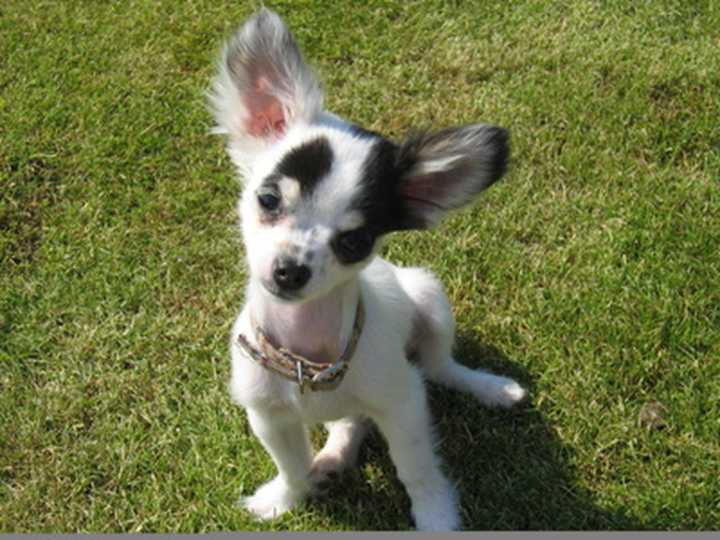
How To Train A Chihuahua Terrier
DogsDog TrainingHow To Train A Chihuahua TerrierByKasey HarganUpdated Jan 10, 2011Things NeededCollar or harnessLeashWarningLimit your Chihuahua's unsupervised outdoor time. The breed's tiny size may make it attractive to large birds of prey or city-dwelling wildlife.Chihuahuas become excited and stressed easily, also causing shivering. Talk soothingly to your dog at all times and strive to provide as calm and stable a home environment as possible.Never strike or yell at your Chihuahua. Not only is this abusive and unacceptable, but it is completely unnecessary.TipAlways make direct eye contact when giving commands to your Chihuahua. Your leadership will inspire confidence in this spirited little dog.Their characteristic shivering is often done to generate body heat. Put a doggie sweater on your Chihuahua on cooler days to keep it warm, even while it's indoors.Use love and praise to train your Chihuahua rather than food rewards. The rationale is simple: if you need the dog to respond to a command in an unfamiliar spot, you may not always have a treat in your pocket, but a kind touch and a reassuring tone are something that are constantly with you.The basic obedience commands of sit, stay and come are vital to your Chihuahua's safety and are good building blocks for other commands and tricks you may want to add later on. Chihuahuas are intelligent dogs and catch on very quickly to new concepts. They are affectionate and loyal in nature and will want to please their owner. Training your Chihuahua should begin immediately as soon as it comes to your home to establish its place in the new pack.Step 1Concentrate on housebreaking first. Other training can wait a few days. Begin immediately upon bringing her home. Even in a fenced yard, leisurely walk your Chihuahua on a leash, allowing time for the dog to get familiar with the new property. Praise lavishly when it uses the bathroom. Your guidance will show that this is the special place "to go". Repeat this several times during the day, and at bedtime. Four or five days is all that's needed to establish a lifelong pattern.Step 2Be the leader. Dogs are pack animals and need a leader. This is simply the canine nature as ordained from the beginning. When you talk to your Chihuahua, it will perk up itsr ears. This simple interaction of you speaking and the dog wanting to listen is a natural demonstration of a dog reacting to leadership. Always be firm and consistent with your commands. Don't leave out the components of love and praise. Even the most temperamental of dogs will respond to a good leader.Step 3Teach sitting by placing your fingertips on your Chihuahua's rump and pushing down lightly while firmly saying "Sit." Leave your fingers in place as it continues sitting and praise the dog. Repeat the command as you remove your hand, allowing it to sit unaided. If the dog gets up, duplicate the previous steps. After a moment or two allow, the dog to get up and lavish with praise for cooperation.Step 4Instruct the dog on the concept of "Stay", showing your Chihuahua the palm of your outstretched hand while saying "Stay." If the dog moves, return it to its original position and repeat the command until it stays in place unaided. As always, give affection to reward your dog's cooperation.Step 5Invite your dog to "Come." Dogs naturally interpret a clap of the hands and outstretched arms as an inviting gesture. Do this motion while enthusiastically calling out "Come Here." After a few times, your Chihuahua will associate the word with the act of going to you. Next, practice saying the word "Come" in a natural speaking tone instead of an excited one and repeat it this way until your Chihuahua will respond to your customary voice level.ReferencesBreed Characteristics
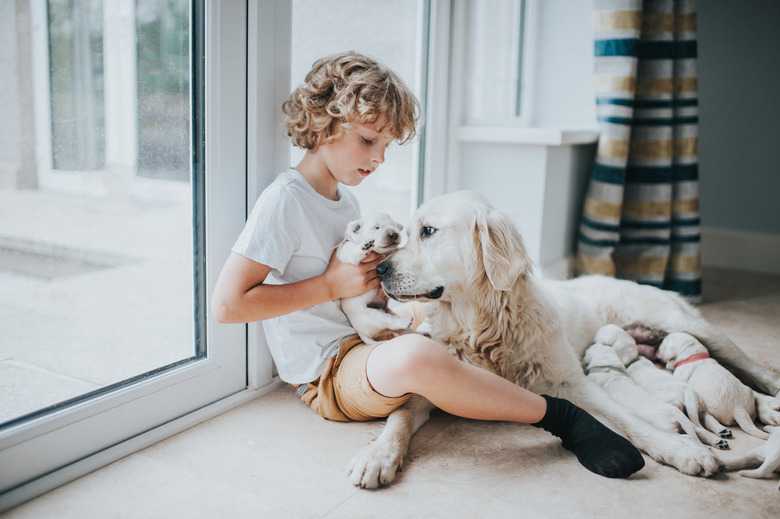
How To Encourage A Mother Dog To Feed Her Puppies
DogsDog TrainingHow To Encourage A Mother Dog To Feed Her PuppiesByMichelle MileyUpdated Aug 12, 2019Catherine Falls Commercial/Moment/GettyImagesIn most cases, mother dogs instinctively know how to care for their puppies and begin doing so as soon as they're born. Once in a while, however, mother dogs reject some or all of their puppies, leaving the tiny creatures to fend for themselves. If your dog won't feed her newborn puppies, you may need to step in and take care of them instead. Before you take over for her, try to kick your dog's maternal instincts into gear.A little privacy, pleaseA little privacy, pleaseGiving birth and caring for newborns are both potentially stressful occurrences. It's possible that your dog is feeling a bitoverwhelmed,especially if this is her first litter. To help her calm down and ease into motherhood, try moving her whelping box to a quieter area of your home with fewer distractions.You could also try doing the opposite. If your dog is particularly attached to you and seeks you out when she desires comfort, it's possible that herwhelping box is too far away.Move it to an area where you spend a lot of time. Some dogs will be calmer and more focused on their puppies in your soothing presence.My mother dog won't clean her puppiesMy mother dog won't clean her puppiesImmediately after birth, a mother dog should lick her puppies. Doing so breaks the sack in which the puppies are born and encourages them to breathe. If your dog fails to lick her puppies when they're born, it's important for you toclean themand rub them with a towel to get them breathing.After delivering her puppies, a mother dog will continue to lick them frequently. After birth, the licking serves to keep the puppies clean and stimulates them so they go to the bathroom as needed. If your dog refuses to lick her pups, encourage her to do so by placinga small amount of baby food or chicken pureeon them. This will encourage mom to lick them and hopefully stimulate the natural drive to continue doing so.Manually encourage nursingManually encourage nursingWhen caring for newborn puppies, hormones and actions have a symbiotic relationship. Pregnancy hormones will encourage your dog to engage in certain behaviors, such as licking her puppies or nursing them. These activities in turn release more hormones. If your dog doesn't want to stay with her puppies or feed them, you can try gently forcing the issue tostimulate the right hormones.To do so, lay your dog on her side to expose her nipples. Lay her puppies beside her, getting each as close to a nipple as you can. If possible, you can even help the puppies latch onto a nipple and begin to nurse. If the puppies dive into their meal, and your dog allows it, the nursing may release more hormones in your dog that inspire her to keep nursing her puppies without any help from you.Feeling under the weatherFeeling under the weatherSometimes, new mothers lack interest in their puppies simply because theydon't feel well.It's possible for your dog to retain a placenta, fail to deliver all of her puppies, or succumb to an infection or illness during or after delivery. If so, she may feel unwell and simply not up to the task of caring for her puppies.Immediately after the birth, contact your veterinarian if your dog has passed more puppies than placentas or if she delivered fewer puppies than you were expecting. Your dog also needs help if she continues to strain without delivering any more puppies or if she walks stiffly, has a fever, or has seizures. Continue monitoring mom's condition and call the vet if within a few days after the birth you notice your dog's nipples turning red and firm, she spikes a fever, loses her appetite, or has discharge from her nipples or vagina.ReferencesBreeding Business: Mother Dog Rejecting Her Puppies — Signs, Causes and SolutionsWag!: Why Do Dogs Lick Their PuppiesAsk a Vet Question: Won't Nurse PuppiesPurina: Things to Look Out for During Dog Labour
Cavachon Can't Figure Out How To Use The Door And It's Laugh-Out-Loud Hilarious
DogsDog BehaviorCavachon Can't Figure Out How To Use The Door And It's Laugh-Out-Loud HilariousByJaz JoynerJan. 25, 2026 9:25 am ESTlianewongsutton / TikTokEver have a total brain fart and forget how to do something very normal? Don't worry, we all have our moments. In a now viral TikTok video, one adorable butterscotch and white cavachon's likely brain fart has been captured on camera. Thanks to one very confusing doorway, they've officially joined the rolodex of silly pets that will make you giggle. Trust us, its spot is well-deserved.In the outrageously funny clip, this zany-minded pup stands on the other side of a half-opened sliding glass door and pauses at the glass as if requesting it be opened. Oh, dear friend, if only you knew! It then watches its sibling exit through the open doorway in sheer confusion, as if to show the way in and out. One viewer joked that the cavachon may have been thinking, "Well, that's the exit, I need the entrance." When its sibling's exit doesn't spark any bright ideas, this adorable cavachon's parent calls both her pups indoors. This seemed to activate the once-confused companion who, at long last, got through the open part of the glass doors once and for all! Finally!What took our new favorite Cavachon so long to catch on?chrisukphoto/ShutterstockCavachons may not be known to be the smartest dog breeds in the world, but is there any truth to what one of the TikTok's viewers claimed, that "Cavachon hearts are bigger than their brains?" Even dogs who may not be considered the smartest are still trainable. The National Canine Research Council's director of communications, Janis Bradley, told Newsweek, "All dogs who've had a bit of training can become smarter the more you train them." Bradley noted that smarter usually means quicker to catch on. So, there's hope for this pup to catch on quicker in the future. That's especially true since hybrid toy companion dogs, like the cavachon (mixed with Cavalier King Charles spaniel and Bichon Frise), are known for being especially easy to train. Cavachons are understood to be a pretty intelligent mix due to their desire to please and bond with their pet parents. Now, could our furry friend use a few mental exercises for dogs to sharpen its problem-solving skills? Probably so! Not only is training your dog good for the brain, but it's also good for your relationship. Just wait, the little, adorable doorstopper could become a super quick-witted canine in no time!
Required Certification For Service Dog Training For Hospital Visits
DogsDog TrainingRequired Certification For Service Dog Training For Hospital VisitsByJoe GordonJun 26, 2010 3:14 am ESTService dogs who accompany their owners to comfort people in hospitals, retirement homes, schools, mental institutions, nursing homes and disaster areas are called therapy dogs. These dogs must be approved by these institutions, which often have strict dog-visitation policies.RequirementsRequirementsMany hospitals, concerned with liability, safety and infection control, may require certification or registration, as well as liability insurance provided by such organizations as Therapy Dogs International or The Delta Society. Most will require that your dog pass the American Kennel Club's Canine Good Citizen (CGC) Test, which defines what the AKC considers a well-behaved dog. Some places such as nursing homes and senior centers welcome visits from those with well-behaved pets without proof of testing.Canine Good Citizen ProgramCanine Good Citizen ProgramThe AKC's Canine Good Citizen Program offers a 10-point certification test that stresses good manners for dogs and responsible pet ownership. Dogs who pass the 10-step CGC test receive a certificate from the American Kennel Club. The 10 points are awarded for accepting friendly strangers; sitting politely for petting; appearance and grooming; walking on a loose leash; walking through a crowd; sitting down and staying in place on command; coming when called; good reaction to another dog; good reaction to distractions; and supervised separation. All dogs, purebred or mixed breed, old enough to have received the necessary immunizations may take the test. Owners sign the Responsible Dog Owners Pledge stating their dog is under the routine care of a veterinarian.Therapy Dogs InternationalTherapy Dogs InternationalWhile the AKC does not certify dogs, groups such as Therapy Dogs International (TDI) does. TDI is an organization that regulates, tests and registers therapy dogs and their volunteer owners for the purpose of visiting nursing homes, hospitals, schools and wherever therapy dogs are needed. TDI registers all breeds of dogs 1 year old and over with proper immunizations. Handlers under 18 must have a parent or guardian present.Certification RequirementsCertification RequirementsTherapy Dog International certification requirements include the 10 points from the AKC's Canine Good Citizen Program and four additional tests. The dogs are tested for positive reaction to medical equipment such as wheelchairs, crutches, canes and walkers; response to the "leave it " command to ignore food placed nearby; acclimation to infirmities, demonstrating confidence when exposed to people breathing heavily, coughing, walking unsteadily and other distractions; responding positively to the "say hello" command, showing willingness to meet, be petted or held by a stranger; and finally, a non-aggressive, friendly reaction to children .Delta Society’s Pet PartnersDelta Society's Pet PartnersThe Delta Society's Pet Partners program screens, trains and registers volunteers and their domesticated pets (dogs, cats, rabbits, goats, horses, miniature pigs, birds, etc.) for visitation programs in schools, hospitals, nursing homes and other health care centers. Training is provided through hands-on workshops taught by Delta Society-licensed instructors or through a home-study course. After training, the pets are evaluated by Delta instructors to determine if they are controllable, reliable and predictable, with good manners in public places and the social skills to visit strangers. Delta's national network links volunteer teams with facilities in their own communities that request visiting pets.ReferencesDogtime: Therapy Dog Certification?American Kennel Club: AKC's Canine Good Citizen® (CGC) ProgramTherapy Dogs InternationalDelta Society; Pet Partners® Program
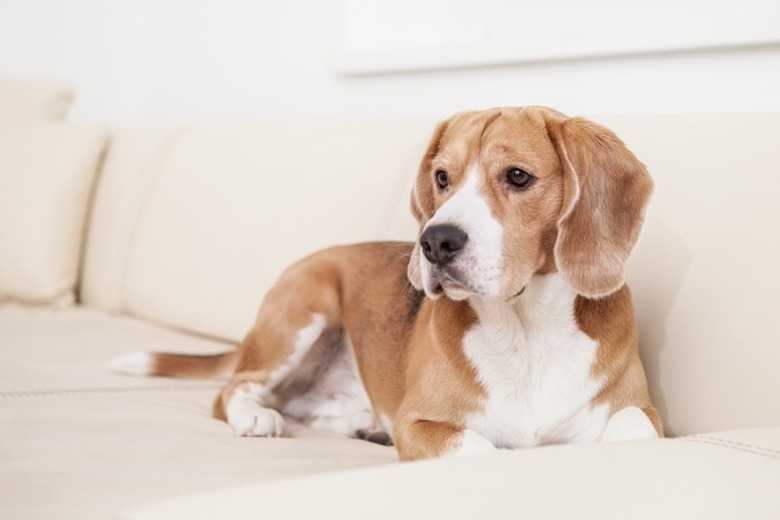
Stop Your Dog From Going Potty On Furniture
DogsDog TrainingStop Your Dog From Going Potty On FurnitureByRyan TronierUpdated Apr 4, 2018If your dog treats the couch like an upholstered toilet, his problem is either medical, hormonal, or behavioral. Sometimes when it seems like a dog is wetting himself on the furniture, it has nothing to do with his bathroom habits and everything to do with his desire to be the dominant animal in your home. Making him stop is first a question of determining why he does it, then eliminating the motivation for the behavior or teaching him otherwise.Tip 1:Monitor your dog's behavior to learn his furniture-related bathroom habits. When he eliminates, does he drain his entire bladder, or simply spray a stream of urine and move on? If it is the latter, your dog is likely marking his territory, which he is compelled to do by both his hormones and your behavior.Tip 2:Spay or neuter your dog. This is a simple solution to a whole host of behavioral problems, not the least of which is urinating in improper areas, like your furniture.Tip 3:If you are trying to keep your dog off of furniture when you're not home, it's best to keep your dog on the floor at ALL times. While it may be pleasant to have your pooch next to you when you're relaxing on the sofa, it also teaches him that he's allowed up there, which can lead to him going up when you aren't around and eliminating all over the microsuede.Tip 4:Take your dog out for adequate walks and exercise every day. Without adequate opportunity to eliminate outside, your dog will look for other venues, like the recliner.Tip 5:Give your dog an alternative place for indoor elimination, like a pee pad. This way, if he is going to have an accident inside, he can go to the pee pad and eliminate instead of doing so on the couch. Make a pee pad available at all times and show your dog where it is — instincts often guide your dog to use it, but if you catch your dog eliminating elsewhere, quickly take him to the pad so that he sees where he should be doing it.Tip 6:Take your dog to the vet if he continues to have accidents on the furniture. He may be dealing with incontinence-related health issues, like kidney or neurological problems.Warning:Never punish a dog after the fact. If you catch your dog urinating on the furniture, scolding may be effective, but once the deed is done, he won't understand the reason for any punishment you administer.
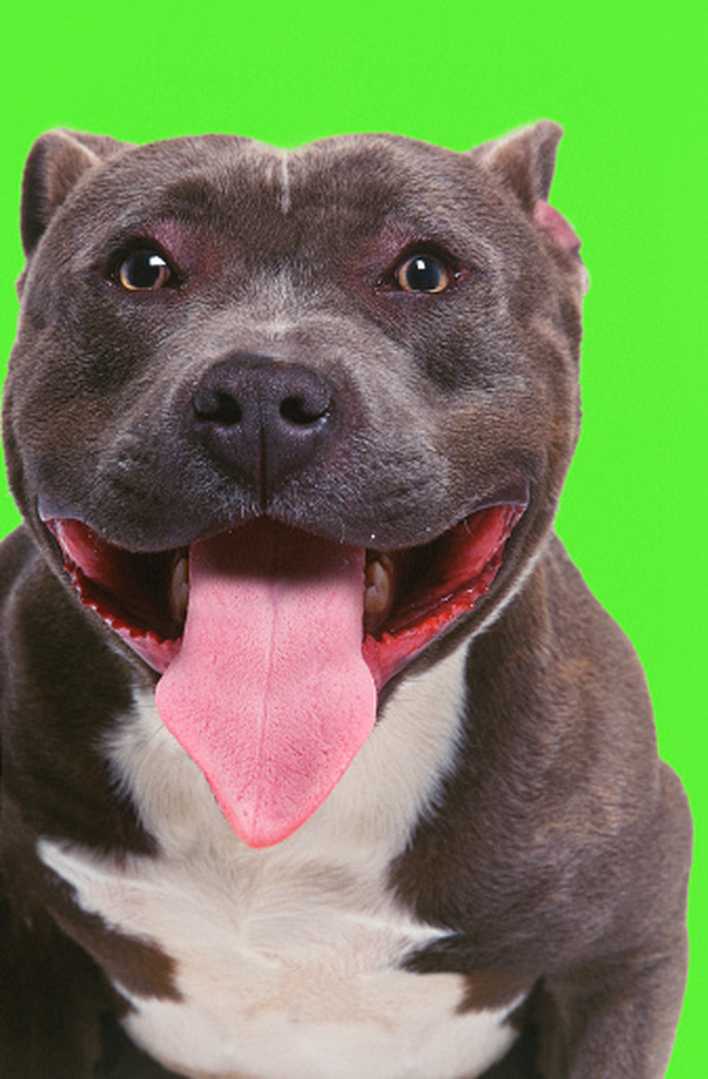
What Kind Of Food Should I Give My Blue-Nose Pit?
DogsDog TrainingWhat Kind Of Food Should I Give My Blue-Nose Pit?ByRoger DelVenadoUpdated May 11, 2011Blue-nose pit bulls are happy, loving and athletic dogs. Pit bulls of all varieties have athletic builds and enjoy an active lifestyle. A healthy pit bull should look like an athlete, with a tucked-in stomach and very little fat covering the ribs or rump. With that in mind, proper nutrition is essential for keeping your blue-nose pit bull healthy and feeling good.Variety of FoodsVariety of FoodsDogs are traditionally carnivores, but that doesn't mean that an all-meat diet is best for your pit bull. Protein, essential for a dog's health, comes in a wide range of dry and moist foods. Use a regular, nutritious dry food supplemented occasionally by a treat of moist food. Additionally, giving your dog some greens or pieces of carrot will help them get the extra vegetable nutrients that are harder to get from produced foods, according to the website Kinneman Kennels.Dry FoodsDry FoodsDry foods are often the most reasonably priced and convenient for feeding your pit bull. When selecting a dry food for your pup, ensure the food is human-grade meat, not grain-based and not filled with vegetable fillers like brewer's rice or soybean hulls, which are waste products. Don't go for dog foods that have a lot of chemical preservatives. Orijen is a recommended brand from the website Pit Bulls.Canned FoodsCanned FoodsIn general, there are two types of canned food for dogs: standalone food that meets the full daily nutritional requirements for your dog and food meant to supplement dry food. In either case, canned food should be made primarily of high-quality meats with little or no plant products. Avoid gluten and cheap filler ingredients. Pit Bull recommends ZiwiPeak.Homemade FoodsHomemade FoodsRaw meats, raw meaty bones, pulverized vegetables are all great foods for your pit bull and, except for the veggies, require little or no preparation. With meats or bones, just plop the food into the bowl and let the dog enjoy itself. The vegetables are nutritious, but generally need to be mashed up or pulverized in a blender for dogs to benefit from them.ReferencesFacts About Pitbulls: Tips for Feeding PitbullsKinneman Kennels: Feeding Your Pit Bull TipsPit Bulls: The Best Dry Food for Your Pit BullPit Bulls: Best Canned Dog FoodPit Bulls: Nutrition for Pit Bulls
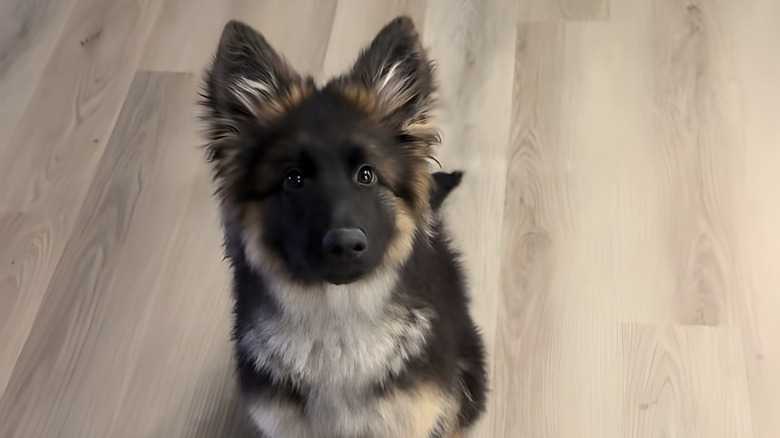
German Shepherd Puppy Learning How To 'Play Dead' Deserves An Oscar
DogsDog TrainingGerman Shepherd Puppy Learning How To 'Play Dead' Deserves An OscarBySheri RadfordJan. 19, 2026 9:25 am ESTgsd_willow / TikTokThe Academy Awards have categories for everything from acting and cinematography to costume design and visual effects. But what the Oscars clearly lack is a category for cute animals doing the most adorable tricks. In a TikTok video that's been viewed more than 3.6 million times, Willow the long-haired German shepherd puppy is seen dramatically falling to the floor after getting the "play dead" cue from her owner."And the Oscar goes to..." one viewer wrote. "Acting like that could get [her] onto the original Star Trek!" another joked, alluding to William Shatner's infamous overacting in the 1960s TV series. Everyone agreed that Willow is a sweet, gorgeous, charming, and clever ball of floof, stealing hearts left and right.In a separate TikTok video, Willow's owner breaks down the individual steps involved in teaching the precious little pup how to do the trick. First, Willow has to learn to respond to the hand signal by going down; then, she has to learn to roll onto her side; and finally, she has to put the two steps together when cued.Teaching your dog new tricksgsd_willow / TikTokAre you feeling inspired to teach your own dog amusing tricks such as playing dead (even a cat can learn to play dead!), picking up items off the floor, or the "peek-a-boo" trick? Patience and consistency are the keys. As with humans, some dogs learn quickly, while others take much repetition before a lesson sticks. Be sure to use the same verbal and physical cues during each training session, and keep the sessions short and enjoyable. Training is a good opportunity for bonding, and it should never feel like a chore for you or your dog.It's no surprise that Willow is skilled at learning tricks. After all, she's a German shepherd, which is one of the smartest dog breeds in the world. The intelligence and strength of these dogs make them popular choices to work with the police, the military, and search-and-rescue teams. They're also excellent guard dogs and service animals.Perhaps the ultimate sign of intelligence is when a dog tries to fool its owner. One viewer commented on the original TikTok video, "Whenever I try teaching [my] German Shepherd something he learns that instantly and then he pretends to not know what you're talking about a day later because he doesn't want to do it."
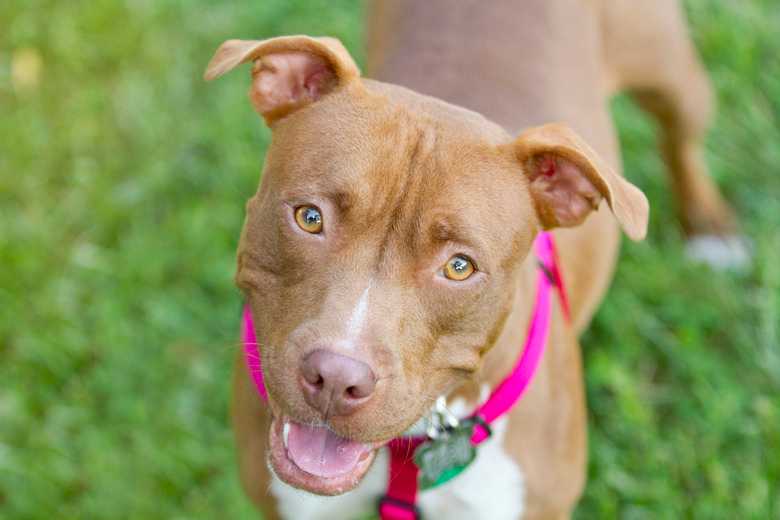
How To Train A Red Nose Pitbull
DogsDog TrainingHow To Train A Red Nose PitbullByKatherine MaloneUpdated Jul 1, 2021Holly Hildreth/Moment Open/GettyImagesWhile pitbulls often have the reputation for being dangerous and aggressive, they are actually intelligent dogs who are eager to please. A red nose pitbull describes the coloring of the dog, but they are not a special type or breed of pitbull. The temperament of a red nose pitbull mix may be different depending on the breed he is mixed with. When training a red pitbull, take into consideration his temperament and energy level to have the best experience for both you and your dog.Red nose pitbull temperament considerationsRed nose pitbull temperament considerationsPitbulls come in nearly any color, except for merle, and any nose color is acceptable. A pitbull with a red nose has the same physical characteristics and general temperament as pitbulls of other colors. While breed is not a reliable indicator of personality, a red pitbull is generally a loyal and intelligent companion. He can also become territorial and protective, which means he may show aggression towards animals or people if not properly socialized. Pitbulls may not be a good choice if you have cats or small children in the household, although pits often do well if they are raised with pets and children and their behavior is moderated.This breed is strong and athletic and needs plenty of exercise. Due to their energy level and personality, you may want to hire a professional trainer to help you with your dog, especially if you are new to training and socialization.Early socialization requirementsmarekuliasz/iStock/GettyImagesEarly socialization requirementsSocializing your baby red nose pitbull is critical to having a well-behaved and social adult dog. While this is an important stop for all puppies, it is especially important for the pitbull personality. Socialization involves more than simply introducing your puppy to other dogs, although this is an important step in the process.You will also want to introduce him to as many new people, environments, sounds, and smells as possible. This includes people on bicycles and skateboards, people wearing hats or glasses, and people of varying ages.Plan ahead to make sure it is a positive experience. Bring treats for rewards and praise him often. Introduce new experiences slowly so that he doesn't become overwhelmed and fearful. After your puppy has received his vaccinations, it is safe to take him to a dog park or enroll him in a puppy training class to meet other dogs.Pitbull training tipsPitbull training tipsTraining your red nose pit puppy ensures that he is responsive and safe. Commands such as come, sit, stay, and leave it not only teach good manners but may save your dog's life if he is near a busy road or is considering snacking on something harmful. You will also want to teach him to walk on a leash as this will be more challenging to teach a strong, adult dog.Regardless of the command you are teaching, the most important thing in pitbull training is to use positive reinforcement. Punishment is not an effective technique for any breed but can backfire when used on this headstrong breed. Consult a trainer if you are struggling to manage your puppy's high energy.Exercise and mental stimulationExercise and mental stimulationDaily exercise and play are key to keeping your pitbull physically and mentally healthy. A bored pitbull can become overly rambunctious and destructive. Make sure your dog has toys to chew on and puppy-proof your home to put any dangerous or valuable items out of reach until you are confident in his training.kocetoilief/iStock/GettyImagesPitbulls are prone to some medical conditions such as hip dysplasia, patellar luxation, and blindness caused by progressive renal atrophy. Monitor your pup throughout the training process. If you notice any changes of behavior or appetite, lethargy, stiffness, or limping be sure to contact your veterinarian right away.ReferencesThe Real Pit Bull: Breed MythsStanislaus Veterinary Group: The Truth about the Pitbull TerrierPet Place: What Are the Different Types of Pit Bulls?American Kennel Club: Puppy Socialization: Why, When, and How to Do It RightKennel to Couch: Top 3 Pit Bull Training Tips for Success
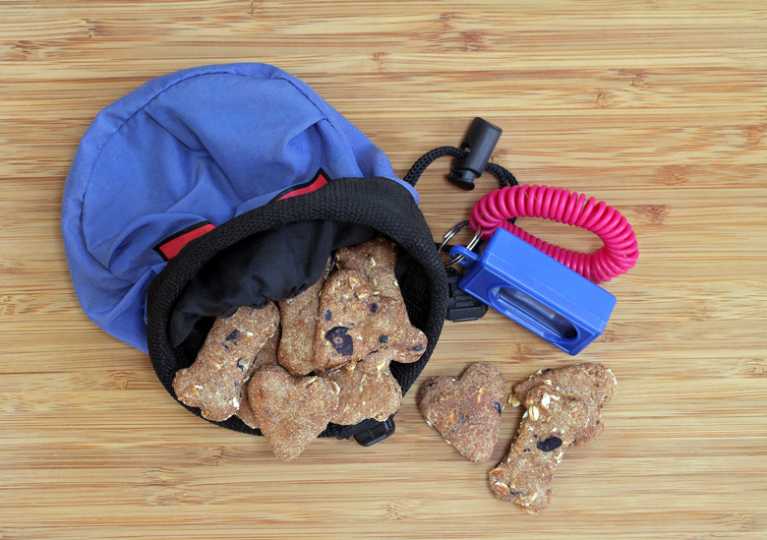
The Beginner's Guide To Clicker Training
DogsDog TrainingThe Beginner's Guide To Clicker TrainingByKayleigh RobertsUpdated Jul 12, 2022Reviewed by Liv HealyWe may receive a commission on purchases made from links.If you're embarking on your dog training journey, you've probably heard at least a little about clicker training. But what is it? How does it work? And why does it work? Here's everything you need to know about getting started with clicker training.FilippoBacci/E+/GettyImagesWhat is clicker training?What is clicker training?Clicker training is a method of training that involves using a clicker to mark and reward desired behaviors. Instead of just saying "good boy" and trying to shove a treat in your dog's mouth at the exact second he does what you want him to do, you use the sound generated by the clicker to "mark" the moment when the dog does what you wanted him to do, and then offer a reward (usually a treat).Because the dog will come to associate the sound of the click with the reward that follows, the clicker lets you hone in on the exact moment that you're rewarding, which makes it clear to your dog what you want from them.More Like ThisDogsHow To Use a Clicker on a Walk With Your DogDogsHow to Teach Your Dog The 'Peek-a-Boo' TrickCatsTikTok is Wild About the Treat and Train Remote Food DispenserThis article focuses on clicker training for dogs, but clicker training works with almost any pet (and really any animal). You can also use clicker training to teach your cat fun tricks and useful behaviors!Tips for successfully clicker training your dogTips for successfully clicker training your dogIf you've decided to clicker train your dog, there are some things to keep in mind. Here are some helpful tips to make your experience clicker training your dog as productive as possible.Jessica Peterson/Tetra images/GettyImagesThink of it like you're taking a picture: If you're having trouble with the timing of the click, think of it like the snap of a camera. Imagine that you're taking a picture of your dog in the exact moment when he performs the behavior you're looking for. If you're asking for a sit, click at the exact second when your pup's butt hits the ground, for example.But whatever you do, make sure you click at the right moment: Even if the "taking a picture" metaphor doesn't work for you, make sure you get the timing right. If you click too early or too late, your dog will associate the click (and the treat that comes later) with the wrong behavior, which ruins the point.Train in a quiet place: Quiet places with as few distractions as possible are ideal for any kind of training, but they're pivotal in clicker training, which depends on your dog, you know, hearing the click.Only click once per correct behavior: You don't need to click more than once, even if you want to give him more than one treat (like if he does a longer stay than he's ever done before, for example). Just click once and shower with praise and treats.You can also use a marker word instead of a clicker, if you prefer. Choose one short word (most people use "yes!") and say it in the same enthusiastic tone every time. Use this word the same way you would a clicker. This can come in handy if you're out with your dog and not currently in a session dedicated to clicker training. You'll definitely want to continue to use your clicker for training sessions, and training them to understand your marker word of choice can continue positive reinforcement while out and about.Why does clicker training work?Why does clicker training work?In a word: science.Behavioral science, on a basic level, has found that behaviors that are rewarded will continue. Or, as Psychology Today put it, "any behavior that is rewarded will be strengthened and the likelihood that it will appear will increase, while any behavior that is not rewarded will be weakened and the likelihood that it will appear will decrease."Clicker training takes advantage of this basic principle of behavioral science by making it easier for the dog to connect the desired behavior with the reward you give him. This results in a quicker acquisition of new skills for your pup and a quicker path to the joy of a well-trained dog for you.What equipment do I need to start clicker training?rojoimages/iStock/GettyImagesWhat equipment do I need to start clicker training?This one is easy. Clickers are super cheap—you can get a five-pack on Amazon for just $8. Or you can choose to make your own clicker. Other than that, all you need is a bag of your dog's favorite training treats (either small training-specific treats or larger treats that you're able to break up into smaller pieces—you don't want to overfeed your dog while training), a small treat bag that clips onto your belt, and plenty of time and patience.As mentioned above, you also don't have to use a clicker. It's ideal to have a clicker for dedicated training sessions, but you can also use a verbal marker (such as "yes!") for any spontaneous training moments. Don't let the clicker itself scare you away!Charging the clickerCharging the clicker"Charging the clicker" refers to the process of making your dog associate the sound of the click with a treat. Here's how to charge the clicker:Settle in to hang out with your dog, preferably at a time when you're alone. Have a bag of treats and your clicker handy.When you're ready to get started, click your clicker and immediately throw your dog a treat. He'll probably look at you at the sound of the click, even if this is your first time charging the clicker. This process is known as click and treat (C&T for short).Wait until your dog has lost interest in you before you C&T again.C&T randomly for several minutes. It's important to make sure that your dog is doing something different every time you click during a charging session though, otherwise, he might start to associate the click with a specific behavior, which is not what you want. The only focus now is to get him to associate the click with the treat.Make sure you C&T at least 20 times before you pack up for the session.Wait at least two hours, but then do another charging session.rojoimages/iStock/GettyImagesWatch out for these common mistakes when clicker trainingWatch out for these common mistakes when clicker trainingThere are a couple of common mistakes that people tend to make when they first start clicker training:Clicking without treatingWhen you begin a clicker training session with your dog, make sure you have plenty of treats on hand. Whenever you click, immediately offer your dog a very small food treat. Especially in the first months of training, never make the click sound without giving your dog an instantaneous reward. By always accompanying the click with a treat, you can motivate your dog to listen for the clicker and cooperate more closely with you. If you fail to offer your dog a treat reward, he may become disinterested or begin to disassociate the noise with positive reinforcement.Sending mixed messagesThe key principle of clicker training is positive reinforcement. If you combine clicker training's positive reinforcement with negative correction (saying "no" or giving a correction on the leash), your dog will likely feel confused and unsure of how he ought to proceed. Instead, be consistent in your training methods to make the training process as simple to understand as possible.alexei_tm/iStock/GettyImagesIn summaryIn summaryAs with any dog training, make sure your training sessions are no longer than 15 minutes, and stop if your dog seems anxious or distressed. Always give your dog lots of praise and pets at the end of a session, and remember: take your time, don't be afraid to repeat lessons until you're certain your dog has understood and mastered the concept, and be patient!Happy clicking!ReferencesAKC: Mark and reward: Using clicker training to communicate with your dogPsychology Today: Is there something special about clicker training for dogs?The Labrador Site: 5 tips to charging the clicker
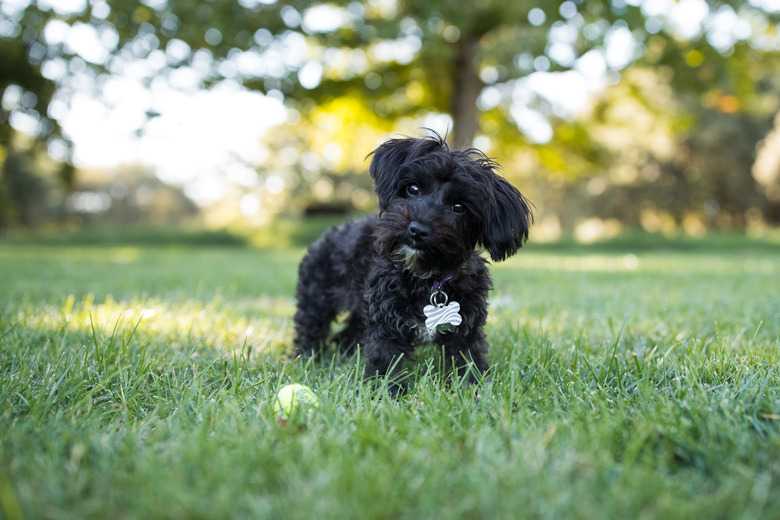
How To Potty Train A Yorkie Poo
DogsDog TrainingHow To Potty Train A Yorkie PooByKatherine MaloneUpdated Apr 29, 2021Purple Collar Pet Photography/Moment/GettyImagesWhen considering designer dog breeds, the Yorkie poo, a cross between a Yorkshire terrier and a miniature or toy poodle, is a popular choice. Yorkie poos are friendly, courageous, intelligent, and full of energy. Their intelligence is a benefit when it comes to training, but these pups also have a stubborn streak that may test your patience. However, with a good plan, consistency, and plenty of positive reinforcement, your patience will pay off and you'll soon have a fully potty-trained dog that can be relied upon not to have accidents.Create a scheduleCreate a scheduleCreating a plan and a schedule is key to your success in potty training your Yorkie poo. You can start training when your puppy is just 12 to 16 weeks old, but keep in mind her bladder control is not as strong at this age as it will be as she matures. Create a schedule for your dog that includes regular feeding with potty breaks after eating and nap time.You will need to schedule eight to 10 potty breaks for puppies under 14 weeks of age and six to eight breaks for puppies 14 to 20 weeks of age. When the dog reaches 30 weeks, she will have bladder control to only need three to four breaks each day.Decide where in your yard you want your puppy to eliminate and if possible, leave some feces in the grass. This lets your Yorkie poo know that this is the right place for her to go potty.Considering housetraining toolsConsidering housetraining toolsPuppy pads are a popular option as a housetraining tool. They are especially useful if you live in an apartment and don't have easy access to a yard or if you work full time and can't get home to let your puppy out. However, using puppy pads can lengthen the amount of time it will take to fully train your Yorkie poo as you are essentially teaching them that it is acceptable to eliminate indoors.Mechelle Brooks/iStock/GettyImagesCrates are another effective option. Puppies and dogs avoid eliminating in their den, so if your crate is not too big for your Yorkie poo, she won't eliminate in the crate if she can help it. Crate training offers additional benefits including giving your puppy a place where she can rest and making travel easier.Monitor and praise potty tripsMonitor and praise potty tripsFollow the schedule you set to take your Yorkie poo outdoors to go potty but don't forget to pay attention to her behavior so you can recognize the signs that she needs to eliminate. Yorkie poos often get restless when they have to go potty, circling and sniffing the ground. If you notice these behaviors, take your Yorkie poo outside immediately rather than waiting for her to have an accident. This sets her up for success and prevents setbacks in training.It is helpful to link potty breaks with a verbal cue such as, "Wanna go potty?" or "Wanna go outside?" This helps your dog associate the phrase with the process. Once you're outside, don't play or distract your Yorkie poo and give her enough time to sniff around and choose a spot if she needs to go. It is a good idea to keep her on a leash while potty training to keep her focused and to ensure you don't miss a behavior you can reward.Once she has finished eliminating in the desired location, offer plenty of praise and even offer a small treat. This feeds your Yorkie poo's desire to please you and helps the training process go faster.Yorkie poo training problemsYorkie poo training problemsAccidents will happen and this can be very frustrating for you. However, punishing your Yorkie poo is not effective and may even trigger her stubbornness. Never punish her physically or rub her nose into the mess. Clean up any accidents in the house with an enzymatic cleaner. This removes the scent that may draw your Yorkie poo to eliminate in the area again.Mary Swift/iStock/GettyImagesIf you catch her in the act, interrupt her and take her outside immediately to finish going potty. Once she eliminates outside, don't forget to praise her.ReferencesDr. Phillips Animal Hospital: How to Potty Train A Puppy: Your Comprehensive GuideUniversity of California, Davis School of Veterinary Medicine: House-Training Your PuppyAmerican Kennel Club: How To Potty Train Puppies: A Comprehensive Guide for Success
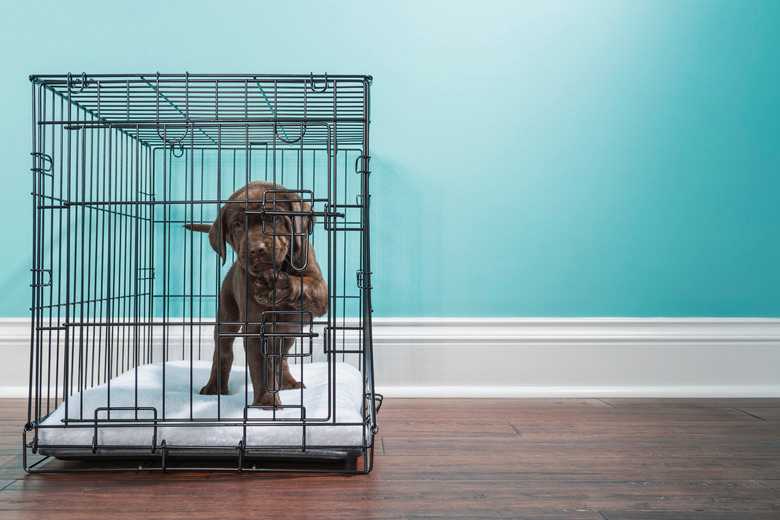
How To Crate Train My 5-Month-Old Puppy
DogsDog TrainingHow To Crate Train My 5-Month-Old PuppyByAndrea Lott HaneyUpdated Mar 23, 2021cmannphoto/iStock/GettyImagesCrate training a dog prevents damage to the home from chewing while the owner is away. Dogs have a natural instinct to find a sleeping den in the wild and to a properly trained dog, a crate becomes not a cage, but a den. Since dogs instinctively avoid eliminating in their dens, it helps house train the puppy. Leaving the dog out of the crate at night is an option, but you may wake up to an accident. For best results, begin crate training as soon as possible after the puppy's weaning, but even a 5-month-old puppy can benefit from crate training.www.anitapeeples.com/Moment/GettyImages1. Select a crateChoose a crate large enough that your dog, when grown, will be able to stand up and turn around in with room for a water dish. The crate will be larger than what your 5-month old puppy needs right now. If there's too much excess room in the crate, the puppy can potty in one end and still eat and sleep in the other, so add a partition to the crate to allow him only the room he needs at his current size. Some crates come with a partition grate to install. If yours doesn't, create a partition using a piece of wood or plastic secured to the crate's frame with twist ties or wire.2. Prepare the cratePlace the puppy's crate in a living room or other common area where she won't be ostracized from the family and will be able to hear the noises of the household while she's in it. Position the crate away from furniture or cabinets that she could reach with her paw. Place a small pillow and a fleece blanket in the crate that your puppy can us for sleeping once she becomes more comfortable.3. Feed your puppyUse the crate for your dog's feeding times twice per day when you can directly supervise him. Begin closing the door for up to two minutes, but open the door before he finishes his meal. Taking food in the crate and getting praise helps your puppy form a positive association to the crate. A 5-month-old puppy is in the "Flight Instinct Period" where he wants to test his limits and find some independence. Consistently praising your puppy for desired behavior during this stage helps him learn to please.4. Increase crate timeIncrease the amount of time your puppy spends in the crate with the door shut by a few seconds each time. Don't open the crate door if the puppy is whining or scratching. If she does start whining, wait until she has calmed down. Opening the crate door while the dog is displaying anxious or problematic behavior reinforces that behavior. For extreme anxiety and behavior issues, take your puppy to the vet and ask for advice from a behavioral specialist.Because a 5-month-old puppy instinctually begins chewing to help with the teething that occurs during this period, guard against unintentionally reinforcing anxious chewing to prevent a long-lasting destructive behavior.5. Offer additional rewardsBegin giving your puppy treats and toys as an incentive to go into the crate when it's not mealtime. Praise your puppy for going into the crate and stay in the room with your puppy when you close the door. Increase the time your puppy spends in the crate gradually while you stay in the room.6. Step out of sightLeave the room while your puppy is in the crate after he begins getting more comfortable spending some time in the crate while you are there. Stay where you can hear the puppy. Return to the room after about 15 minutes and open the crate only when and if he is not whining or scratching. Gradually increase the time you spend away from the room where your puppy's crate is located.7. Leave the puppy aloneLeave the house for short errands that take up to only a couple of hours while your puppy is in the crate. When you return, allow your puppy to stay in the crate for a short time before taking her out, remembering not to take her out of the crate while she is whining, scratching or anxious.8. Finish crate trainingAngela Auclair/Moment/GettyImagesGradually increase the amount of time you are away from home while your puppy is in the crate. Because a 5-month-old puppy has not reached full maturity, it won't be possible for her to last all day in the crate without eliminating. Allowing her to eliminate in the crate can delay house training. Plan a lunch break in your workday to walk your puppy or hire a dog walker. After your puppy is about 1 to 3 years old, he may be able to stay in a crate throughout the workday.Things NeededCrateTreatsDurable toysDog pillow and blanketReferencesUC Davis Breeder Caretaker Community Pages: Critical Periods in Puppy DevelopmentAmerican Kennel Club: How to Crate Train Your Dog in 9 Easy StepsUniversity of California, Davis Veterinary Medicine: Crate Training Your Puppy
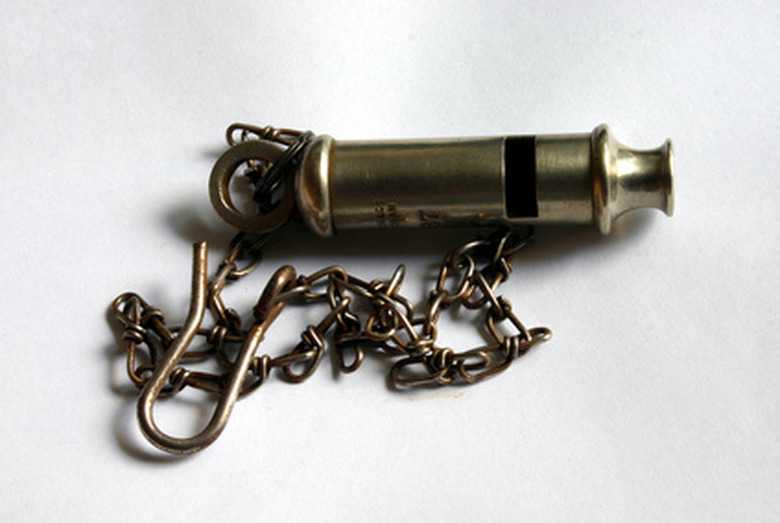
How To Adjust A Dog Whistle
DogsDog TrainingHow To Adjust A Dog WhistleByCarroll RoopApr 6, 2010 11:04 am ESTDog whistles are often used for training dogs. Dogs do not respond to the same sound pitches in the same manner and as a result, you may need to adjust the pitch levels on your dog whistle. Most all whistles come equipped with a screw or knob that will allow you to make adjustments. With a few quick turns, you can find out which setting your dog is most responsive to.Step 1Locate the screw or knob that adjusts the whistle's frequency. The screw is usually located on the top or side of the dog whistle.Step 2Turn the screw slightly and blow through the whistle. You want to perform the adjustment with your dog present as dogs react differently to different pitches.Step 3Stop turning the adjustment screw when your dog exhibits the strongest reaction to the sound coming from the whistle. This will be the optimum setting for training your pet.ReferencesCanine Concepts: Training With Dog Whistles
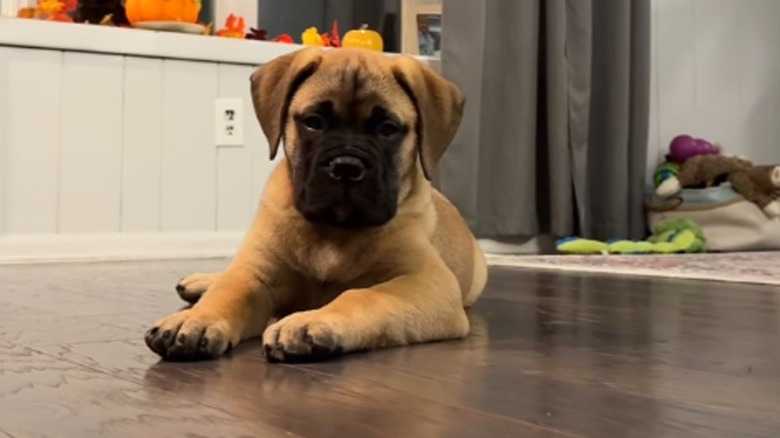
Bullmastiff Puppy Who Rings A Bell When He Wants To Go Potty Is One Smart Cookie
DogsDog TrainingBullmastiff Puppy Who Rings A Bell When He Wants To Go Potty Is One Smart CookieByCynthia AnayaJan. 20, 2026 12:25 pm ESTfonzeethebullmastiff / InstagramWatching your puppy go outside consistently after weeks of potty training is definitely something to celebrate, but the outdoor component is only one part of the training process. Signaling is another. While some dogs bark at the door, stare at their owners, or paw at their legs to let their humans know they need to go out without being taught, others require additional training to learn these behaviors. A woman trained her bullmastiff, Fonzee, to ring a bell to request his potty breaks. She set up a camera, filmed his proud moment, and shared the footage on TikTok in September 2025.The clip opens with Fonzee standing at the front door, where a table sits a couple of feet away with an antique-style shopkeeper doorbell attached. "Let's go potty," his mom says as she points to the bell. Fonzee paws at the bell, prompting her to open the door. He paws at the bell again for good measure, but the overachieving doesn't stop there. The door closes behind him, and moments later, he's back inside and rings the bell one more time, as if to celebrate his accomplishment. Or maybe he just likes the sound.Viewers found the scene delightful, with many complimenting his cuteness, intelligence, and obedience. "The goodest boy," one viewer said. "Let me make sure she heard it," another added. A third commented that "he needs to announce his presence!" Regardless of why he rang the bell multiple times, there's no denying that he is, in fact, a very good boy.Fonzee is more than just a smart puppyfonzeethebullmastiff / InstagramFonzee arrived at his forever home in early September 2025 when he was about 2 months old, just a few weeks before the clip above appeared on TikTok. In addition to learning how to ring a doorbell, he can relocate a small rug from one room to another, open under-bed drawers with his back, and sleep peacefully like a baby in his mother's arms. He also passed the "first time left alone, out of his crate" test in November and didn't destroy anything or have any accidents, despite having free rein of the living room.In early December, he experienced his first snow day. While some dogs aren't fans of the cold, wet feeling against their paws, Fonzee didn't mind one bit. He was a bit hesitant at first, but he soon began frolicking in it, eating it, and making as many footprints in it as he could. Perhaps fans will see videos of him showing off some more tricks on social media in the near future, while he's still young. After all, this loyal, intelligent breed must be trained as a puppy to avoid stubbornness issues later.When he's not playing with snow or toys or running around inside, Fonzee has been practicing his guarding skills in the backyard recently. The bullmastiff is one of the best protective dog breeds to help you feel safe, according to pet parents, so as he grows and gets bigger, he'll likely become a great guard dog for his mom. He just might learn to ring the bell to alert his mom that someone's at the front door, not just when he needs to go out.
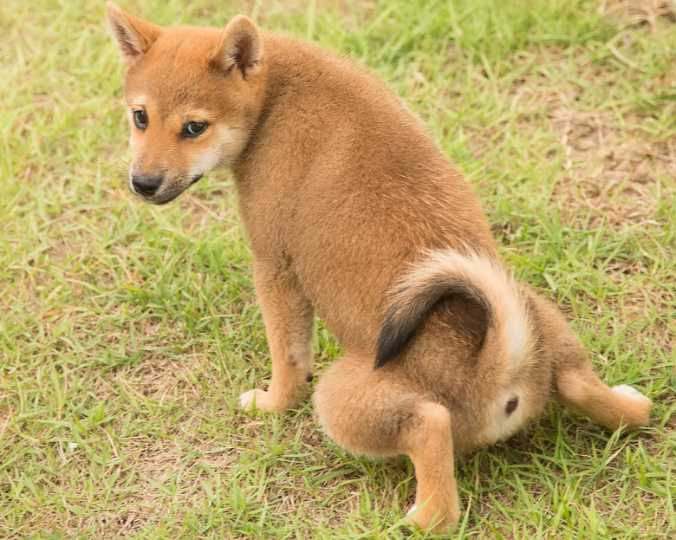
What Is The Average Time For Housebreaking A Puppy?
DogsDog TrainingWhat Is The Average Time For Housebreaking A Puppy?ByElle Di JensenJan 23, 2010 10:15 am ESTSegmed87ru/iStock/Getty ImagesPotty training is one of the less enjoyable aspects of adopting a puppy, but it is one of the first things you'll want to teach her. Don't despair if, after a week of instruction and reinforcement, she's still leaving puddles and packages in inappropriate places. The Humane Society of the United States advises puppy parents that housetraining can take several weeks on the average, and some breeds take longer than others. Additionally, every puppy has a unique personality, making it difficult to pinpoint a specific time frame for housebreaking all dogs. If you stay positive and have patience, your precious pup will catch on.Distinctive PersonalitiesDistinctive PersonalitiesJust like people, dogs each have their own personalities with traits and quirks that make it easier or more difficult when training them. Sometimes those traits are related to the breed. Sometimes it's simply that the pup is stubborn, strong-willed or needs to be taught the potty training ropes in a different way than others. The American Society for the Prevention of Cruelty to Animals says that some puppies simply catch on easier, but it's normal for training to stall or even regress. Give your pooch credit for being her own person. Look for what works and what doesn't with her individual personality, and don't hold her to a particular timetable for becoming fully housetrained.Some Breeds Are EasierSome Breeds Are EasierIf you're looking to adopt a dog that is easy to potty train, you may want to stick with larger breeds. The Canine Information Library says they are genetically closer than small and toy breeds to primitive dogs, who instinctively avoided eliminating in their dens. That's why breeds such as Doberman pinschers, chow chows, Norwegian elkhounds, poodles and Shiba Inus have a reputation for quick housetraining. For prospective pooch parents who prefer a smaller dog, Cavalier King Charles Spaniels are known for being among the easiest to train. If you opt for a breed that's smaller than that, even with a beagle or a pug, you may end up potty training for up to a year.Steps to Speed Up HousebreakingSteps to Speed Up HousebreakingMost pups respond well to basic housebreaking methods and, if you follow through with them and stay consistent, your pup's potty training program should be completed more quickly. Designate a potty place, whether it's a piddle pad in the laundry room or a specific corner of the backyard, and always take your puppy there when she needs to relieve herself. "The Doctors Book of Home Remedies for Dogs and Cats" advises getting your pup on a schedule, too. The rule of thumb is that a pup can hold her bladder one hour for every month of her age, but during training it's wise to take her to the designated potty spot every two hours, as well as first thing in the morning, after meals and drinking, after playing and last thing before bedtime. Also, take your pup to her elimination spot if she shows signs that she has to "go," such as appearing anxious or nosing around. Consistency and reinforcement will help the training sink in.Positive Reinforcement, Not PunishmentPositive Reinforcement, Not PunishmentWhen it comes to housebreaking puppies, the University of Tennessee College of Veterinary Medicine says that punishing pups for accidents isn't effective. Swats with a newspaper or rubbing your pup's nose in her mess will only frighten and confuse her, and may even lead her to believe it's the act of elimination itself rather than the spot she's in that is upsetting you. Instead of focusing on accidents, concentrate on the times she gets it right. Praise her excitedly every time she eliminates in the designated spot. Giving her a treat positively reinforces that your pup is on the right track. Have treats on hand so you can do it immediately, though. The Humane Society of the United States says it's vital to reward your pup right away to reinforce eliminating in the proper place.ReferencesThe Canine Information Library: Easiest Dog Breeds to HousebreakThe Humane Society of the United States: How to Housetrain Your Dog or PuppyASPCA: House Training Your PuppyUniversity of Tennessee College of Veterinary Medicine: Tips on House Training Puppies: The Dos and Don'tsASPCA: Living With Small DogsThe Doctors Book of Home Remedies for Dogs and Cats; the Editors of Prevention Health Books
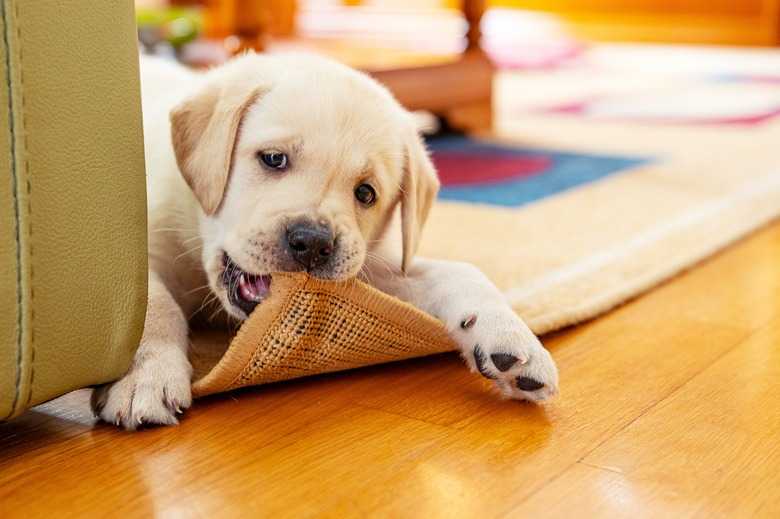
How To Prevent A Dog From Chewing On Furniture
DogsDog TrainingHow To Prevent A Dog From Chewing On FurnitureByCatherine Holden RobinsonUpdated Apr 23, 2021Stefan Cristian Cioata/Moment/GettyImagesThe arm of your sofa has little protection from an enthusiastic pup with a fervor for chewing. Dogs aren't terribly picky when it comes to inappropriate chewing. It's not unlikely that more than a few possessions have been lost to the choppers of the family dog. Destructive chewing can be damaging to any household items, especially furniture, but proper training and conditioning can prolong the life expectancy of your favorite arm chair.Understanding dog chewingUnderstanding dog chewingDogs have an innate need to chew, according to the ASPCA. Dogs chew to improve the strength of their jaw and to clean their teeth. Puppies will chew to alleviate the pain associated with teething. Your dog may become a chewer if he is bored, if he's seeking food because his caloric intake has been reduced, and if he's experiencing anxiety.Separation anxiety may cause your dog to seek something to chew while you're away, explains The Humane Society. Your dog won't know what is ok to chew on and which are inappropriate items, so make sure you're clear about what the appropriate items are when you begin training.If the reason your puppy is a chewer is because they are teething, consider a frozen toy or other teething dog chews to help sooth the gum pain. Puppies simply don't know what they can or can't chew on, so if your puppy can reach the remote control they will chew on it. Young dogs have to learn what is ok to chew on. Never provide inappropriate items to chew on during playtime, even if it's cute, because it will simply confuse them.Provide good chew toysProvide good chew toysNever offer an old shoe, garment, or pillow for your dog to chew. He cannot differentiate between the "good dog" chews and the "destructive behavior" chews. Instead, give him his own chew toys, and consider a food-stuffed toy like a Kong to keep him busy for a long period of time. Kongs are durable rubber toys that can be filled with kibble or treats like peanut butter and they can keep a dog or puppy chewing for a long time as they lick and chew to get it out.If your dog has a propensity for destructive chewing, don't allow him out of sight. Spend time with him engaged in play and make sure he gets enough physical exercise and mental stimulation to keep him busy. If you catch him in the act, use a vocal command such as "no chewing," or "uh oh," and immediately give him his own toys. Praise him when he's chewing his dog toys, and offer him a treat to reinforce the positive act of chewing something other than the couch.Why pets chew furnituretenkende/iStock/GettyImagesWhy pets chew furnitureChewing behavior is a natural instinct and urge in dogs, so you can't expect to stop your dog's chewing habits completely. In the wild, gnawing on sticks fulfill a dog's need to chew. In your living room, your dog may chew the leg of a table, the leg of your couch, or the arm of your favorite recliner. The wood table leg may fulfill his ancestral need to chew wood found in the wild, and sucking the fabric from an arm chair may mimic the comfort your dog felt nursing as a young pup.This may become a real issue if your dog was weaned too young. Consider talking with your vet about the benefit of seeing a dog behaviorist if your dog begins sucking the fabric parts of your furnishings. Chewing wood may lead to splinters in your dog's gums, and if he's tearing apart the arms or cushions of couches or chairs, he could ingest fabric or batting, which could lead to intestinal distress or be a choking hazard.Using bitter taste deterrentsnortonrsx/iStock/GettyImagesUsing bitter taste deterrentsLiquid deterrents, commonly referred to as "bitters," may cause your dog to redirect their behavior before they start to chew your couch. Sprays with a bitter apple scent simply don't taste good, so most dogs want to avoid them. Bitter sprays shouldn't be used in place of good training, but can supplement your training efforts. Spray the taste deterrent onto a small piece of washcloth and allow your dog to take it into his mouth.He should spit it out immediately. If he doesn't, it's unlikely spraying the furniture will be much of a deterrent. If he does spit out the cotton, spray the furnishings liberally, but you may want to test the bitters first in an area that cannot be seen, such as the back of the couch, to make sure the spray won't damage your fabric. Provide items for appropriate chewing like antlers, durable rubber toys, or rawhides.ReferencesThe Humane Society of the United States: Chewing: How to Stop Your Dog's Gnawing ProblemASPCA: Destructive Chewing
What Treats Are Good For A Puppy Yorkie?
DogsDog TrainingWhat Treats Are Good For A Puppy Yorkie?ByElizabeth TumbarelloUpdated Jun 28, 2011Yorkshire terriers, or Yorkies, are small dogs noted for their energetic presence and long, silky coats. Like most dogs, Yorkie puppies are eager to please and learn. Using treats as a supplemental training tool can encourage the Yorkie's natural desire to perform. Choosing the right treat for puppy Yorkies is largely a matter of reading labels and determining your dog's unique tastes.IngredientsIngredientsA good dog treat for a Yorkie puppy contains little or no sugar. Dogs don't require sugar in their diets and treats with added sugar can contribute to health problems later down the road, such as diabetes. Similarly, dyes are unnecessary. Dogs don't care what their treats look like, as long as they taste good. The brand isn't as important as the ingredients. Look for treats containing minimal grains or whole grains and genuine animal products on the label — instead of artificial flavoring or meat by-products.Personal PreferencePersonal PreferenceGood dog treats are largely a matter of personal preference. Not every Yorkie dog likes every flavor of treat – some dogs snub peanut butter, for example, while others forgo lamb. Even treats of the same flavor with different additional ingredients can cause a dog to turn up its nose. Some dogs prefer chewy-textured treats — while others like biscuit-style snacks. Experiment to find the best treat for your Yorkie puppy.ConsiderationsConsiderationsSome human foods can be used as dog treats for a Yorkie puppy. Cooked or raw meat, some fruits and some vegetables can make enticing snacks for your dog. Additionally, homemade dog treats are prepared using foods found in most grocery stores. Certain foods, such as chocolate, are deadly to dogs. If you opt to use people food to make your own dog treats, consult a veterinarian to ensure the safety of the ingredients.WarningsWarningsAvoid feeding your Yorkie puppy too many treats of any kind in one day. Treats still have calories and too many treats can contribute to obesity. Treats are a supplemental food and do not meet 100 percent of a dog's nutritional requirements. Feeding a dog a diet consisting entirely of treats is detrimental to its health.In addition, limit the number of liver treats you provide to your Yorkie pup. Too many liver treats can lead to a build up of vitamin A and lead to a condition called hypervitamintosis, or vitamin A overdose. While you should exercise caution, the threat is minimal. The amount of vitamin A needed to cause a toxic buildup of vitamin A requires feeding large amounts of the vitamin over a period of weeks, even for a small dog like a Yorkie.ReferencesAKC: Yorkshire Terrier"Nutrition for Veterinary Technicians and Nurses"; Ann Wortinger; 2007"Clinical Textbook for Veterinary Technicians"; Dennis McCurnin, Joanna Bassert; 2009"Petfinder.com The Adopted Dog Bible"; Petfinder.com, Kim Saunders; 2009
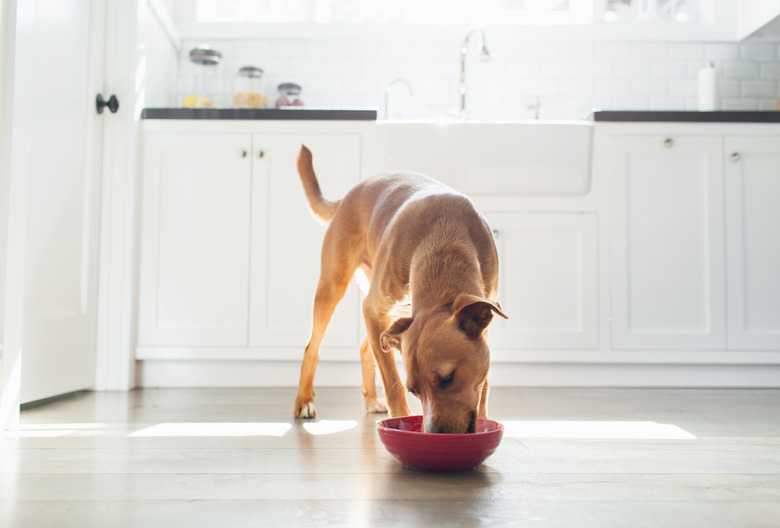
A List Of Which Raw Vegetables Are Good For Your Dog
DogsDog TrainingA List Of Which Raw Vegetables Are Good For Your DogByVanessa SalviaUpdated Aug 10, 2020Grace Chon/Image Source/GettyImagesYou're sitting in front of the television snacking on something healthy, like baby carrots or celery sticks, and your dog wants some too. Is it OK to give raw vegetables to your dog? The good news is that there are many dog-friendly vegetables, and while humans benefit from eating raw vegetables and fruits, dogs can too.Nutrients in dog-friendly vegetablesNutrients in dog-friendly vegetablesThe American Society for the Prevention of Cruelty to Animals says that there are six major groups of nutrients that dogs need in order to be healthy: water, protein, fats, carbohydrates, vitamins, and minerals. Most vitamins and minerals cannot be synthesized in the body and are therefore essential in the diet. Nutrients in dog-friendly vegetables don't typically include protein, carbohydrates, or fat, although some vegetables can contain some of these things.Vegetables to avoidVegetables to avoidWhile most vegetables won't harm dogs, the American Kennel Club says some of them should still be avoided. Asparagus, for instance, is too tough to be eaten unless it's cooked, and once it's cooked, it loses the nutritional benefits. Mushrooms are best avoided altogether so your dog doesn't accidentally ingest any toxic varieties. Broccoli (and related cruciferous or leafy vegetables) is OK in only small quantities because it can cause gas, and hard broccoli stems might get stuck in a dog's throat.Hazardous vegetables to avoid feeding to dogs include:Anything in the chive family (garlic, leeks, onions, chives)HorseradishOnionsRhubarbShallotsTaroWasabiWatercressGreen leafy vegetablesGreen leafy vegetablesGreen leafy vegetables include:SpinachKaleCollards and other greensCabbageLettuceBok choyAll of these are OK but come with some warnings. Cabbage can cause an excess of gas, and aren't dogs already gassy enough? Spinach too should be fed in moderation. It contains an element that can lead to kidney damage and blocks the body's ability to absorb calcium, although your dog would probably have to eat a very large amount of spinach for this to become a problem.Dogs can eat bok choy, according to Link AKC, although take note of the effect it has on your dog. It might be grouped with the gas-causing vegetables that you might want your dog to avoid.Root vegetables for dogsRoot vegetables for dogsDogs can safely eat most root vegetables, but there are a few exceptions. Root vegetables are considered to be any vegetable that grows underground, including:CarrotsPotatoes, yams, sweet potatoesBeetsParsnips, turnips, rutabagasRadishesOnions, garlic, and leeks are no-nos. All alliums are toxic to pets. Carrots, however, are an excellent low-calorie, high-fiber snack for dogs. They love the crunch (which is also good for cleaning their teeth), and they get some vitamin A.The Whole Dog Journal warns against feeding an abundance of root vegetables because they are starchy and high in sugar. If your commercial dog food already contains root vegetables, and many do, your dog may already be getting enough.Other considerations and warningsOther considerations and warningsIt is easy for dogs to consume too much vitamin A. This can cause bone and joint pain, brittle bones, and dry skin. Excess vitamin D may result in very dense bones, soft tissue calcification, and kidney failure. If you know your dog is a fan of vegetables that provide an abundance of these nutrients, make sure you're feeding her only moderate amounts.Vegetables safe for dogsVegetables safe for dogsRaw vegetables that are safe for dogs, according to the American Kennel Club, include:BroccoliBrussels sproutsCarrotsCeleryGreen beansPeasSpinachIf you think your dog has eaten something harmful, call the American Society for the Prevention of Cruelty to Animals's poison control center at (888) 426-4435.ReferencesAmerican Society for the Prevention of Cruelty to Animals: Animal Poison ControlWhole Dog Journal: What Vegetables Can Dogs Eat?Link AKC: The Ultimate Guide to Safe & Unsafe Produce for DogsAmerican Kennel Club: Fruits and Vegetables Dogs Can or Can't EatAmerican Society for the Prevention of Cruelty to Animals: Dog Nutrition Tips
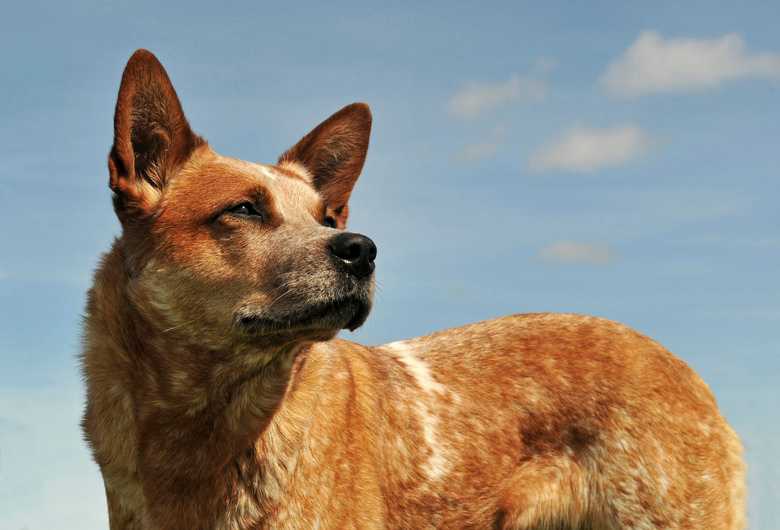
How To Train A Red Heeler
DogsDog TrainingHow To Train A Red HeelerByJane MeggittUpdated Jul 6, 2011cynoclub/iStock/Getty ImagesIf you're training a red heeler or a blue heeler — color types of the Australian cattle dog — it's important to know the history of this working breed. These high-energy dogs require lots of exercise, so they need active owners. While the ACD is highly trainable, he needs a strong leader. Otherwise, he'll train you, not the other way around.Australian Cattle DogAustralian Cattle DogThe breed's name explains it. Australian cattle dogs were developed Down Under to work all day herding cattle. A cattle drive might last for weeks through rugged, harsh territory. Heelers are tough, independent and extremely smart canines who learn quickly. The typical ACD is territorial but loyal to his person. The Australian Cattle Dog Rescue website says the breed is suited to "active people who view training and working with a canine companion as a way of life." If that's more of a time and energy investment than you can give a dog, consider a less demanding breed.Early SocializationEarly SocializationWhile early socialization and puppy kindergarten classes are important for every canine, they are especially necessary for dominant breeds like the Australian cattle dog. Some ACDs are aggressive with strangers, so acclimating a puppy to different people and situations early on can help avoid that later aggression. However, you must take it slowly and not overwhelm an Australian cattle dog. He will never be the sort of dog who just loves everybody — but he can be trained to tolerate everybody. As puppies, ACD are even mouthier than other young canines. If he's biting you, give him something appropriate to chew on, not your hand or other body part.Australian Cattle Dog TrainabilityAustralian Cattle Dog TrainabilityBasic training for an ACD is similar to that of any other dog. He must learn the basic commands — sit, stay, down, heel and come. How he learns might differ from the average dog. An ACD will go to the ends of the earth for a firm leader. As long as you're consistent, the ACD is easily trained and just soaks up knowledge. That strength doesn't mean you physically or emotionally dominate the dog in any way. Instead, use positive reinforcement, such as effusive praise or treats, when he does what's expected. Methods such as clicker training are often effective with an ACD. Because he's a herding dog, it's his nature to nip at cattle to keep them moving. He can transfer this behavior to kids in the household or other pets. Nip the nipping in the bud. A sharp vocal reprimand should suffice.Lots of ExerciseLots of ExerciseLots of exercise is necessary not just to address all the heeler's pent-up energy but to keep him out of trouble. Separation anxiety is common in the breed, so if you must leave one alone for extended periods, introduce him to crate training as a puppy. Otherwise, you could come home to mass destruction. In addition to physical activity, the ACD needs mental stimulation. He can master and excel at nearly any canine sport, so see which ones best suit the two of you.Herding TrainingHerding TrainingHerding comes naturally to ACDs. If you don't have cattle, find a club or trainer with available livestock. You can find trainers through the American Kennel Club, which holds certified herding events. If you're not familiar with herding, you have as much — maybe more — to learn than your ACD. Before you start training, it's crucial that your ACD knows all of the basic commands and obeys them immediately. You must ensure that your ACD views the herd as individuals, rather than a group, so he knows to work one animal at a time. Herding takes a team: you and your ACD. He takes direction from you, so you must know enough to give him the correct cues.ReferencesAustralian Cattle Dog Rescue: HomeAustralian Cattle Dog Rescue: Frequently Asked QuestionsAustralian Cattle Dog Club of America: Breed and Working Standards for the Australian Cattle DogVetstreet: Australian Cattle DogAmerican Kennel Club: Why Does My Dog Do That? Or Why Does My Handler Do That?
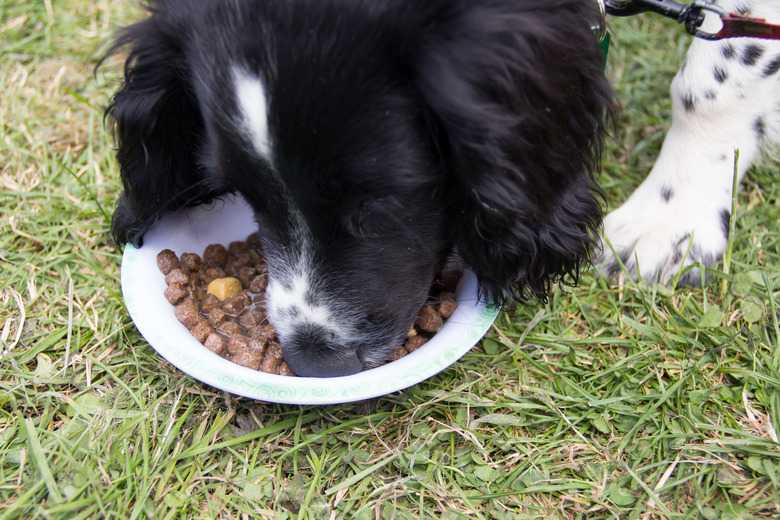
How To Feed A Small Dog With No Teeth
DogsDog TrainingHow To Feed A Small Dog With No TeethByBarbara Bean-MellingerUpdated Aug 31, 2021Dental issues can affect all dogs especially as they age, but small dogs are particularly prone to tooth decay that can cause them to lose their teeth. Of course, dogs with no teeth still require nutritious meals, but chewing food they used to eat can become a problem. The secret is to make that food or any food easy for them to eat. Fortunately, that's not hard to do.Nikita Burdenkov/iStock/GettyImagesWhy small dogs lose their teethWhy small dogs lose their teethSmall adult dogs have 42 teeth just as large adult dogs do. The difference is that while these teeth fit into the mouth of a large dog, it's a tight squeeze fitting them into a small dog's mouth. With the teeth right up against each other, food that gets wedged between teeth isn't likely to come out on its own and may stay there, decaying in place and causing the teeth that are trapping the food to decay too.Brushing the teeth helps remove food and the plaque that builds up on them. Many dogs dislike having their teeth brushed, however, and they aren't used to it, so their owners don't brush them very often if ever. Some owners aren't even aware that gum disease and tooth loss can be prevented by brushing their dog's teeth or taking the dog to a vet to have plaque removed under anesthesia. If you inherit or adopt an older small dog, he may have tooth loss for which you aren't responsible, but you must still deal with the consequences of him having difficulty eating.Soften or grind kibble for dogs with no teethSoften or grind kibble for dogs with no teethIf your dog has always enjoyed hard, crunchy kibble, you can continue to feed it just by making the kibble easier to chew. This can be done by adding a little water to the food in the dish. Measure the same amount of kibble as before, assuming you have been careful to give the amount of food recommended by your vet. Small dogs can become overweight very easily by eating too much food, which leads to other health problems besides missing teeth. If you have been overfeeding even a little bit, cut back gradually until you reach the recommended amount.Warm water will soften the kibble more quickly than cold water, but you don't need to boil it, as warm tap water will work. Use 1 teaspoon of warm water at a time so you don't accidentally add so much that the kibble is swimming in the liquid. Sprinkle the water over the pieces of kibble, let it sit for five to 10 minutes, and then smash the pieces a bit with the back of a spoon, adding another teaspoon of water if necessary. Some people like to use broth instead of water, which is fine as long as it isn't too cold. Keep in mind, though, that dogs who are used to eating dry kibble aren't expecting the taste of broth just because their food is now softer, so you don't need to go to the expense and time of using something other than water.Another method is to grind the kibble in a food processor. Try grinding the kibble into smaller pieces first and see if your dog can eat it that way. It might be easier to pick up the food if it is in small pieces rather than finely ground. If that still doesn't work well, grind the kibble smaller. Experiment with grinding it dry versus adding water 1 teaspoon at a time before or during grinding, as the liquid may help the ground kibble stick together and be easier to eat than finely ground bits.Switch to or mix in wet foodEileen Groome/iStock/GettyImagesSwitch to or mix in wet foodAnother option is to switch to wet food instead of kibble. Be sure to read the labels on cans of wet food since some contain more fillers than healthy ingredients, and ask your vet for recommendations. Wet food can be more expensive than dry food, however, and if you want to cut the cost of switching food, it's fine to mix the kibble with some wet food. The moisture from the wet food will help soften the kibble, so you may not need to add water.Any time you change a pet's diet, it's important to introduce the new food gradually. Giving new food too quickly can cause stomach upset and/or diarrhea, and the newness may make a dog hesitant to give it a try. Experts recommend substituting wet food for one-fourth of the kibble the first day, increasing to 50/50 by the third day, three-fourths wet food by the fifth day, and all wet food by the end of one week. If you want to mix the two, stay at the ratio you prefer and that your dog seems to like and is able to eat.Prepare your own fresh foodPrepare your own fresh foodStill another option is to make healthy food for your dog, which can be raw, cooked, or a combination of both. Discuss your dog's nutritional needs with your vet or a canine nutritionist first, however, to be sure you're feeding the right amounts of protein, vegetables, and starches that will provide the proper vitamins and minerals, which are different for dogs than humans. You'll need to be precise about measurements just as when feeding kibble or wet food so your dog doesn't overeat.Carol Yepes/Moment/GettyImagesMake sure your homemade food is soft enough and in small pieces or grind or puree it for your dog with no teeth. Also, learn about the foods that are toxic to dogs, including common human fare, like garlic, onions, grapes, raisins, and avocados.ReferencesCaring for a Senior Dog: What to Feed an Old Dog With No TeethLittle Dog Tips: How to Add Water to Your Dog's Food: Benefits of Adding Water to Dry KibbleAmerican Kennel Club: Do Small Dogs Have More Dental Problems Than Large Dogs?
How To Get A Dog To Sleep In His Own Bed
DogsDog TrainingHow To Get A Dog To Sleep In His Own BedByBarbara Bean-MellingerUpdated Apr 23, 2021Prystai/iStock/GettyImages"My dog won't sleep in his bed anymore — what gives?" you may wonder. Maybe you bought your dog a cushy, cozy bed all his own and he won't sleep in it. Or maybe he used to sleep in it but doesn't want to anymore. Whether your dog is partial to sleeping in your bed, on the floor by your bed, on the couch, or anywhere but his own bed, there are ways to get him to sleep in his own bed and even enjoy it.Make your bed less attractiveMake your bed less attractiveIf your dog has been sleeping in your bed with you, you'll need to be patient as you break this habit. Dogs are pack animals, and you are their pack. They don't like being alone, and being in your bed gives them warmth and comfort. So the first thing you need to do is to make your bed less desirable. When your dog climbs into your bed, don't shower them with the love and affection they expect. Tell them to go to their bed, crate, or whatever you call the spot you've set up for them. When they obey, that's when you bring on the praise, hugs, kisses, and affection. You will probably need to repeat this many times until they get the idea that jumping into your bed gives them no rewards while going to their own bed wins them the praise and affection they seek.Turn your dog's bed into the place to bePolonina Irina/Moment/GettyImagesTurn your dog's bed into the place to beNow you need to make your dog's bed the best spot in the universe. Put his favorite toys in or next to the dog's bed. Add a dog bone, perhaps, or other treats he doesn't get on a regular basis. The idea is to make your dog's bed more desirable than your bed. It will help if your dog's bed is next to your bed, or at least in the same room. That way, your dog, who wants to be near you all the time, can see you, hear your voice, and be comforted by knowing you are close by. It could also help to put an article of your clothing in his bed, like a T-shirt you can part with, because it will have your scent on it.Match the bed to your dog's sleeping styleMatch the bed to your dog's sleeping styleWhen humans look for new beds for themselves, they go to mattress stores and try them out. Lay flat on their backs. Turn sideways if they're side-sleepers, or on their stomachs if that's how they slumber. Determining your preferences for soft or firm mattresses is the key to getting the bed you will want to sleep in every night.It's the same goal for dogs; their beds need to fit their sleeping styles. If you've had your dog for a while, you likely know how she sleeps. Some dogs like to lean against something while they sleep. Some prefer soft and warm beds, while for others, a hard, cool surface does the trick. Take your cue from observing your dog. If you often see him sprawled on the tile floor, look for a hard, cool bed. If she burrows into any blankets she can find, be on the hunt for warm and cozy beds.Beds are sized for small, medium, and large dogs and have small, medium, and larger prices. But it isn't only the dog's size that matters. A tiny chihuahua that sleeps with legs out in all directions might need a bigger bed than one intended for small dogs. On the other hand, a dog that is comforted by feeling the sides of the bed enveloping him all around might like a smaller bed than is customary for his size. And the dog that rolls from side to side in her sleep needs room to roll on both sides.Understand the unique needs of senior dogselectravk/iStock/GettyImagesUnderstand the unique needs of senior dogsAs dogs get older, they tend to get the ailments that accompany age, such as arthritis, hip dysplasia, and more. Dogs that have sore joints or muscles may appreciate beds with orthopedic features that offer more support. Look into all that's available to find what's best for your dog. There are couch-type beds with high sides that dogs can lean their heads, legs, and back on; heated beds; memory foam surfaces; raised platform beds; and low-to-the-ground beds for dogs that have difficulty stepping up onto a higher bed. Be sure the bed you choose has a removable, washable cover to keep the bed clean and hygienic, especially since many senior dogs experience incontinence at least occasionally. There are also beds made of PVC plastic so the whole bed can be hosed down.ReferencesAmerican Kennel Club: How to Teach Your Dog to Go to Their PlaceAnimal Wellness Magazine: How to Train Your Dog to Sleep in His BedCuteness: The 6 Best Beds for Senior DogsCuteness: 6 Major Benefits of Adopting a Senior DogCuteness: Is Your Dog a Picky Sleeper? The Best Beds for Dogs of Every Sleeping Style
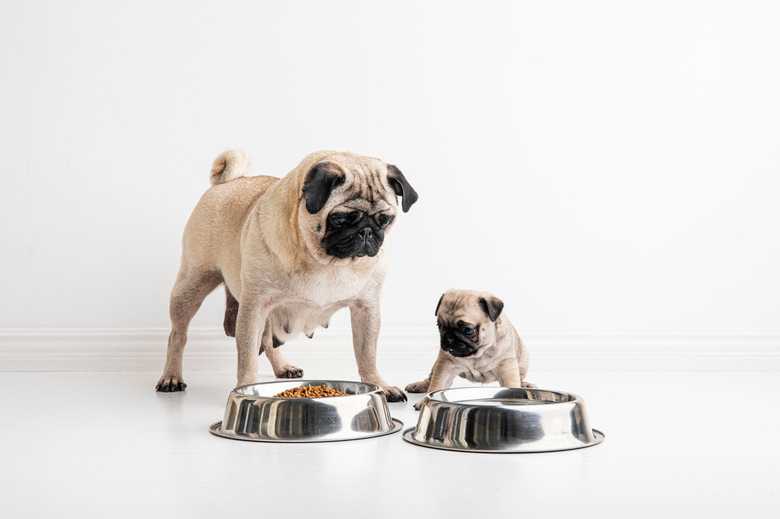
When To Start Feeding Puppies Solid Food?
DogsDog TrainingWhen To Start Feeding Puppies Solid Food?ByKylie Ora LobellUpdated Feb 13, 2021We may receive a commission on purchases made from links.Cuteness may earn compensation through affiliate links in this article.Having a puppy is a big responsibility. Not only do you have to do obedience training, but you also have to make sure they're eating the right foods at different stages of their life so they grow up healthy and strong.Unlike adult dogs, they need a higher caloric intake as well as certain nutrients to ensure they are getting enough nutrition. They are much more fragile than adult dogs and need pretty constant supervision.If you've just brought home a new puppy, here are some tips on when you should start feeding him solid food.Back in the Pack dog portraits/Moment/GettyImagesWhen do you feed a puppy solid food?When do you feed a puppysolid food?Your dog will exclusively drink from his mother's milk for the first month of life. If your dog is having trouble latching, can't reach the milk because the other puppies are too aggressive, or he isn't growing, then you will need to buy a milk replacer and feed your pup manually one to six times per day, every day. Keep in mind that your puppy needs to gain 5% to 10% of his body weight daily.Then, you can feed your puppy solid food when he's around four weeks of age. You can mix wet or dry puppy food with an equal serving of puppy formula/milk replacer. This is because your dog still needs those nutrients and the milky mix is easier for him to chew. As your dog starts to grow teeth around the first four to six weeks, then you can slowly decrease the amount of moisture in the mix and just feed him solid food instead. Up until your dog is six months of age, you need to feed him three to four times per day. After that, you can decrease it to once in the morning and once at night, like regular adult dogs.Here is how much to feed your puppy every day based on his weight:If he weighs 5 pounds, thenfeed him ½ cup to 5/8 cupsIf he weighs 10 pounds, feedhim ¾ cup to 1 cupIf he weighs 20 pounds, feedhim 1 ¼ cups to 1 ¾ cupsIf he weighs 26 to 50pounds, feed him 2 to 2 2/3 cupsIf he weighs 76 to 100pounds, feed him 3 1/3 to 4 ¼ cupsWhen your dog becomes mature – which is when he is fully grown – then they can start eating adult food. This is around one year of age, but if your dog is a larger breed, then it could take up to two years. You'll need to ask your veterinarian if your dog is at his adult size yet.What food is best for different breeds?Angela Kotsell/iStock/GettyImagesWhat food is best fordifferent breeds?The truth of the matter is that breed-specific dog food is usually nothing more than a gimmick. As long as you feed your dog high quality food that is appropriate for his stage in life, then he should be fine. He needs to eat puppy food when he's young, for instance, because it will contains all the nutrients he needs to grow up healthy. Plus, it's more caloric than adult food, and he needs those calories.If you notice that your dog is having certain health issues, then you can always ask your vet if you need to switch to a different type of food. For instance, if you have a Golden Retriever, he might have joint issues if his diet is very high in calcium or calories. You can inquire with your vet about what food would be best for your Golden Retriever in this case.What should puppy food contain?What should puppy foodcontain?Good puppy and adult dog food will contain ingredients like meat, grains, vegetables, and fruit, and it won't contain unnecessary things like corn, soy, corn syrup, artificial colors, MSG, artificial flavors, vegetable oil, animal by-products, salt, or sodium nitrate. Typically, wild caught fish is better than farmed fish as well. Even though high-quality dog food is going to cost more, it is going to be better for your puppy and could help him avoid health issues later on.Finding the best puppy foodRobby Sheets/iStock/GettyImagesFinding the best puppy foodIf you're searching for good, high-quality puppy food, then try Blue Buffalo Life Protection Formula Natural Puppy Dry Dog Food, which comes in two flavors: chicken and brown rice or lamb and oatmeal. It contains real chicken, along with wholesome vegetables and fruits, along with DHA and ARA, which are fatty acids that are found in a mother's milk support retinal health and cognitive function. It contains no artificial flavors, chicken by-product meals, wheat, corn, or soy.Another solid option is Taste of the Wild Dry Dog Food With Roasted Bison And Roasted Venison, which contains real meat as the no. 1 ingredient. It also has DHA for brain and vision, and no grains, corn, wheat, artificial flavors or colors, or preservatives. It has proprietary probiotics and it comes in small kibble so that your puppy can easily chew and digest it.ConclusionConclusionYou can start feeding your puppy solid food around one month of age, and give him high-quality food while you're at it. Then, he will develop accordingly and live a long and healthy life.ReferencesPet Place Weaning AdvicePet Side Tips
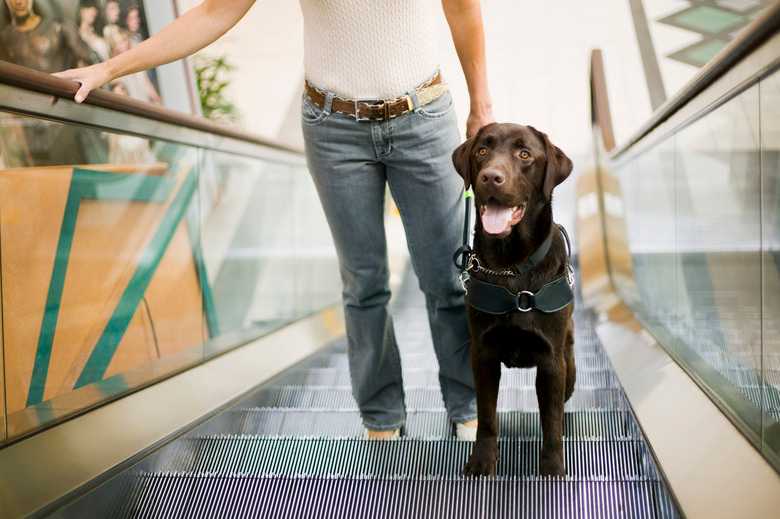
How Can Guide Dogs Help Blind People?
DogsDog TrainingHow Can Guide Dogs Help Blind People?ByJulie Thomas-ZuckerUpdated Mar 23, 2021Jim Craigmyle/Stone/GettyImagesA guide dog can help a blind person in many ways, beginning with giving unsighted people independence. Many blind people can't get around without the help of a well-trained guide dog. As with most types of service dogs, guide dogs go through extensive training. It takes between 2 and 5 years for a guide dog to be ready to be matched with a disabled person. Training includes basic obedience and service dog training. Providing protection and companionship are other ways these dogs help blind people.Guide dog trainingGuide dog trainingService dog training takes a minimum of 2 years to complete. In addition to basic obedience, the dog learns how to move forward and to turn right and left on command. More advanced commands include learning how to stop before crossing a street, leading its blindfolded handler around overhangs or other obstacles safely, and retrieving dropped objects. Also, during this time the dog learns only to guard its handler. After successful completion of training, the dog is matched with a blind person.Despite their extensive abilities at the end of the training, there are some things that guide dogs cannot do. They cannot be expected to establish a route to a new location, nor can they read traffic signs or signals. They take direction from their handlers and offer warnings of any dangers or obstacles along the route.Under the Americans with Disabilities Act, establishments are not allowed to refuse service to individuals with a service animal. While all guide dogs must be exceptionally well trained to fulfill their role, certification is not required. Many guide dog schools will provide an identification card or certification to help minimize hassles, but these do not offer official legal protections for the handler. Service dogs are legally allowed to enter establishments unless they are posing a real danger. Some states may have additional laws pertaining to guide dogs and other service animals.Types of service dogsJupiterimages/Stockbyte/Getty ImagesTypes of service dogsAny well-trained dog can become a guide dog, although some common guide dog breeds for the blind include Labrador retrievers, golden retrievers and German shepherds are the most popular breeds. Standard poodles are another popular option, especially for individuals who have allergies. This is mainly because they have a strong instinct to assist their owners.Guide dogs must be in good health and free from any genetic health conditions. They must also have a personality that fits the job. Characteristics to look for in guide dogs include a high level of confidence, friendliness, biddability and adaptability. Trainers also look for dogs that are focused and not easily distracted. Another important requirement for a guide dog is that it be large enough to be fitted with a harness and leash. The blind person must be able to reach the harness comfortably.Good human candidatesBoris Djuranovic/iStock/Getty ImagesGood human candidatesGuide dogs serve blind people as well as individuals who are visually impaired. Handlers too must be trained. Much to the surprise of many of them, they have to learn how to walk again, as oftentimes, blind persons will shuffle along and not move at a speed that a dog can comfortably walk. As they gain confidence in their partnership, they learn to move at a pace better suited to the dog.Dogs are matched with people based on their specific needs, personalities and lifestyle. Some blind people may not walk enough to keep their dogs happy and healthy, so activity level is an important consideration when pairing guide dogs with their handlers. They must attend a training school as well and pass competency tests. This allows the dog and handler to build a trusting relationship and practice realistic scenarios.ReferencesAmerican Kennel Club: 7 Things You Probably Didn't Know About Guide DogsThe Seeing Eye: What You Should Know About Service Animals In Public PlacesService Dog, Therapy Dog & Emotional Support Animal: How are Guide Dogs Trained to Help the Blind?Guide Dogs for the Blind: Guide Dog TrainingGuide Dogs for the Blind: Get a Guide DogGuide Dogs for the Blind: FAQs
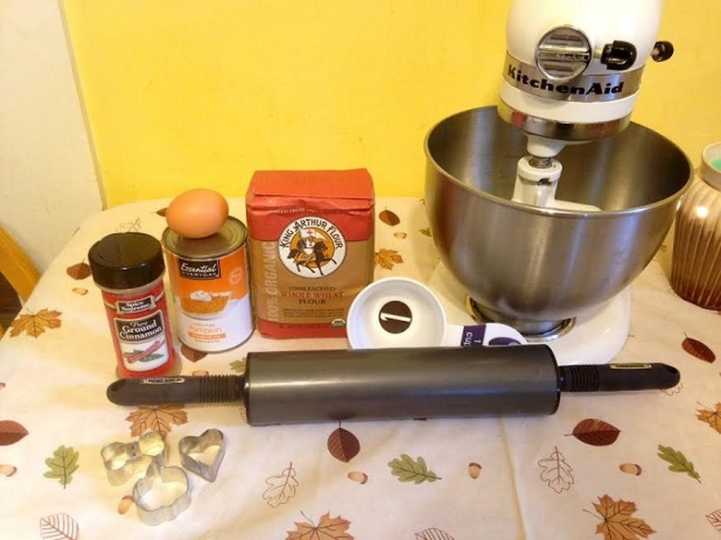
How To Make Pumpkin Dog Treats
DogsDog TrainingHow To Make Pumpkin Dog TreatsByBarbara Bean-MellingerUpdated Nov 2, 2021Pumpkin is somewhat of a miracle food for dogs. Its fiber helps soak up liquid when they have diarrhea and softens stools for a smooth exit when they are constipated. A small amount of pumpkin (1 to 4 tablespoons depending on the dog's size) can be given with meals, or you can bake it into tasty, healthy pumpkin dog treats they will love.J FellowsMake pumpkin dog treats with healthy ingredientsMake pumpkin dog treats with healthy ingredientsBy making your own pumpkin dog treats, you can control the ingredients that go into them and make sure they are healthy treats that are good for dogs. While it's fine to use what you have on hand, if you need to buy some of the ingredients, you can choose to buy healthier versions, like wheat flour instead of bleached white flour and organic or low-fat peanut butter for pumpkin and peanut butter dog treats. Check that the peanut butter doesn't contain xylitol, which is toxic to dogs.When buying canned pumpkin, be sure to buy plain pumpkin puree and not pumpkin pie filling, which contains sugar that dogs don't need and spices that may upset their tummy. You can also use fresh pumpkin with the seeds removed. Fresh pumpkin contains more water and is thinner than canned pumpkin puree, so each tablespoon of fresh pumpkin contains less of the vitamins A, C, and E plus potassium and iron than canned pumpkin puree contains.Peanut butter and pumpkin dog treats recipeJ FellowsPeanut butter and pumpkin dog treats recipeSince most dogs love peanut butter, many doggie treat bakers like to use it as the fat in their pumpkin treats. This simple recipe has only three ingredients and comes together quickly.Ingredients:1 cup pumpkin puree (no sugar or spices added)1/2 cup peanut butter (xylitol-free)2 cups flourPreheat oven to 375 degrees Fahrenheit.Combine pumpkin puree and peanut butter in a large bowl and mix well.Add flour 1/2 cup at a time. Start mixing slowly to avoid having flour flying out of the bowl. When the flour is fully incorporated, mix well after each addition until the mixture is smooth.On a lightly floured surface, roll out the dough to about 1/4 inch thickness.Using any small cookie cutter you'd like, cut out the treats and place them 1/2 inch apart on an ungreased cookie sheet or line the cookie sheet with parchment paper for easy cleanup.Bake 7 minutes and check on the treats. If they do not appear to be done, cook another 2 minutes and check them again. Bake the treats up to 12 minutes total but do not allow them to become too brown on top or burnt on the bottom.Remove the cookie sheet from the oven and cool the treats on the tray for 2 minutes. Use a large, metal spatula or pancake turner to remove the treats to a cooling rack. Allow them to cool thoroughly for 20 minutes or more.Sliced almond butter and pumpkin dog treatsSliced almond butter and pumpkin dog treatsFor something different, try this alternative recipe. Although it has more ingredients, there's no need to roll out the dough or use cookie cutters. Dogs don't care whether their treats are shaped like dog bones or pumpkins or if they are sliced rounds.Ingredients:1/2 cup canned pumpkin puree (not pie filling)2 tablespoons almond butter2 eggs, lightly beaten2 1/2 cups whole wheat flour1/2 teaspoon salt1/2 teaspoon ground cinnamonWater as neededPreheat the oven to 350 degrees Fahrenheit.Mix together the pumpkin puree and almond butter in a large bowl.Add the lightly beaten eggs and mix thoroughly.In another bowl, combine the flour, salt, and cinnamon mixed together.Gradually add the flour mixture 1/2 cup at a time to the pumpkin mixture, beating well after each addition.Add water 1 tablespoon at a time using just enough water for the dough to come together. The dough should be stiff and dry.Roll the dough into a 1/2-inch-thick log on waxed paper. Slice the log into 1/2-inch pieces.Place the treats 1/2 inch apart on a baking sheet lined with parchment paper.Bake 20 minutes. Check on the treats to be sure they don't burn and continue baking up to 20 minutes longer for 5 minutes at a time until the treats are hard.Transfer the treats to a cooling rack and let them cool completely.J FellowsYou can substitute another kind of nut butter, such as peanut or cashew, for the fat in the recipe. You can also substitute coconut flour, oat flour, or other flour of the same consistency as the whole wheat flour as long as the substitutions are safe for dogs. For example, you wouldn't want to use anything made from walnuts or macadamia nuts because they are toxic to dogs.ReferencesAmerican Kennel Club: Can Pumpkin Help With Dog Diarrhea?American Kennel Club: 3 Easy Pumpkin Recipes for DogsAll Recipes: Peanut Butter and Pumpkin Dog TreatsTop Dog Tips: Recipe: Easy DIY Dog Treats
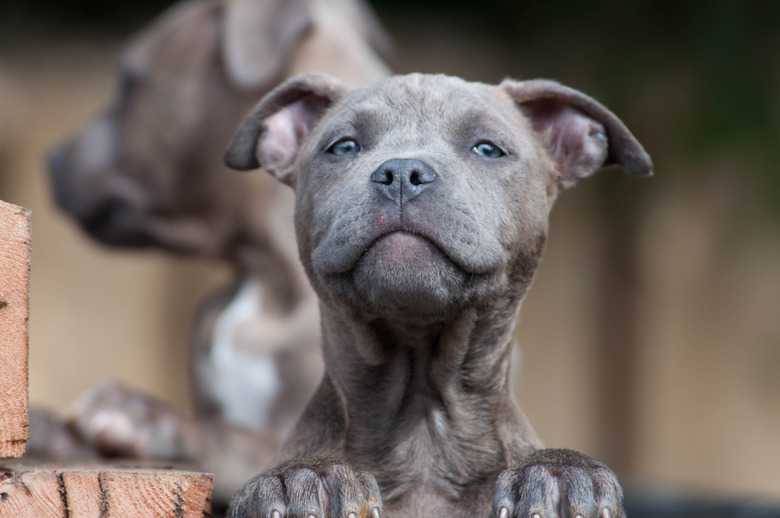
How To Potty Train Pit Bull Puppies
DogsDog TrainingHow To Potty Train Pit Bull PuppiesBySusan ParettsUpdated Nov 2, 2021Pit bulls are loving dogs who are very loyal to their humans and are quick learners who are eager to please. This makes potty training pit bulls as puppies a breeze but only if you use positive reinforcement training methods and are consistent with your training schedule.To set up your pit bull pup for success, you'll need to start training your pit bull around 8 to 10 weeks of age. Remember that lots of potty breaks, regular supervision, and positive rewards are important in successfully training pit bull breeds. With consistent training, your pup should learn the ropes of potty etiquette within a few months.Potty training pit bullsPotty training pit bullsThe key to successful potty training of any pit bull breed, including the American Staffordshire terrier and Staffordshire bull terrier, is to regularly take out your puppy for potty breaks. Pick a quiet spot outdoors that's away from other dogs, especially if your puppy hasn't yet been properly socialized. Each time you go outside, go to that same spot and give your pup a command, like "potty." If your little one eliminates in that spot, lavishly praise and treat your dog for this accomplishment. Should your puppy not eliminate, head back inside for a few minutes and return to try again.You'll want to start with taking out your puppy for potty breaks every one to two hours during the day, including every morning, before bedtime each night, 15 minutes after meals and drinks of water, after naps, and once during the night for at least the first few weeks of training. Generally, pit bull puppies can wait the same number of hours between potty breaks as their age in months up to 9 months of age.Crate training a pit bull puppyBarbara Rich/Moment/GettyImagesCrate training a pit bull puppyPart of successfully house training your pit bull puppy involves crate training. The crate provides a safe and secure spot for your dog that's similar to a den in the wild. Because dogs usually won't soil their den, the crate is a great learning aid for potty training as well.Choose a crate with a divider that can grow with your pit bull, who are generally medium-size dogs as adults. That's because you don't want a crate with too much space that lets your puppy sit away from an accident. Set the crate in an area of the house where you and your family hang out and place a comfy blanket in there along with a few treats so she associates it with good things.Close your dog in the crate when you aren't around to supervise her between potty breaks and at night but never for more than a few hours at a time. Be sure to move the crate into your bedroom so you can hear her crying if she needs to go potty at night.Dealing with pit bull accidentsDealing with pit bull accidentsRemember that accidents are prone to happen with your pit bull puppy. Never punish your dog for any accidents in the home. Simply clean accidents with an enzymatic cleaner to remove the scent that could draw your puppy back to the area again to eliminate.Between regular potty breaks, if you see your dog circling, sniffing around, whining, or otherwise indicating that he needs to go, take him out immediately to his potty spot. Should you catch your dog in the middle of eliminating indoors, say "no!" to startle him and immediately bring him outdoors to finish. Praise him when he finishes outdoors.A good way to prevent nighttime accidents is to take away your pup's food and water dishes within two hours of bedtime.Pit bull exercise needsPeopleImages/iStock/GettyImagesPit bull exercise needsPit bulls are generally active dogs who need a good dose of exercise to prevent destructive behavior and accidents in your home. Remember to exercise your dog regularly in addition to providing her with regular potty breaks. A great time to do this is after potty breaks if your dog does her business. This makes the outside time a fun reward for her good behavior and helps with training.ReferencesPitBulls.org: Housetraining Your Pit Bull PuppyAmerican Kennel Club: American Staffordshire TerrierAmerican Kennel Club: Staffordshire Bull TerrierAmerican Kennel Club: How to Crate Train Your Dog in Nine Easy StepsThe Humane Society of the United States: Crate Training 101American Kennel Club: How to Potty Train Puppies: A Comprehensive Guide for Success
Preparing A Nervous Dog For Kennel Boarding
DogsDog TrainingPreparing A Nervous Dog For Kennel BoardingByCuteness TeamApr 21, 2014 3:59 am ESTIf you've never kenneled your dog before, it can be a nerve-racking experience, especially if you have a nervous pup. Neither of you know exactly what to expect, and the prospect of separation can be difficult. In order to make kenneling a positive experience, preplan and prepare for the event. If you are kenneling multiple dogs who get along well in close quarters, consider kenneling them together to create a sense of familiarity that will reduce stress and anxiety.Choosing a KennelYour dog can pick up on your anxiety, and if you're nervous about kenneling, he will be extra jumpy too. Make sure you select a place that will give you peace of mind. Visit and interview several different kennels and boarding facilities and look for a location that provides the type of care you want your dog to have. Be honest about your dog's anxiety and ask kennel staff how they handle skittish animals. Ask questions about how often your dog will be fed, walked and played with and whether a vet is on staff. Request a tour to see different kennel sizes and to observe the interaction between boarded animals and kennel employees.Crate Train at HomeCrate training in your home will not only make the commercial kenneling experience less scary, it will also help you with obedience training. When you crate train a dog, you establish his crate as a place of safety, comfort and retreat, and you also ensure he is safe and out of trouble if you're away. Crate training in a familiar environment will help prepare you and your pup for when you must leave him in a boarding kennel for an extended period of time. This can reduce his anxiety and nervousness about being contained.Do a Trial RunIf you're kenneling a nervous dog for the first time, it's better for everyone if the first stay is a short one, no more than a day or two. Introduce your dog to the kennel you plan to use before he has to make a lengthy stay. Start with an overnight visit, then extend it to two or three nights and gauge how well your dog does. Ask the kennel staff for honest feedback about your dog's anxiety and nervousness during his stay. If he is highly fearful and doesn't eat, drink or interact, you might want to ask your vet about an anti-anxiety medication, or forgo kenneling altogether and employ a pet sitter instead.The Kennel StayPack a doggie bag for your pup when he goes to the kennel. Include his bed, favorite blanket or toys, and bring along his own dog food so he won't have to deal with stomach upset from eating an unfamiliar brand. Make it feel like an exciting adventure by being upbeat about taking your dog to the kennel, rather than nervous and tearful, even if that's how you're feeling inside. Showing too much emotion will not make the transition easy for you or your dog. Say a short good-bye and ask the staff about calling in on a regular basis so you can ensure your dog is doing well while you're away.By Lisa McQuerreyReferencesUC Davis Veterinary Medicine: Choosing a Boarding FacilityPerdue University: Keep the Family Pet Happy and Healthy While on VacationAbout the AuthorLisa McQuerrey has been a business writer since 1987. In 1994, she launched a full-service marketing and communications firm. McQuerrey's work has garnered awards from the U.S. Small Business Administration, the International Association of Business Communicators and the Associated Press. She is also the author of several nonfiction trade publications, and, in 2012, had her first young-adult novel published by Glass Page Books.
How To Train Your Dog To Sleep In Another Room
DogsDog TrainingHow To Train Your Dog To Sleep In Another RoomBySarah Jeanne TerryJan 10, 2019 1:07 pm ESTAlexandr Zhenzhirov/iStock/GettyImagesA few months ago, I moved to a new house with my fiancé and the 2-year-old mini-Pinscher Papillon mix that has snuggled her way into the center of our lives. At our previous house, our dog slept in her crate with the door open in our bedroom, because we shared our house with roommates. However, now that we have a house of our own, we moved her crate to the other room, but our dog doesn't want to sleep there. She constantly tries to sleep in our bed with us, but we want her to learn enough independence to sleep in another room.Studies don't show any real harm to sleeping with your dog. In fact, sleeping in close proximity can ease anxiety on both sides and increase the bond owner and pet. However, for a lot of us, we prefer a little separation from our furry friends while we get our beauty sleep. If you're like me and you find that your dog has established a habit that you don't like, there are some simple steps you can take to teach your dog to sleep in a different room.First, create an appealing new sleeping space.Boris Zhitkov / EyeEm/EyeEm/GettyImagesFirst, create an appealing new sleeping space.More Like ThisDogsHow to Get A Dog To Sleep In His Own BedDogsHow Can I Tell if My Dog Is Depressed?DogsHow to Train a Dog to Sleep With YouWhen you're trying to change your dog's habits, you need to make the new behavior as enticing as possible. Dogs prefer to sleep in a space that feels safe and secure, because they don't want anything sneaking up on them in the middle of the night. Try to find a cozy corner in your dog's new space that will make them feel as safe as possible. You can also add some other appealing things to the new bed, like a favorite toy. Or, if you can spare it, using the blanket or pillow from your dog's current sleeping area may help smooth the transition.Make sure your dog gets nice and tired, to discourage them from acting out.gollykim/iStock/GettyImagesMake sure your dog gets nice and tired, to discourage them from acting out.One of the worst things you can do when trying to change your dog's sleeping habits is to put a dog to bed that isn't tired enough to go to sleep. You probably understand the feeling – get yourself tired enough and even the most uncomfortable hotel bed will feel like a dream. Take your dog on an extra long walk a few hours before bedtime. If your dog likes mental stimulation, you can also do some training or give them a treat puzzle. Whatever you can do to tucker your pup out, try it in the early days of changing your dog's bed location.Lead your dog to their new bed, don't put them there.Donald Nausbaum/Photographer's Choice/GettyImagesLead your dog to their new bed, don't put them there.Nobody likes to do something that they were forced to do, and our pups are no different. Whether your dog is big or small, they don't really like when you pick them up and put them somewhere. You want your dog to feel like their bed is a safe space that they can choose, so you want to entice your pup to go there. Lead your dog to their new bed space with its favorite treat or reward. Keep going there and back a few times, and your dog will begin to develop positive associations with going to their bed.Make your dog's new bed a positive place.marcoventuriniautieri/iStock/GettyImagesMake your dog's new bed a positive place.Continue the positive reinforcement by making your dog's bed a positive place. After you lead your dog to their bed, reward them with treats and/or praise. Practice a command like "stay" or "go to bed" by saying it to your dog and then walking away. Most likely, your dog will not stay in the bed, so lead them back, reward them, and then try again. Repeat these steps several times every day, until eventually your dog stays in bed. You can even use the bed space to practice other training moves like "sit" or "lie down" to help create more positive associations with the bed space.Praise your dog in their new bed, and ignore them in their old one.Hero Images/Hero Images/GettyImagesPraise your dog in their new bed, and ignore them in their old one.You need to teach your dog that their new bed is amazing and their old bed is old news. Though your dog may try to sleep in their old spot, try not to reinforce that decision by giving them your attention. Instead, lead your dog back to their new bed, where they can all the petting and attention they want. Eventually, your dog will hopefully learn that the new bed is way better than the old one, creating a habit that makes sleeping more peaceful for everyone.Be patient.Be patient.As with any kind of training with your furry friend, changes take time. You may have to endure some difficult nights and a pup that doesn't quite know what to do with bedtime for a while. Stick to your plan, because consistency will eventually work in your favor.With the a little persistence, some treats, and a lot of encouragement, your pup will soon learn to love sleeping just where you want them to.