The One Time Of Year You Should Think Twice About Adopting A Dog
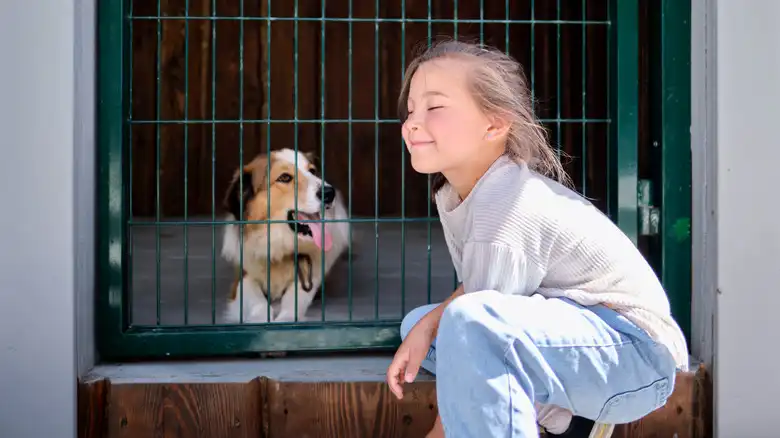
DogsDog TrainingThe One Time Of Year You Should Think Twice About Adopting A DogByCynthia AnayaJune 24, 2025 9:25 am ESTMariya Borisova/Getty ImagesFor many adults, adopting a dog evokes the same emotions that a child feels when bringing home a brand-new toy. Excitement, happiness, anticipation. Choosing a dog from a shelter can be far more rewarding than buying one from a pet store or breeder, but it's important to adopt wisely. The time of year can make a difference in how quickly and successfully your dog adapts to a new environment and becomes trained, or retrained. Some pet parents discourage adopting a dog in the winter if you live in a region that experiences sub-zero temps or frequent snowfall.Unless you plan on adding a breed that thrives in cold weather, like a Siberian husky or Alaskan malamute, you could face challenges with a winter adoption that you wouldn't face in warmer months. It's also important to consider that the first few weeks with a new dog could come with some challenges that have nothing to do with the weather, especially if the dog was rescued from an abusive situation; it could take a couple of months for the pup to truly feel comfortable.Does this mean you shouldneveradopt a dog in winter? Not necessarily. You can't control when you fall in love with a dog or when one falls in love with you. So, if you happen to connect with a shelter dog in the winter and don't want to wait until spring to adopt it, don't! Just be prepared for some potential (but not guaranteed) weather-related hiccups during your dog's adjustment period.Cold winter weather could interfere with training your dogDaniela Duncan/Getty ImagesPuppies obviously need to be house-trained within their first few months of life, but sometimes adult shelter dogs need to be retrained after being adopted. Training a dog to eliminate outdoors takes months, even if you start on a sunny 75-degree day. Replace that temperature with a 5-degree day, and you could end up extending that timeline; your new companion may not want to be outside long enough to do its numbers. If you force it to stay outdoors until it handles its business, you could increase the risk of frostbite and slips, unless you give it a warm sweater and dog winter boots.Snow could also pose a challenge during the potty training period. While some dogs get excited by the fluffy white stuff and even enjoy playing in it, others find it frightening or confusing. They might take one step on it and immediately run back inside. Even trained dogs behave this way if they're not used to snow, like the ones in cities that see measurable snowfall only once every few years. To resolve this issue, owners need to shovel the snow in a small area, exposing the lawn so their dogs can be more comfortable.If you'd rather skip these added hurdles, you don't want a cold-climate breed, and you haven't fallen in love with a pup yet, wait until temps warm up before adding a new dog to your family. You could end up shortening and simplifying the training period by simply waiting until spring to adopt.
The Completely Normal Human Behavior That Makes Your Dog's Anxiety Worse Every Time
DogsDog BehaviorThe Completely Normal Human Behavior That Makes Your Dog's Anxiety Worse Every TimeByAdam SymchukMay 4, 2025 9:25 am ESTReddogs/ShutterstockWe may receive a commission on purchases made from links.Pet parents love to see the ways they can get their dogs excited. Who can blame them? Witnessing a dog's reaction to the mention of its favorite outdoor activity, when rummaging through a bag of treats, or playing with its favorite toy is a genuinely joyful experience. It's hard not to react to a dog that is ridiculously happy to see its owner, but a pet parent may unintentionally give their dog negative cues on how to behave — especially when coming and going.While your dog may be excited to have you home after even the briefest outing, adding to its energy can cause anxiety that can escalate into unwanted traits like excessive barking, destructive behavior, or peeing inside. A pooch in waiting may start associating its owner's return with positive stimulation, such as letting it out, playing with it, or just giving it an enthusiastic greeting. The anticipation of interacting with its favorite person and not having these expectations met can heighten anxiety. This anxiety-inducing behavior can also extend to leaving the home with an overly expressive or emotional goodbye.It's a natural response for some owners to shower their dogs with affection when they leave or return home. However, it is recommended that owners wait to greet their dogs and minimize attention. You may want to give your dog 5 to 10 minutes to calm down before you say hello. The same routine can be applied before leaving, with 10 minutes of non-engagement before departing. Exercise before leaving a dog alone can also help burn its anxious energy. However, not all dogs are the same, and sometimes establishing the perfect routine for coming and going requires extra effort.Alternative ways to greet your dog that won't cause anxietySofikoS/ShutterstockCertified dog behavior consultant Sarah Fraser of Instinct Dog Behavior and Training has a nuanced approach to greetings. For her, completely ignoring a dog has not proven as effective. Instead, a calm, simple greeting with a neutral expression is recommended. She states, "The initial acknowledgment is important so your dog doesn't worry that they've suddenly become invisible."From here, Fraser recommends using several training techniques. The techniques can help redirect your dog's behavior and offer soothing, calming alternatives to overexcitement. They include giving a handful of treats to redirect your dog's attention to a new task at-hand or using a KONG Classic Stuffable Dog Toy packed with almond or peanut butter to keep your dog occupied. If food motivation is not an option or is ineffective, a toy basket by the door can ease your dog's anxious mind when handed its favorite toy. Alternatively, trying to sit down and focus on soothing your dog with a calming touch can also help lessen its anxiety.The best approach to combatting a dog's anxiety when arriving home or leaving will depend on the dog's personality. However, the desire to greet it with the same energy it has or give a long goodbye is counterintuitive to how you want it to feel. People can hide their excitement or sadness for the greater good of their pets; it can be difficult for the passionate owner, but it is the best way to avoid unnecessary anxiety.
Frenchie Puppy Gets Caught Red-Handed After Causing Major Chaos In The Bathroom
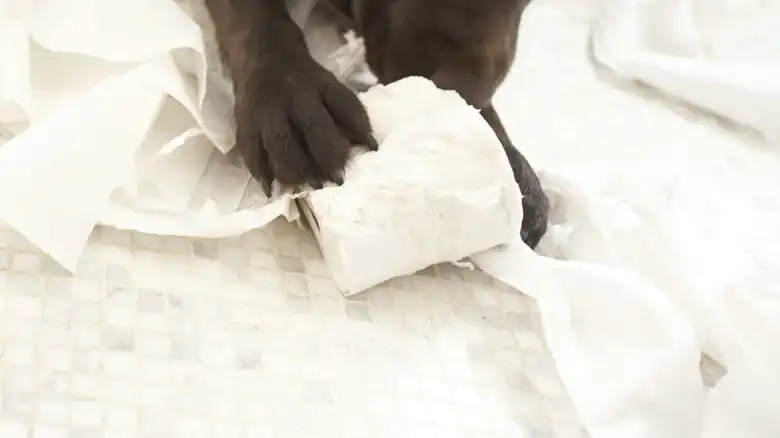
DogsDog BehaviorFrenchie Puppy Gets Caught Red-Handed After Causing Major Chaos In The BathroomByMorrison ChanteshaUpdated: Oct. 16, 2025 3:29 pm ESTChris Amaral/Getty ImagesBathroom breaks are supposed to be quick, but one French bulldog puppy had other plans. In a now-viral TikTok clip, the little troublemaker was caught red-handed after turning the bathroom into his personal playground. The floor was littered with shredded toilet paper, and a scattering of toiletries completed the scene. Sitting proudly in the middle of the chaos, the Frenchie looked more like a decorator than a guilty pup, making it hard not to laugh at the destruction.Puppies are curious by nature, and the bathroom often feels like a treasure chest of textures to explore, with crinkly paper, fluffy towels, and anything that rolls nearby. Frenchies have a mischievous streak, so a little chaos comes with the territory. Chewing is a big part of this stage of puppyhood, too. From shoes to furniture, young dogs will test just about everything with their teeth. That's why it helps to know about the many ways to prevent a dog from chewing household items, giving pups an outlet for their energy without losing another roll of toilet paper. The bathroom disaster might look dramatic, but in reality, it's a snapshot of puppyhood. In the moment, the mess is temporary, while the memory of catching such a guilty-yet-adorable face is the part that sticks.What drives a puppy's messy behavior?Vitapix/Getty ImagesThe big question is why a Frenchie puppy would choose the bathroom as the scene of such chaos. The answer lies in a mix of curiosity, boredom, and the simple joy of having an owner's attention. Puppies don't distinguish between "toys" and "not toys," at least not until they're taught otherwise, so a bathroom stocked with paper and soft textures feels like an invitation to play. For energetic puppies, it's almost irresistible.Exercise and training can help channel this energy into better places. Many pet parents learn firsthand that what really works when potty training a puppy is structured habits — guiding them to the right place and rewarding the success, and this expands to all aspects of training. This bathroom mischief shows how, without clear guidance, puppies quickly invent their own rules.Experts stress the importance of patience and positive reinforcement when training a puppy. There are solid reasons not to punish a dog after a potty accident or other mischief indoors. Redirecting with toys, creating safe spaces, and reinforcing good behavior builds trust while cutting down on disasters. While this Frenchie's bathroom adventure might look like chaos, it just shows how playfulness drives puppy behavior. Luckily, even the wildest mess can be a chance to understand it better.
8 Cute Ways To Celebrate National Dog Day Beyond Basic Puppy Treats
Pet Parenting8 Cute Ways To Celebrate National Dog Day Beyond Basic Puppy TreatsBySheri RadfordAug. 22, 2025 4:35 pm ESTNew Africa/ShutterstockWe may receive a commission on purchases made from links.Every dog has its day — and that day happens to be August 26. That's when dog lovers around the world honor their very good girls and very good boys by celebrating National Dog Day. How long has this celebration been around? Good question. As it turns out, animal welfare advocate Colleen Paige, author of "The Good Behavior Book for Dogs," created the holiday in 2004 as a way to promote canine adoption and companionship. National Dog Day is worth celebrating, and we'll always advocate for pups getting a treat on the holiday. But there are plenty of other ways to make your dog feel special each August 26 beyond the treat aisle you're used to browsing at PetSmart. If you plan to help your pup feel pampered, stimulated and well-loved on this sweet holiday, check out our recommendations for you and your favorite furry friend to mark this year's National Dog Day.Feed your dog a homemade treat or surprise it with StarbucksJustin Paget/Getty ImagesBasic treats are out this National Dog Day. Instead, whip up yummy homemade dog treats such as dog popsicles or pumpkin treats. They're easy to make and sure to satisfy any hungry hound. Or, buy your pet some eco-friendly snacks such as cricket dog treats. (Yes, they're made from real insects.) Perhaps a trip to Starbucks is in order, where you can get a caffeinated indulgence for yourself along with a Puppuccino for your pooch. This fancy-sounding drink is really just unsweetened whipped cream in an espresso-sized cup, but your doggo will love it like it's a million bucks.Add some mental stimulation to your dog's lifeKathrineva20/ShutterstockEven if your pooch seems content with a chewed-up stick or an old tennis ball, why not splurge on a new puzzle toy to keep your dog mentally stimulated? Hide-and-seek dog toys are great for mental stimulation, too! If you're looking to offer your dog both mental and physical stimulation, try building an agility course in your backyard. Fill the course with fun but challenging obstacles such as tunnels, jumps, seesaws, and weave poles.Doggo playdates are another way to keep your pet engaged. This type of supervised interaction is especially helpful for socializing puppies.Venture into the great outdoors with your dogMichnik101/ShutterstockTake your dog for an extra-long walk on National Dog Day to give it some extra exercise and fresh air. You can even get an added boost of serotonin by doing a good deed at the same time: Bring the dog of an ill or elderly acquaintance along for the outdoor excursion. To shake up your typical dog-walking routine — and log some extra steps for both you and your canine companion — drive to an off-leash dog park or a dog-friendly beach or hiking trail and spend the day in nature.Pamper your pooch with a day at the spaPixel-Shot/ShutterstockSpa treatments aren't just for stressed-out humans — pet spas are a big business, too. In addition to the expected bathing, brushing, and nail trimming, some dog spas offer luxe treatments such as facials, massages, aromatherapy, hydrotherapy, acupuncture, reiki, and detoxifying mud baths. A deep-conditioning treatment will make your dog's coat shiny and silky soft, and a "pawdicure" may include cute nail art using non-toxic, dog-safe nail polish. For the ultimate in convenience, find a mobile pet spa in your area to bring the services to you.Schedule a photoshoot for your haute houndKrakenimages.com/ShutterstockSometimes, cellphone snapshots just aren't good enough to show the world how attractive your very good dog truly is. That's when you need to bring in a professional pet photographer. A pro knows how to keep your dog calm and content while capturing priceless memories. Many pet photographers are also skilled at doing action shots. To make sure your dog looks as snazzy as possible, schedule a grooming session for a day or two before the shoot.Book an overnight stay at a pet-friendly hotelИрина Мещерякова/Getty ImagesIf you think only downmarket lodgings allow pets on their premises, think again. Some of the fanciest hotels you can imagine open their doors to furry, four-legged guests, and these places regularly go above and beyond, such as the Copley Plaza in Boston with its codfish and caviar dish on the doggie room service menu or the Plaza in New York, which offers well-heeled hounds miniature bathrobes, dog-friendly macarons, and bowls of Evian water. Your dog deserves the royal treatment, too.Help an animal shelter or rescue groupUndefined/Getty ImagesWhatever your skills and interests may be, chances are that a local animal shelter or rescue group could use your volunteer help on National Dog Day (on most days, really) with everything from grooming and cleaning to socialization and adoption. These organizations tend to run on shoestring budgets and rely on the generosity of animal-loving individuals to keep doing their life-saving work. Gifts of toys, old towels and blankets, and pet food are usually welcome — check with local organizations to learn which particular items are needed at any given time — and monetary donations are always appreciated.Welcome a dog into your homeBongkarnGraphic/ShutterstockGood foster homes for dogs are always in short supply. If you aren't quite ready to commit to adopting a(nother) dog permanently, fostering is a great temporary way to help a needy animal. But, of course, one of the best ways to celebrate National Dog Day is by adopting a dog. In 2024, hardworking animal shelters and rescue groups across the United States took in about 5.8 million dogs and cats. Of those animals, only about 4.2 million found their forever homes, but you could help push the needle toward loving homes for all.
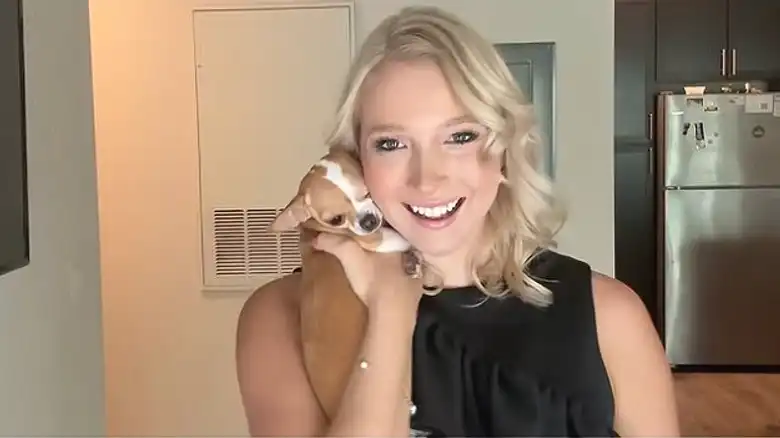
Chihuahua's Tearful Reaction To Owner Packing For Vacation Has Everyone Sobbing
DogsDog BehaviorChihuahua's Tearful Reaction To Owner Packing For Vacation Has Everyone SobbingByMorrison ChanteshaUpdated: Oct. 9, 2025 4:50 pm ESTbruiserandellewoods / TikTokDogs often seem to know when something is changing at home. Suitcases pulled from closets can be enough to send them pacing or hovering close by, as if bracing for separation. Small breeds like Chihuahuas, that form close bonds with their families, are especially quick to pick up on those cues. Their reactions can look almost human, with wide eyes and trembling bodies that leave little doubt about how much they want to stay close.That instinct is what turned Blondie, a 3-year-old Chihuahua, into a viral star. In a TikTok clip, she climbs onto her owner's packed suitcase and holds her place, eyes shimmering as if pleading not to be left behind. The caption jokes that she's "crying real tears," but viewers couldn't shake the image of such raw attachment.A 2022 study in Current Biology showed that tear production can rise during emotional moments, especially when dogs are reunited with their owners, and scientists link this response to oxytocin, the hormone tied to bonding. That means the question of whether dogs cry real tears goes beyond a playful TikTok caption and is something supported by science. Blondie's viral protest seemed to reiterate those findings by showcasing this unusual phenomenon.Helping your dog cope with goodbyesPhuttharak/ShutterstockWhen suitcases come out, many owners are left wondering how their dogs will handle the days apart. There are different options, and the best choice depends on a pup's personality, health, and how long the trip will last. For some dogs, staying home with a sitter feels more reassuring. A familiar environment and routine can keep stress low, especially for pets who thrive on one-on-one attention. Boarding facilities are another route, giving social dogs the chance to play and stay busy under supervision.Little details also come into play when helping a dog adjust. A favorite blanket or toy can offer comfort while you're away, and practicing shorter separations before a big trip can make longer absences easier. For those who struggle more deeply, what helps a dog with separation anxiety often comes down to shaping their environment. Some owners create a quiet corner with familiar scents, or leave on soft music or white noise, and a few provide safe chews to keep their dog occupied. These small adjustments don't erase the sadness of a goodbye, but they can give a dog something to hold onto until you walk back through the door. Then again, your dog may just be ready to travel anywhere with you, regardless.
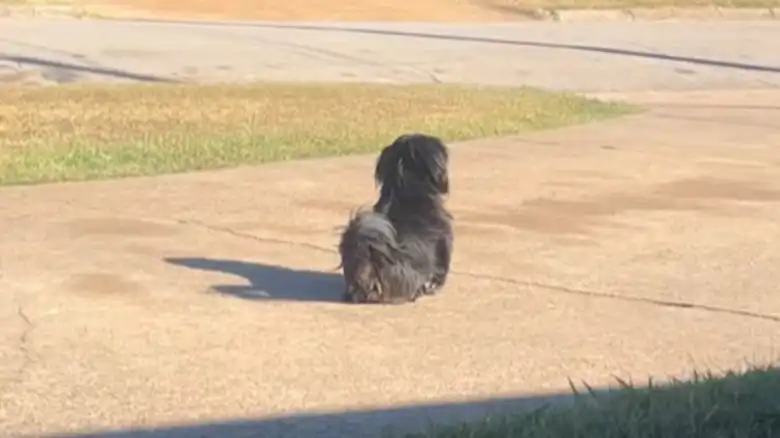
Shih Tzu Waiting For Best Friend To Get Off The School Bus Has Us Saying 'Aww'
DogsDog BehaviorShih Tzu Waiting For Best Friend To Get Off The School Bus Has Us Saying 'Aww'ByCynthia AnayaNov. 13, 2025 9:25 am ESTthenailmadam / TikTokWhen you consider the unconditional love, companionship, and moments of joy that dogs create, we humans really don't deserve these furry angels. Some want nothing more than to be by their owners' side, so when left alone, they might wait by the front window or door in anticipation of their return. Others, like a Shih Tzu named Tux, take the waiting a step further by moving it outside, in front of the house. In a video clip shared on TikTok on October 15, 2025, the adorable pup strolls down the driveway to wait for his little human to get off the bus."Here he come, Tux!" owner Candis says behind the camera as she sees her son approaching. When the boy sees him, he starts running toward the pup, which only increases Tux's excitement and sends him spinning in circles. The dog then gets on his hind legs to greet him — after a couple more happy spins — as his tail uncontrollably wags back and forth.The post has received more than 19,000 likes and counting. Viewers commented on how sweet and cute the interaction was, and how the pair are obviously best friends. Based on a more recent clip shared five days after the one above, it's likely that the driveway waiting and greeting have become Tux's daily routine on school days.What it's like to own a Shih TzuCaíque De Abreu/Getty ImagesAs the video proves, Shih Tzus are very loving, affectionate dogs and aren't afraid to show it. They're also great with children, and not just when they're getting off a school bus. They're typically friendly and social with new people, too. In terms of activity level, Shih Tzus should get play time, plus a walk of about 30 minutes every day for exercise and mental stimulation. These fluffy bundles of joy are pleasantly playful, so visiting the toy aisle of the pet store will be a must.Thinking of adopting a Shih Tzu as a companion for your existing dog(s)? More good news there. The breed typically behaves well with other pups in the same household, although it's still best to supervise the introduction. This is especially important if you have large or territorial dogs in your home that may not warm up to a new, smaller canine sibling as quickly as you'd like.One final important factor of Shih Tzu ownership to consider involves their health. Unfortunately, Shih Tzus are prone to certain health issues, including brachycephalic syndrome, hip dysplasia, and eye problems. The good news is, not every Shih Tzu develops these issues, and on average, the breed has a lifespan of about 10 to 18 years. A veterinarian can provide preventive or treatment options for any concerns to ensure your Shih Tzu is around to greet the kiddos outside after school for as long as possible. Curious about other good dog options for kids? Check out what "type" of dog you should get if you have kids.
You Should Think Twice About Leaving Your Dog Alone Overnight - Here's Why
DogsDog BehaviorYou Should Think Twice About Leaving Your Dog Alone Overnight - Here's WhyByCynthia AnayaMarch 22, 2025 1:25 pm ESTBy Anna Rostova/Getty ImagesMany dogs spend time home alone during the day or evening hours and can adjust, especially if there's consistency involved. Perhaps your dog is one of them. However, if your schedule ever requires an atypical overnight absence, you might consider leaving your pup alone like you do during the day or evening. Depending on your dog's normal routine and temperament, this could be a bad idea that results in nighttime separation anxiety, but there are several possible solutions, including conducting a trial run with a camera, boarding your dog the first time to test it out, and hiring a sitter.Dogs thrive on routine. With your dog, this schedule might involve greeting you when you come home every evening before snuggling up beside you or in their bed on the floor every night. Changing that routine by suddenly not showing up for bedtime could lead your canine companion to believe you've abandoned it and become anxious. This can lead to behavioral issues; dogs with nighttime separation anxiety have a tendency to whine, howl, bark, urinate or defecate, or scratch at doors as they await their owner's return.Your dog's personality also plays a role in its reaction to being left alone overnight. "It can be a lot more stressful for some pets and particularly dogs that have separation anxiety," animal behaviorist Kate Mornement told ABC News. So, if your dog already shows signs of separation anxiety during daytime absences, leaving it alone at night would likely only exacerbate negative behaviors.What to do if you can't be home with your dog overnightOscar Wong/Getty ImagesAs Dr. Kate Mornement alluded to when speaking to ABC News, only "some" pets become overly stressed while left alone overnight. If your dog has a positive temperament, it might be a good candidate for a solo one-nighter, but how do you know for sure? You can set up a camera and run a trial before your full overnight absence. Plan to stay at a friend or relative's house nearby for a few hours later than you usually stay out, and watch how your dog responds to your late-night absence. If it seems unfazed, it might be okay alone for longer, as long as it's no more than six to eight hours total in a puppy's case. Most adult dogs can hold their bladder for eight hours or longer, but that doesn't mean they should. Long hold times like these shouldn't be the norm for any dog.On the other hand, if the trial-run camera footage reveals unwanted behaviors, come home and seek other alternatives. These alternatives can be in the form of boarding or hiring a pet sitter. Your dog will be near other pets at a boarding facility and might have overnight staff monitoring. If you prefer to keep your dog in a home, you can ask a friend or relative to stay with it at your place or theirs. You could also hire a sitter from a pet-sitting website. Just remember to set your pet sitter up for success by giving them adequate information about your dog and home beforehand.
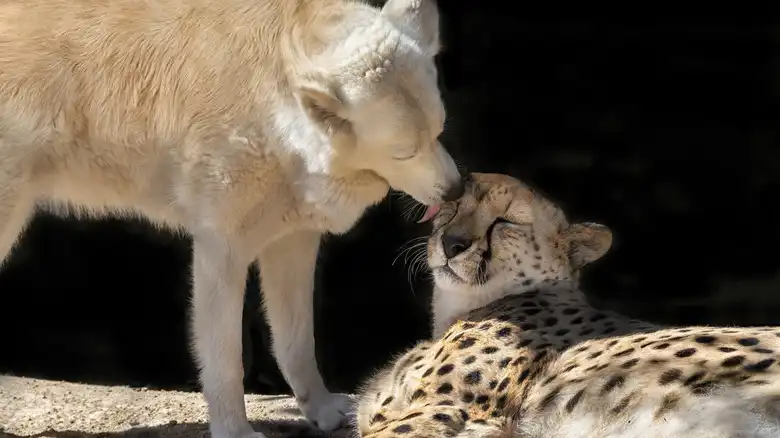
Why Cheetahs At Zoos Sometimes Have Support Dogs
DogsDog BehaviorWhy Cheetahs At Zoos Sometimes Have Support DogsByAdam SymchukMay 3, 2025 9:25 am ESTBarbaraaaa/Getty ImagesMany dogs are known for their caring personas, providing support to their human counterparts in many ways. This attentive nature and kindness have enabled canines to become integral in many people's lives, taking on roles such as emotional support, therapy, or service dogs. In fact, an estimated 500,000 dogs work with people in need. Using this unique skillset, some dogs have gone above and beyond in providing support to other animals, with zoos pairing shy cheetahs with loving canine companions. The practice began in 1976, when conservation biologist Dr. Laurie Marker cared for a lone cheetah cub as part a wildlife safari's breeding program. To help the cub adapt to its new environment, she had the idea to pair it with a dog. Speaking to Atlas Obscura, Marker explained how the bond worked, saying, "Companion dogs act as a surrogate for cheetah siblings," adding, "It is the friendship between the two individuals that creates a strong bond, and this is what makes for a successful pairing." Since then, the San Diego Zoo has become exemplary in showcasing the rehabilitative effects of the adorable duo, with several successful friendships starting in the 1980s.Since Marker's efforts to help abandoned or orphaned cubs, this practice has become common at zoos worldwide. In the above video, you can see a recent pairing at the San Diego Zoo featuring a cheetah and a golden retriever named Elvis. Golden retrievers, known for being a loving dog breed that knows when we're sad, make a common pairing for lonely cubs. While the interspecies friendship is pure and adorable, dogs can also play a significant role in the conservation efforts for the vulnerable cheetah.How dogs help protect vulnerable cheetahs in the wildGuenterguni/Getty ImagesThe International Union for Conservation of Nature (IUCN) lists a declining population of mature cheetahs in the wild at 6,517 on its Red List. What's more, several cheetah species have gone extinct in certain regions, including India, Egypt, and Afghanistan. Namibia currently holds the largest population of wild cheetahs, but even then, current estimates only put numbers between 2,000 and 3,000 cats. However, like the supportive dogs in zoos, canines have been brought in to help cheetahs thrive.In 2021, the Cheetah Conservation Fund (CCF) began training its first scat detection dog, a Belgian Malinois named Enyakwa (or Enya for short). Through extensive work, including positive reinforcement training, Enya can track cheetahs without the risks associated with human interaction. Enya also serves as an envoy for the CCF, helping to spread awareness about animal coexistence by visiting local areas with her trainer.The CCF has another program that provides livestock-guarding dogs to farmers in Namibia. This program incentivizes farmers to protect their livestock from cheetahs and other predators. Positioned in areas where confrontations between cheetahs and livestock are most likely to occur, the dogs deter the big cats from attacking livestock. Safe livestock helps relationships between people and cheetahs, changing attitudes toward the big cat and preventing retaliatory killings. Ultimately, whether as companions in a zoo or assisting with conservation, the relationship between a cheetah and a dog can educate and inspire future generations to push for coexistence and protection.
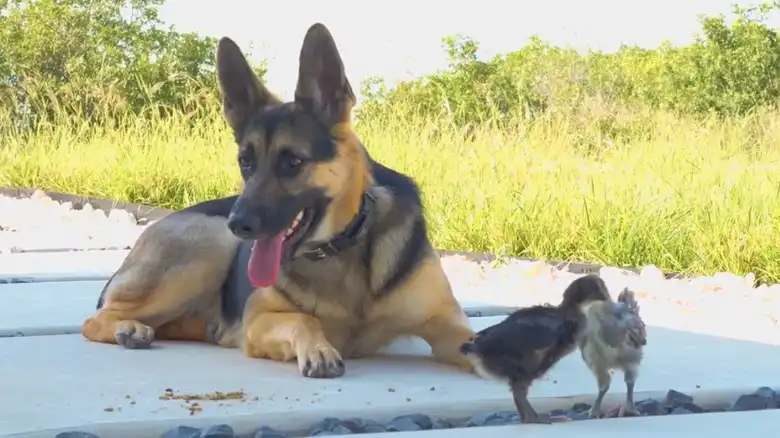
German Shepherd 'Adopts' Baby Chicks And Loves Them Like 'They Are Her Own'
DogsDog BreedsGerman Shepherd 'Adopts' Baby Chicks And Loves Them Like 'They Are Her Own'ByCynthia AnayaOct. 31, 2025 9:25 am ESTChanelthegermanshepherd / FacebookGerman shepherds appear on multiple lists of scary or intimidating dog breeds, and they're commonly used in law enforcement, the military, and search and rescue. What people don't typically associate with these dogs, though, are their caregiving behaviors toward animals of another species. Meet Chanel, the German shepherd that wants nothing more than to look after her baby chicks and exercise her maternal instincts. Her human shared the TikTok proof in September 2025.In the video, she tries desperately to get her human to open the door into the garage, where a chick brooder inside a storage tub awaits her. When he does, she eagerly approaches the tub, peers over the edge, looks inside, and walks over to the other side to examine the chicks from another angle. "They're safe, okay? Can we go back inside?" her human says behind the camera. As the caption reads, she's become quite attached to the chicks, loving them "like they are her own" after meeting them for the first time nine days prior.More recent clips show the chicks out of the tub and walking outdoors in front of Chanel, who seems to still be captivated by them. One viewer describes the breed as "so loving and concerned with anyone or anything to do with their family." Another said their shepherd behaves the same way, but with their pet fish. These dogs are undoubtedly among the most protective dog breeds to help you feel safe, but what is it about German shepherds that causes them to behave this way?Why German shepherds make good guard dogschanelthegermanshepherd / InstagramOriginally bred in Germany for herding sheep, German shepherds have evolved into elite working animals. One of their standout traits is their trainability. German shepherds rank high on lists of the smartest dog breeds, meaning they can quickly learn commands, routines, and even differentiate friend from foe. They're also ranked highly as a strong dog breed. With such high intelligence, combined with a strong build, they make exceptional guard dogs for a household — feathered friends included.What really sets them apart, though, is their natural protective instinct. German shepherds are deeply loyal to their pack, whether that's a herd of sheep, your kids, or a brood of chicks in your home that they've adopted. They're also naturally alert and quick to respond to potential threats, often before you even realize there's something to worry about. These dogs aren't unnecessarily aggressive, but when well-trained, they can switch from cuddle buddy to guard dog in seconds.With their intimidating bark, imposing stance, and reputation as guard dogs, just having one nearby is often enough to make a would-be perpetrator think twice. But, as Chanel so eloquently demonstrated, German shepherds also have a gentle side with their protective nature. They can grow to be 70-90 pounds, but they can still gingerly protect any small animal they consider part of their pack. Interested in reading more about uncommon animal friendships? Check out 16 interspecies friendships that are too pure for this timeline.
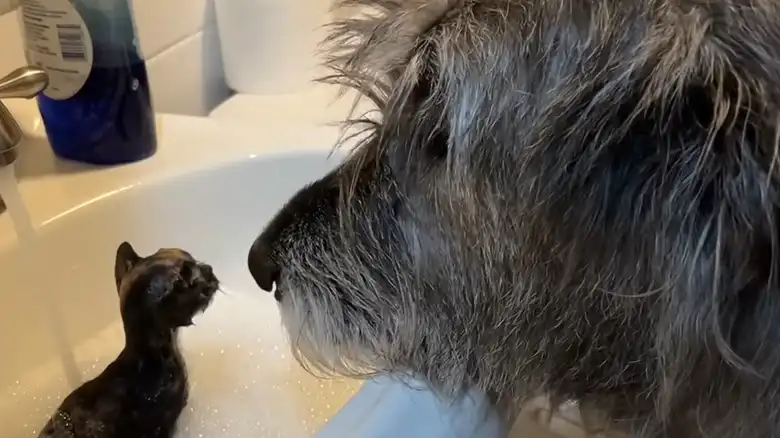
Rescue Dog Now Gives Emotional Support To Tiny Foster Animals And It's So Pure
DogsDog BehaviorRescue Dog Now Gives Emotional Support To Tiny Foster Animals And It's So PureBySheri RadfordOct. 27, 2025 9:25 am ESTThe Dodo / YouTubeSome big dogs have even bigger hearts, and that certainly seems to be the case with a beautiful canine named Chicken. "It was never the goal to have her being the emotional support dog," Alyssa Krieger told The Dodo in a September 2025 YouTube video that's been viewed more than 1.6 million times. Krieger is an employee of the nonprofit Angell Animal Medical Center, and she brought Chicken home in May 2022. Since then, the Irish wolfhound has helped Krieger foster many tiny, helpless creatures. "Because I work at the shelter, there are often animals that just need a place to go," she added to The Dodo.Chicken particularly adores kittens and bunnies. The video shows her watching a tiny 3-week-old kitten named Gumball, allowing several kittens to climb all over her, and sniffing little bunnies. She isn't as smitten with puppies, though. "It's interesting because tiny baby puppies, she's like, 'This is too small. I'm not really that interested.' But tiny kittens, she just wants to watch them," Krieger explained. The loving Irish wolfhound has also formed a strong bond with Krieger's son, Max, and some of the sweetest videos on Chicken's Instagram feature the two playing together.How Chicken the Irish wolfhound got his funny, charming nameThe Dodo / YouTubeMany comments on The Dodo's YouTube video praise Chicken's sweet, loving nature and refer to the Irish wolfhound as an angel and true gentle giant. "What a beautiful dog with a HUGE heart...she's an example to human beings..." one user wrote. A few eagle-eyed viewers also pointed out the heart-shaped patch of white fur visible on Chicken's otherwise-gray chest, mentioning how apt it is for the big-hearted dog to have a big white heart in her gray fur. "Anyone notice that wonderful amazing baby has what looks like a heart on her chest...she is so precious ," another user commented. Naturally, many people seemed to be tickled by the name Chicken for a dog. In an absolutely adorable Instagram video, Max explains that the family's previous dog was named Tuna. Because tuna is sometimes referred to as the chicken of the sea, it made sense to name the family's new pet Chicken. Max originally proposed the name Garbage Truck for the sweet Irish wolfhound, but unsurprisingly, Max's parents vetoed that suggestion. Why Irish wolfhounds make wonderful petsginormouschicken / InstagramThe Irish wolfhound is the true gentle giant of the dog world, with males able to reach a height of 3 feet — the tallest of any American Kennel Club breed — and a weight of 180 pounds. Despite their huge size, these serene, patient hounds are known to be affectionate with family members and friendly toward other dogs. Their protective nature often compels them to alert their owners whenever strangers appear. Irish wolfhounds are usually considered one of the best-behaved dog breeds, sometimes even being employed as therapy dogs, but they're also a dog breed that's likely to steal your food because of their size. It's just too easy for them to reach the top of a kitchen counter (or even a refrigerator!) and swipe whatever tasty treats they come across. On the downside, Irish wolfhounds are definitely not one of the longest-living dog breeds. As with many large dogs, they have a shortened lifespan, usually living just six to eight years. Still, as Chicken proves, these affectionate dogs can spread a lot of love during their lives.
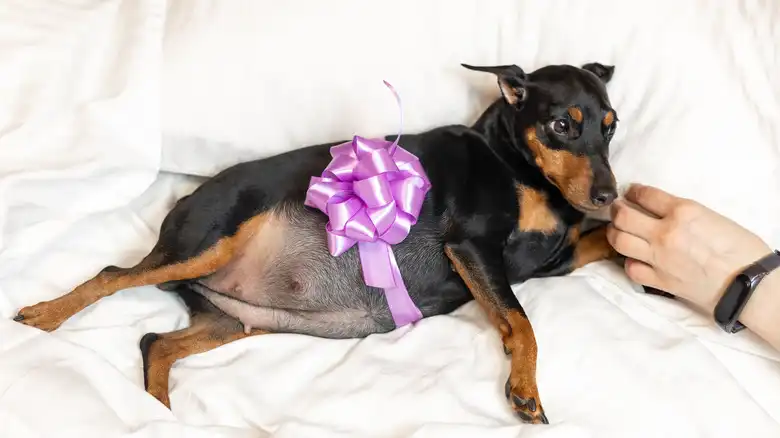
Signs Your Pregnant Dog's Labor Isn't Going As Planned
DogsDog HealthSigns Your Pregnant Dog's Labor Isn't Going As PlannedByMorrison ChanteshaAug. 16, 2025 9:25 am ESTGlikiri/ShutterstockAs your dog nears the end of her pregnancy, it's completely normal to feel a little anxious, especially if you're unsure what to expect. Most dogs give birth without complications, but things don't always go perfectly. And sadly, some dogs are more likely to experience complications. These include small breeds, first-time moms, and those carrying large litters, and for these dogs, it's especially important to understand the signs that a dog is ready to go into labor and when things may be taking an unusual turn. Some red flags are more obvious, like strong straining with no puppy after 30 minutes. Others, like green discharge or sudden exhaustion, can be easy to overlook.Of course, not every unusual moment means there's an emergency. Labor doesn't follow the exact same timeline for every dog, but knowing what to watch for and when to call your vet can make a big difference in keeping both mom and her puppies safe.Experiencing contractions with no delivery after 30 minutes could be worrisomeOlgagorovenko/Getty ImagesOnce your dog's water breaks and she's ready to deliver her pups, there should only be a short time before they start appearing. Strong, repeated straining is usually a sign that a puppy is on the way. However, if more than 30 minutes pass with no progress, your dog may need veterinary help. A puppy may be stuck in the birth canal, positioned incorrectly, or too large to pass through. In these cases, prompt veterinary care is usually needed to prevent further complications.This kind of complication is called dystocia, and it's a common emergency during labor (at least compared to other emergencies). Small breeds are especially prone to it, but it can happen to any dog. In addition to strong straining without producing a puppy, signs include crying and repeated licking of the vulva.If your dog has already delivered some puppies and then takes a break, monitor how long it lasts. Resting between deliveries is normal, but she shouldn't return to straining without progress. When that happens, acting quickly helps reduce the risk of exhaustion, stillbirth, or added stress for both mom and her puppies.Having green or foul-smelling discharge before a puppy is born could be a bad signOlgagorovenko/Getty ImagesSome discharge from a pregnant dog is normal during labor, especially after the first puppy has arrived. But if your dog produces green, black, or foul-smelling fluid before delivering any puppies, it may be a sign of complications. Discharge like this can mean that a placenta has detached too early, which can lead to a decline in oxygen supply for the puppies. You should reach out to your vet as soon as possible if this happens.A greenish liquid called uteroverdin is normally released when the placenta detaches during delivery. It helps separate the placenta from the uterus and is expected after a puppy is born. However, if it shows up too early, it may mean a puppy is in distress and needs immediate care.Foul-smelling discharge is equally concerning. A strong, unpleasant odor may indicate an infection like metritis or the loss of a puppy inside the womb. Infections can spread quickly, and a retained fetus may prevent others from being delivered safely, putting the mother and her litter at serious risk. If any fluid appears suddenly, has an unusual color, or smells off before any puppies have arrived, don't wait. Call your vet right away to help keep labor on track and ensure a safe delivery.Always consult your veterinarian before making changes to your pet's diet, exercise, or care. To find an accredited veterinarian in your area, you can search theAmerican Animal Hospital Association's online database.
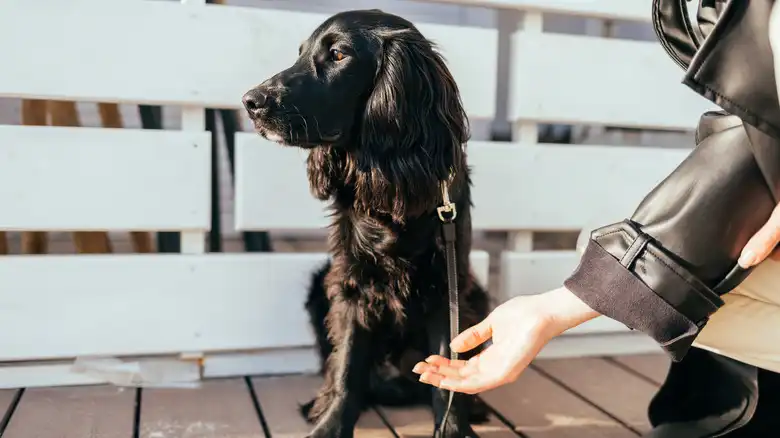
The Common Behavior Most Dogs Love But Some Don't - And Here's Why
DogsDog BehaviorThe Common Behavior Most Dogs Love But Some Don't - And Here's WhyByAdam SymchukMay 30, 2025 1:25 pm ESTprogressman/ShutterstockWelcoming a new dog into a home is a cause for celebration, excitement, and reflection on how much a new furry friend will change your life. Still, everyone has certain expectations about what a canine will bring, and bonding through cuddles and pets is one of the givens that many anticipate. This is true for many dogs, but others may not be interested in cuddling or receiving physical attention from their owners.Dogs have unique personalities, and just like people, some don't enjoy being touched, or at least only at certain times when they are comfortable welcoming it. Instead, some faithful companions prefer to show love through play or a walk rather than curling up and having their heads patted. Other canines may have special needs or requirements. Notably, dogs with post-traumatic stress disorder, affecting between 5% and 17%, may struggle with expressing themselves and receiving affection. As PTSD can occur in dogs with a troubled past, it's important for an owner to consider whether they are ready to adopt a dog and if they can take on the responsibility of a pet that may struggle. Finally, a dutiful pet owner should consider potential medical issues if sudden changes occur in behavior; pain and discomfort can cause a dog to shy away from affection when they craved it previously.A dog that does not want to be petted isn't necessarily telling its owner it doesn't trust them, but instead is looking for another kind of attention. Think of it as a unique love language your pooch shares by bringing it a toy or expressing excitement before a walk. Some dogs just aren't cuddly, and that is okay. However, there are ways that potential pet parents can work with their pet to get the snuggle buddy of their dreams.How to help a dog be more affectionate and appreciate cuddles and petsCatherine Falls Commercial/Getty ImagesLearning how to care for a puppy can come with plenty of challenges. Still, during this period, puppies are like little, adorable sponges ready to learn as both the owner and the dog start to understand each other. As dogs get older, they become more hesitant about new situations. While dealing with other struggles like vet visits and potty training, getting a puppy used to being touched, petted, and held is essential. Getting a growing dog used to being handled will increase the chances of becoming a cuddly canine as an adult.For mature dogs already set in their ways, an owner can still take steps to help the tentative canine open up. Making your hands a positive instead of something to be wary of starts by never reaching out to try to pet it first. Instead, make your hands an object of joy by dropping treats or toys nearby so an inquisitive pooch begins to see them positively. Finally, make your hands passively available and let it come to you; with time, it may welcome a pet after brushing up against your hand.Pet parents can also choose a qualified dog trainer to assist them, particularly if their pet is reactive to touch and displays aggression. Teaching a dog to open up can be challenging and emotional, but owners owe it to their new furry friends to care for their needs and gradually work toward a common goal.Adopting an affectionate dog breed can help ensure it loves pets and cuddlesMariia Vitkovska/Getty ImagesA dog's breed has been determined to affect only 9% of its behavior, meaning pet parents should always prioritize individuality over breed. Still, certain breeds are known for being more affectionate than others. For bigger dogs, the beloved family favorites, the golden retriever or the Newfoundland, are renowned for their cuddly nature. Those looking for a smaller companion may consider the adorable floof, the Pomeranian, or the faithful follower, the Cavalier King Charles spaniel.If a cuddle buddy is the goal, potential pet parents may want to avoid more independent dogs like the chow chow or malamute. Of course, there are exceptions on each side, and it is vital to research before adopting, including meeting the dog if possible, to gauge how compatible it will be in its potential forever home. It is important to remember that, like people, each dog is unique; some may take more time to open up, while others will find different ways to express gratitude to a loving owner. Patience, love, and understanding can go a long way to getting those bonds you want with your dog.
'Broken' Shelter Dog Blossoms Into A Whole New Pup With The Help Of Foster Sister
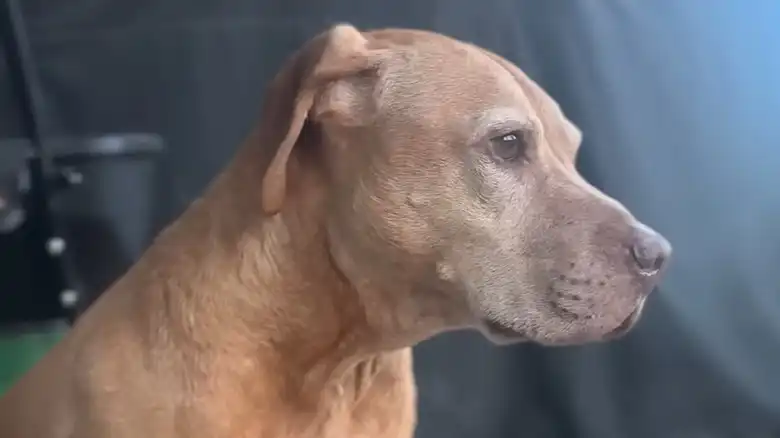
Dogs'Broken' Shelter Dog Blossoms Into A Whole New Pup With The Help Of Foster SisterBySheri RadfordOct. 28, 2025 9:25 am ESTThe Dodo / YouTubeSometimes, a human's kindness, affection, and patience are all it takes to help a scared shelter dog become confident and playful. Other times, though, the loving attention and joyful example of another dog may also be required to break through an animal's fear. That's certainly what happened with Honey, a rescue dog in Daphne, Alabama. "When I saw her, my heart was completely broken," a Daphne Animal Shelter volunteer, Kerrie, told The Dodo. "She was completely defeated." Kerrie took Honey home to be fostered, hoping that the scared dog would thrive in a quiet, loving environment. Initially, Honey appeared frightened of everyone and everything, spending most of her time cowering in her crate. "When I first would take her outside, she would go to the bathroom and then just sit there looking at the back door and just shaking, very obviously frightened of being outside," Kerrie recalled in the video. However, after Kerrie's dogs started spending more time with Honey, the timid dog began to relax a bit. Her foster mom observed, "She sees what my dogs are doing and she's learning everything from them and it's just been so vital for her progress." Honey comes out of her shellDaphne Animal Shelter / InstagramIn a TikTok video that's been viewed more than 1.8 million times, Kerrie described how, on day 29 of being fostered, Honey followed the example of Kerrie's sweet dog Ellie and rolled around in the grass — a bit hesitantly at first, then joyfully. "At first, she was like 'this is silly' but you see the moment where she's like 'hey this is kinda NIIICCCEEE????'" wrote viewer Soda_bones. Several commenters noted how sweet and emotionally moving it was to see Honey trying to copy the carefree behaviors of Ellie in the grassy backyard. "Watching foster dogs learn how to 'dog' is the most joyful thing 😍," wrote Sarachacha95. In September 2025, Kerrie sent the Daphne Animal Shelter an update about Honey, which was then posted on Instagram: "Honey has been making so much progress lately! She loves playing with her foster siblings, a Kong toy, or her stuffed animals." Kerrie noted how much Honey enjoys eating cheese and sleeping in comfy beds, though loud noises do still frighten the pup. She added, "Honey's future family is someone who will be patient, loving, and understanding as she continues working to heal from whatever trauma happened prior to her coming to the shelter." Adopting a dog like HoneyThe Dodo / YouTubeAs of October 2025, this sweet, shy dog is still available for adoption. Honey is described as part American pit bull terrier and part vizsla, a dog breed sometimes referred to as the Hungarian pointer. Vizslas are known to be playful and affectionate, with a high energy level and a constant need for mental stimulation, and they're considered one of the most emotionally intelligent dog breeds. Pit bulls, too, need to be physically active in order to thrive, and they tend to be strong, intelligent animals. As with any dog that has experienced trauma, Honey requires a patient and affectionate family who will allow her to warm up to them at her own pace and on her own terms. If you're ready to find the right dog for you and your family, consider adopting an older dog instead of a puppy — and perhaps even the oldest dog in the shelter. Honey's exact age is unknown, but she seems to be about 7 years old. The emotional payoff of adopting a senior dog like Honey can be huge, for both you and them.
Jealous Dachshund Adorably Tries To Steal Grandma's Attention Away From New Baby
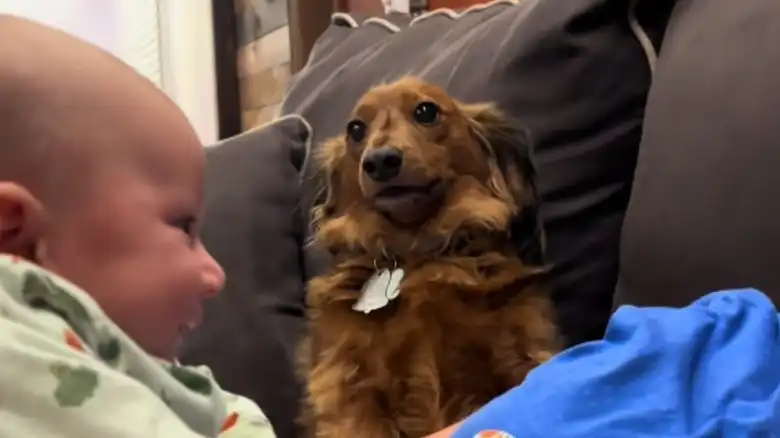
DogsDog BehaviorJealous Dachshund Adorably Tries To Steal Grandma's Attention Away From New BabyByCynthia AnayaDec. 8, 2025 9:25 am ESTravebae1996 / TikTokDogs experience many of the same emotions that people do, including jealousy. You might have a dog that gives you the side eye when you pet or cuddle with another dog in the home, or even your cat. Some dogs also feel the sting when they see their human showing affection toward another human. This was the case with a long-haired dachshund that was used to being the baby in the home — until an actual baby joined the family. His mom recorded a moment of betrayal involving the two and their grandma and shared it on TikTok in October 2025.The caption implies that Grandma usually comes over and loves on the dachshund, but in the clip, she's seated and giving all her attention to her newborn granddaughter instead. With his ears pushed back and a confused expression, the dog tolerates the treachery until he can't anymore. He gives Grandma one final "How could you?" look before licking his lips and pawing at her arm, as if to say, "Okay, that's enough. My turn." Jealousy is clearly one of the many personality traits of dachshunds."Aww, bless his little heart. He's waiting so patiently for some loving, too!" one viewer commented. "Staring right into grandma's soul at the end," another follower said. While it may seem that the pup isn't thrilled at the idea of having a tiny human in the house, his mom said in a comment that he loves his new baby sister; he just prefers all the affection from Grandma and others to be directed toward him.Tips for having a baby and dog in the home togetherFly View Productions/Getty ImagesWhen a new baby arrives, it's normal for a dog to wonder why the new addition is suddenly getting all the attention. The pup might also not be thrilled about getting fewer head scratches and belly rubs and feeling replaced. While a few brief moments of jealousy from a dog might seem cute at first, they could escalate to aggression or resentment in some dogs, depending on the owners' actions. The good news is, you can prevent this by following a few easy tips.To help keep jealousy at bay, try to maintain as much of your dog's routine as possible, including walks, play sessions, and feeding schedules. It also helps to sprinkle in some extra praise and treats when your four-legged friend behaves calmly around the baby. This can help your pup associate the baby with something positive: food!As your baby grows and becomes more active, involve your dog where you can. Let it hang out nearby during feedings or story time, even if it's just quietly lying on its bed. If you give your baby a new toy, give your dog one, too, and play with them both at the same time. This helps your dog associate the baby's presence with bonus perks, not competition. And last but not least, when you show your human baby affection, give your canine one some loving, too. After all, your dog was your baby first.
If Your Newly Adopted Dog Has Behavioral Issues, It May Be 1 Of These Manageable Anxiety Types
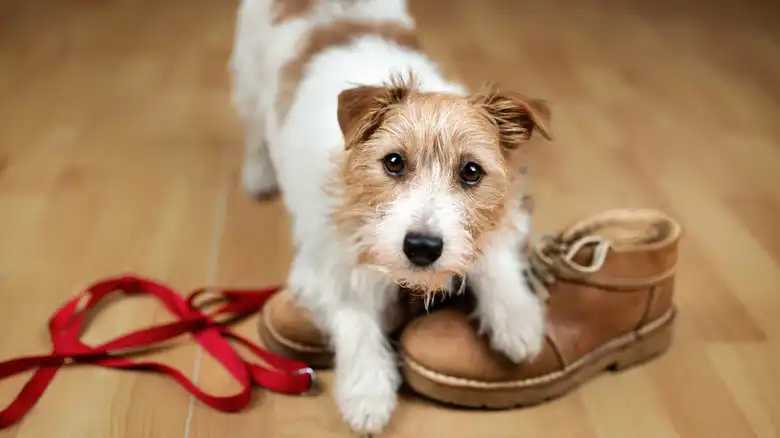
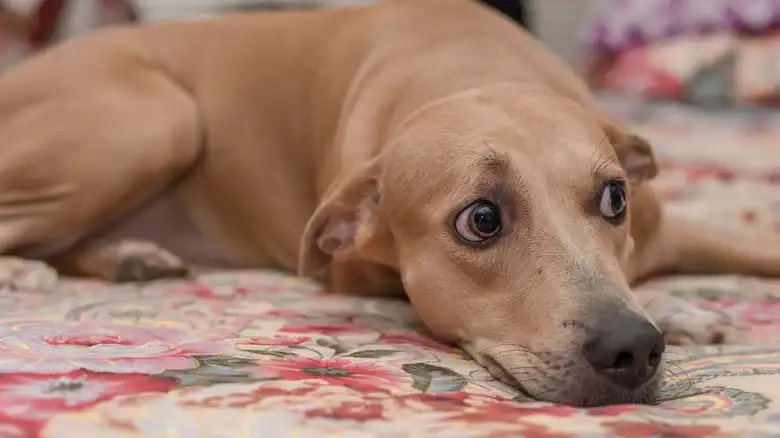
DogsDog BehaviorIf Your Newly Adopted Dog Has Behavioral Issues, It May Be 1 Of These Manageable Anxiety TypesByCynthia AnayaJune 4, 2025 9:25 am ESTMDV Edwards/ShutterstockAdopting a dog from a shelter can be compared to bringing your new baby home from the hospital. You feel excitement and joy about the addition, but sometimes, those happy feelings are coupled with confusion or concern when your pup starts misbehaving or acting strangely. Perhaps it hides under the dining room table, growls at you while eating, or makes your latest pair of running shoes its chew toy while you're at work. In many cases, these behavioral issues point to a specific type of anxiety, including separation anxiety and resource guarding.You'll never know all the details surrounding your dog's life before it ended up at a facility or what it experienced while living at the shelter. The employees should be able to provide some information about its history, but it will never tell the whole story. Plus, adjusting to a new environment can cause anxiety, even for humans, so while you may not immediately know how to handle your dog's behavior, at least you'll be more understanding of the reason.Many behavioral issues when adopting a dog can be managed at home with training, consistency, and positive reinforcement, so be patient. Do everything with love, compassion, and kindness, and don't give up. When you're able to identify the type of anxiety your dog is experiencing, it will help you to reduce or eliminate it.General or fear-related anxiety can happen with shelter dogsp.s.stasya/ShutterstockPerhaps you were the student who cried on your first day at a new elementary school after moving to a new city, or you knew someone who was. Humans aren't the only ones who experience anxiety from being in a new, unfamiliar place. Oftentimes, dogs and other animals need time to adjust to a new place, whether it's a shelter, a three-bedroom home with a fenced-in yard, or a third-floor apartment. No matter how inviting the place is, it will be filled with unfamiliar smells and sounds that could cause both positive and negative reactions for a dog. Fear-related anxiety is one of them.Your dog might have experienced a level of trauma from its old life and have a reason to be fearful of new surroundings, even if it's within your safe and loving home. It might show this fear and anxiety by hiding, urinating, or pacing. Perhaps it was adopted before and brought back to a shelter, more than once. Perhaps its previous owner was abusive or neglectful. Maybe your dog never had a real home before and just needs some time to warm up to it.Regardless of the cause of your dog's anxiety, which you may never know, be patient. Show your dog love however it allows you to. Let it know that it can trust you, and create a routine. Also keep the 3-3-3 rule in mind, which suggests that dogs could take three months to truly start to feel at home in a new domain.Resource guarding can be a problem in adopted dogsSrinuan Hirunwat/Getty ImagesWhen you're a dog living on the streets, you don't know when you're getting your next meal. You might get used to sharing food against your will or having it snatched up by another animal before you get even one bite. These scenarios can cause a hungry dog to become aggressively protective of certain items. This resource guarding behavior, also known as possessive aggression, can continue after a dog is rescued. Even after being adopted, the behavior may linger, especially if other pets are in the home.Newly adopted dogs exhibit resource guarding behavior with any object they consider valuable, whether it's food or a toy. When it involves food, it's known as food aggression. Picture this: You fill your dog's bowl with kibble or give it a chew toy before walking away. Moments later, you or one of your other pets approaches, and your dog responds by growling or snapping as it guards the item. Based on its previous experiences, it may think you plan to steal its prized possession from under its nose.To address this behavior, don't yell at or punish your pup. Instead, give it space and encourage the other pets to do the same. Give it food and toys in an area that's away from the other pets and foot traffic, such as in a crate or an area blocked off by a doggy gate. Use positive reinforcement techniques like rewarding calm behavior, and consider consulting a certified dog behaviorist for assistance.Separation anxiety can occur in a new homeMaximilian100/ShutterstockSeparation anxiety is a common behavioral issue that any dog can develop, even if it never lived on the streets or in a shelter. This condition occurs after a dog forms a strong attachment with its owner to the point that it experiences distress when it becomes separated from them. For some dogs, this may be the anxiety beginsafter 30 minutes or more of separation, but for others, it begins within a few minutes.Separation anxiety ranges from mild to severe and can manifest in a number of ways. Your dog might urinate or defecate on your carpet, despite being housebroken. Pacing, barking, and howling are also common behaviors associated with this behavioral issue. Other ways that dogs express their separation anxiety include chewing on random objects or surfaces, such as shoes, walls, or doors, or by attempting to escape via digging.While it might be heartwarming to know that your dog loves when you're around, it's best to treat the anxiety ASAP to prevent further destruction, injury, and other unwanted consequences. For mild cases, you can give your dog a treat or new toy every time you leave the house so it will associate your exit with something that brings it joy. This is called counterconditioning. Certain products can also help ease separation anxiety in your dog. Moderate and severe cases may require additional treatment in the form of desensitization and the assistance of an animal behaviorist.Illness-induced anxiety can make dogs fearfulPamela Lico/ShutterstockSometimes, a dog develops anxiety from an internal factor, like a sickness. Like separation anxiety, illness-induced anxiety can occur in both newly adopted dogs and dogs that have never lived in a shelter. It's caused by unwanted symptoms of a health condition, such as itchiness, pain, or general discomfort. You probably know someone who gets grumpy or unpleasant in some other way when they're experiencing symptoms of an illness. Dogs can respond in the same way. If your newly adopted four-legged friend develops a health problem, it might behave aggressively or become fearful in response to the symptoms. You might notice other non-behavioral symptoms related to the illness as well, such as vomiting or diarrhea. This medical problem may have started before the adoption or after. Either way, schedule an appointment with your vet so they can conduct a comprehensive exam on your pooch and perform any diagnostic tests if necessary. Once they can make an accurate diagnosis, they can discuss treatment options.Social anxiety can ramp up in newly adopted dogsPachi Bagiolita/ShutterstockYour new dog might fall in love with you and appear to have no behavioral issues at first, but once it meets someone new or another animal, it could do a 180. Some dogs just prefer the company of humans over other dogs, or they need time to adjust to the unfamiliar. On the other hand, some dogs might have issues with meeting new humans or both humans and animals. Others get nervous only around specific people or specific animals. This behavior is called social anxiety.Sometimes, the shelter staff members are aware of pre-adoption social anxiety and include this information in the dog's description, but this isn't always the case, so be on the lookout. The signs of social anxiety are hard to miss. Your dog might hide, shake, or attempt to get as far away as possible from the unfamiliar person or animal that it encounters for the first time. It might also bark, growl, whine, or appear overly excited by jumping or licking.To help your dog with its social anxiety, evaluate its home space to ensure it's as comfortable and safe as possible. Create a space that it knows belongs to it, whether it's a crate lined with comfy blankets, a cozy space under a bed, or an area in the corner of a room with a dog bed. You might also want to consider giving your dog a calming agent. If necessary, consult with your veterinarian or a professional dog trainer. Regardless of the type of anxiety, these steps can help your dog feel a little more comfortable in its new home.Always consult your veterinarian before making changes to your pet's diet, exercise, or care. To find an accredited veterinarian in your area, you can search theAmerican Animal Hospital Association's online database.
How To Deal With A Dog's Motion Sickness During Long Drives
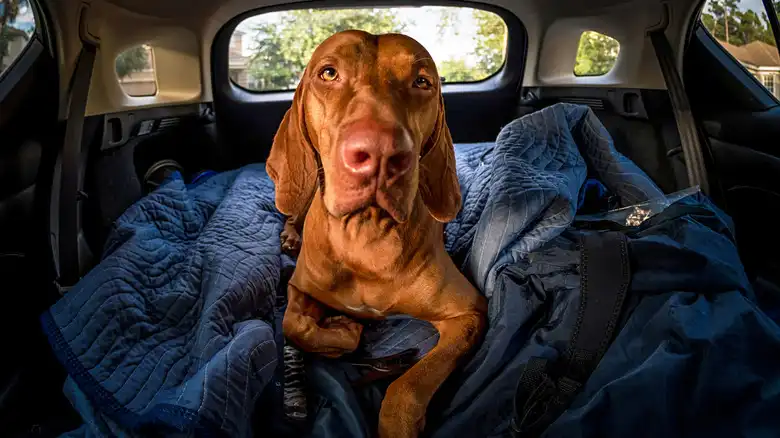
DogsDog HealthHow To Deal With A Dog's Motion Sickness During Long DrivesByAdam SymchukApril 26, 2025 9:25 am ESTHillary Kladke/Getty ImagesWe may receive a commission on purchases made from links.When picturing a dog in a car, many envision a happy pooch with its head out of the window, soaking in the sights and sounds with a smile on its face. However, this isn't the case for all pets, with around 15% of dogs suffering from motion sickness. Having to deal with a sick dog making a mess of a car can be daunting, and sadly, furry friends who suffer from motion sickness are sometimes left out of travels with their favorite people.To help pet parents figure out ways for their dogs to overcome motion sickness, Cuteness spoke exclusively to Dr. Gary Richter, the founder of Ultimate Pet Nutrition. One major factor that can lead to motion sickness is anxiety. On this, Dr. Gary Richter tells us, "If there is time, it is sometimes possible to gradually acclimate dogs to riding in the car through desensitization training." He further outlines a plan: "Begin by sitting in the car with the dog when it is not moving. Feed them treats. Make it a game for them to get into the car." After successfully getting them used to a still vehicle, you can expand the process. "Eventually, take very short (5 minutes) trips with the dog and make sure there is a great reward at the end," Dr. Richter explains. What this reward is can vary, whether you take your dog to its favorite park or give it a yummy treat.Through desensitizing to the process, an anxious pup can turn into a happy dog going on a heckin' good car ride with its owner. However, some dogs require more than training and may need aids to help them on a trip. So, whether you need to spend some extra time leading up to a big trip or explore medical aid, there are ways to overcome motion sickness.Finding the proper medication to help a dog with motion sicknessChristine Bird/ShutterstockDr. Gary Richter emphasizes the importance of testing any medication before a long trip to monitor for side effects and consulting with your veterinarian beforehand. "One of the best is Bonine. This is an OTC (over the counter) motion sickness medication for people that can also be used for dogs," Dr. Richter exclusively tells Cuteness. Curious how to use it? "The dose is 1/2 to 1 mg per pound of body weight. For example: A 30-pound dog would get 15-30 mg. Bonine can be used once daily, and it is very important to give it at least 45 minutes to 1 hour prior to getting in the car," Dr. Richter explains. For a pet parent, avoiding potentially harmful substances that can appear in some OTC medicines, such as xylitol, is vital.You can purchase Bonine Non-Drowsy Motion Sickness Relief without a prescription, but a vet can provide a tailored recommendation to a car-sick dog. "There is also a prescription medication called Cerenia (maropitant citrate) that is used for motion sickness," Dr. Richter notes. A veterinarian may also be able to address the underlying cause of the motion sickness, such as anxiety, through medication. Alternatively, pet parents can use natural products, such as Adaptil ThunderEase Dog Calming Pheromone Spray or Nutramax Solliquin Calming Behavioral Health Supplement, to help calm their dog before a trip. Furthermore, letting a dog bring its absolute favorite toys to hold onto is a free way to help alleviate stress.Other factors that can cause motion sickness in dogsCatherine Falls Commercial/Getty ImagesSome good news is that no dog is more prone to motion sickness than others. "Motion sickness does not seem to be more prevalent in certain breeds or sizes of dogs," Dr. Gary Richter exclusively explains to Cuteness. However, other factors can lead to motion sickness. Knowing your dog's limits in training and not pushing it is crucial. Making note of how long a dog can ride in a car will also help avoid extended discomfort and motion sickness. Puppies and young dogs (under 1 year old) are susceptible to motion sickness because their inner ears, which help with balance, aren't yet fully developed.Specific medical issues can also increase the likelihood of motion sickness. For instance, an inner ear infection can cause agitation and imbalance. Alternatively, vestibular disease, which affects the system that maintains a dog's balance, can be exacerbated during a car ride. Some medications may also have side effects, including dizziness. For those who love to travel with their furry friend by their side, discussing this with a veterinarian before starting new prescriptions is vital. Ultimately, the symptoms of motion sickness are often manageable, and it's up to a pet parent to address potential issues to ensure a smooth trip for both them and their canine companion.Now, check out the travel essentials every dog owner should have.
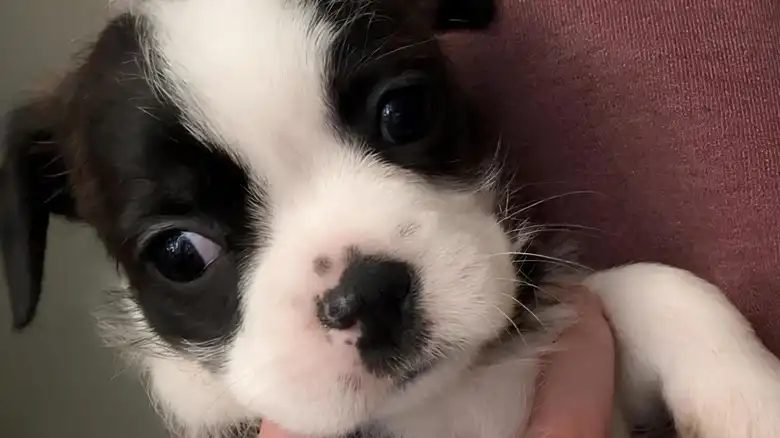
Tiny Puppy's Big Stretch After Waking Up Has Everyone Saying The Same Thing
DogsDog BehaviorTiny Puppy's Big Stretch After Waking Up Has Everyone Saying The Same ThingBySheri RadfordNov. 4, 2025 9:25 am ESTJessica Hang / FacebookIt's difficult to think of many things more satisfying to watch than a dog doing a big stretch. After all, there's a good reason downward-facing dog is one of the most-practiced yoga poses. A dog's big stretch can indicate an array of positive feelings, such as happiness, contentment, relaxation, and fondness toward an owner. Sometimes, of course, the stretch is simply an instinctive movement to boost circulation and reduce stiffness upon waking. Even still, the big stretch can be absolutely adorable.Take, for example, seven-week-old Zoey. In a TikTok video that's been liked nearly 4 million times, Zoey starts out sound asleep. The pup is dozing so deeply, with her little pink tongue hanging out, that several commenters admit they initially feared the puppy was deceased. Then, Zoey wakes up suddenly and does the cutest full-body stretch, complete with shaking limbs. "She stretched her body and soul," Anaaamp3 observes.Several commenters mention that any owner who witnesses their pet doing a big stretch must immediately comment upon it. "It's a federal crime to not say oooo biiiiig stretch after such a big stretch," Mariekayyy13 jokes. "Tell her I said AWWW BIG STRETCH," Moey6711 adds.What is a BoShih?Jessica Hang / FacebookDarling little Zoey is a BoShih, which is a mix of a Boston terrier and a Shih Tzu. The Boston terrier is a small, people-oriented pup that requires much stimulation, both mentally and physically. It's considered one of the best-behaved dog breeds. The Shih Tzu is another small, affectionate dog breed, best known for its long hair, which requires daily grooming. Some owners spend a lot of time and effort on fancy Shih Tzu hairstyles such as top knots.When you combine a Boston terrier and a Shih Tzu, the resulting BoShih usually weighs between 10 and 20 pounds and stands about 12 to 16 inches tall. BoShihs are feisty little pooches that demand lots of attention and affection. Though Zoey may be feisty and lively when awake, from the video, it's clear that she also enjoys her naps. "Sleeping like she pays all the bills in that house," Thatguychato writes on the TikTok video. Puppies require about 18 to 20 hours of shut-eye each day, to help with the healthy development of their brains and bodies. "Dogs be sleeping like they work 12-hour shifts 😭," Cloudy_bx says. Clearly, all that sleeping is hard work.Want to see more cute dogs doing big stretches? Here are 18 dogs crushing their yoga goals.
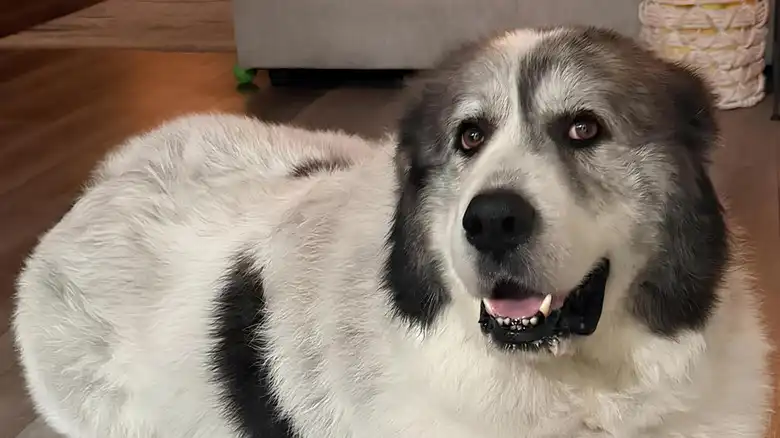
Great Pyrenees Walks To CVS Every Day And Puts A Smile On Everyone's Faces
DogsDog BehaviorGreat Pyrenees Walks To CVS Every Day And Puts A Smile On Everyone's FacesBySheri RadfordNov. 5, 2025 9:25 am ESTritchiethepyr / InstagramDo humans train dogs? Or do dogs train humans? In the case of Ritchie the Great Pyrenees, this gentle giant of a dog has definitely trained the humans in his life. "Every time I walk him outside, he takes me to CVS," explains his owner, Laura Santos, in a YouTube video that's been viewed more than 1 million times. "I'll never be able to go on a simple walk with him."It all started when a kind woman at CVS bought a package of dog treats and gave one to Ritchie. Now, in Ritchie's mind, every trip to CVS means a treat for him. Santos says, "If I don't give it to him, he lies down. Obviously, he loves the treats, but he loves the people there, too. They are just extra nice to him." Viewer Kt3853 comments on the video, "He has trained those humans to do what he wants. Treats, hugs, and kisses. He is adorable." CVS employees aren't the only people enamored with the big shaggy dog. Ritchie's Instagram page shows the placid pup attracting attention and causing smiles wherever he goes — even in the cockpit of an airplane, where he calmly poses for snapshots with the pilot.The Great Pyrenees as a breedritchiethepyr / InstagramWhen a dog as big as Ritchie decides he wants a treat and isn't moving until he gets one, there isn't much an owner can do to physically move the animal. A Great Pyrenees female can weigh up to 85 pounds, while a male like Ritchie can top the scales at 100 pounds. A female can be 29 inches tall, and a male can be another 3 inches taller than that.The Great Pyrenees can be a mellow, low-energy dog breed, often exhibiting an almost Zen-like calm, but Pyrs are also one of the dog breeds most likely to save you during an emergency. These strong and territorial warriors are known to spring into action when a loved one is in danger. Pyrs are long-haired dogs with thick double coats, making them a poor choice for allergy sufferers. Great Pyrenees are also strong-willed — and their desire to protect livestock is so ingrained — that they often struggle without a leash. As is evident from the viral video of Ritchie, even a Great Pyrenees on a leash can be nearly impossible to control when he's determined to get his treat.Uqox comments on the video, "Great Pyrenees are wonderful dogs. Stellar protectors and pretty gentle with most people, and very, very smart. Doesn't surprise me at all that he remembers where his 'friends' are waiting for him. Once he knew where his snacks were, he locked that info in his memory vault." Ritchie certainly loves his routine.
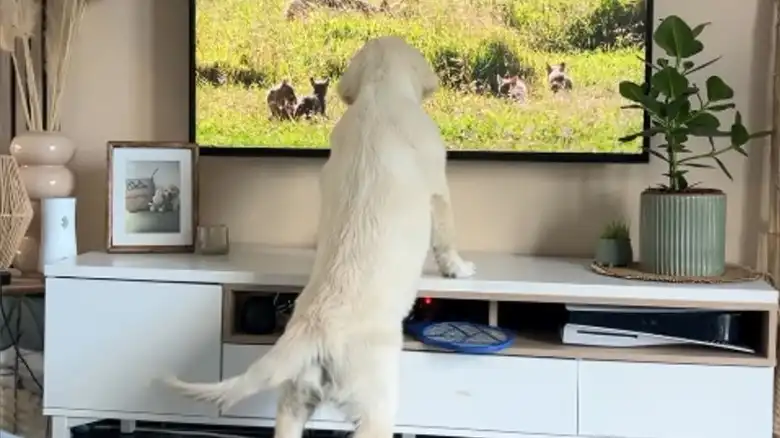
Golden Retriever Practically Tries To Jump Into The TV When Animals Are On The Screen
DogsDog BehaviorGolden Retriever Practically Tries To Jump Into The TV When Animals Are On The ScreenByCynthia AnayaNov. 25, 2025 9:25 am ESTodie_thegoldie_ / InstagramMany of the same sights, sounds, and smells that get our attention as humans intrigue our dogs, too. The wafting aroma of meat cooking in the kitchen, the sound of a whining dog outside, and the sight of a wild animal. Even on a television screen, animals can quickly captivate a dog's interest — dogs like Odie, a golden retriever who lives in Belgium. His owner shared on TikTok the moment when the dog noticed some of his relatives on the screen during what appears to be a documentary or nature program.In the clip from August 2025, Odie is seen staring at the television mounted to the wall, his tail wagging with excitement and curiosity. He paws at the table below it in an attempt to get closer to the action. Moments later, he's seen with both paws on the table and his snout only a couple of inches from the screen. He sniffs and pulls his face away, probably wondering why the jackals have such a faint chemical smell. "Every time he sees animals on TV, he wants to play along," the caption reads.This isn't the first time Odie has made his fans smile on social media. In September 2025, his human caught the puppy patiently waiting to show off his new toy to his neighbors. It goes without saying that Odie brings joy not just to his owners, but to his 8,500+ TikTok followers by simply living his life.Benefits of TVs for dogs, and what they love to watchDamedeeso/Getty ImagesWhat do dogs see when they watch TV? As Odie proved, these animals can not only recognize images on a television screen; they can enjoy them, too. Plus, television can actually help mentally stimulate dogs while reducing separation anxiety and stress. It can also create the illusion that a human is home with it — especially if you regularly have the television on while you're home.Many owners turn the TV on specifically for their dog, either when they're busy cleaning around the house or when their four-legged friend is home alone. Even some boarding facilities have televisions in their suites for their canine guests. The question is: what do dogs like to watch? A 2025 Scientific Reports study of 453 dogs found that they're most interested in other animals on screen, especially other dogs. They also like watching moving objects, like balls or running animals, suggesting that motion captures their attention more than static scenes.Nowadays, you can find many options for channels and programs for your pet to enjoy, including Animal Planet, National Geographic, and DOGTV. If you want to put a movie on, consider one of the many where dogs are the main characters. "Homeward Bound: The Incredible Journey," "Eight Below," or any of the Benji or Lassie films are all great choices. Your pup may or may not show the excitement level of Odie, but hopefully, they'll still enjoy it from the floor or sofa. Interested in more golden retriever stories? Check out this golden retriever puppy who lives on a cruise ship and has a very important job.
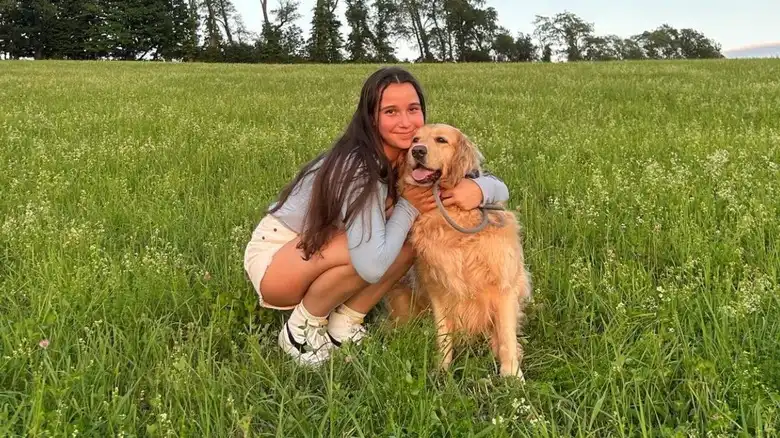
Golden Retriever Reuniting With Owner Who's Home From College Is Pure Happiness
DogsDog BehaviorGolden Retriever Reuniting With Owner Who's Home From College Is Pure HappinessByCynthia AnayaUpdated: Oct. 5, 2025 4:29 pm ESTelizabethverboys / InstagramWho doesn't like a heartwarming reunion video? You've likely seen the tearjerkers of soldiers surprising family members and dogs jumping all over their long-lost humans. A golden retriever named Rosie had her own moment like this when her human, Lizzy, returned home from college after being away for two weeks. It turns out that Rosie had been seriously missing her two-legged BFF, and Lizzy and her mom filmed the reunion and shared it on TikTok in September 2025. "I had to come home and see her, obviously," Lizzy says in the clip.To capture the magic from all angles, Lizzy arranged for her mom to bring Rosie outside and start filming from the front yard while she filmed the arrival perspective. Lizzy begins walking down a long, curved road that leads to her home. Still with Lizzy's mom, Rosie looks confused at first until she hears someone calling her name in the distance. Being one of the smartest dog breeds in the world, Rosie follows the familiar voice down the road, bolts around the corner, spots Lizzy, and sprints toward her. "Rose! My baby! Come here!" Lizzy yells. When Rosie reaches her, she smothers her with kisses and whines with joy.Naturally, viewers' reactions to the video were charming, humorous, and relatable. Many jokingly suggested that Lizzy should drop out of college to stay home with Rosie, while others expressed how emotional the clip made them. The video proves that dogs miss us (and may even cry) when we're gone, but what exactly do they experience during this time of longing? What's going through their minds during those days apart?Studies show dogs get emotional when their owners are away (not just when they return)elizabethverboys / TikTokDogs don't just notice when we're gone; they feel it deeply. According to 2022 research published in the journal Animals, dogs can experience stress and behavioral changes when separated from their owners. Think racing hearts, pacing, whining, and even pre-departure anxiety. Yes, sometimes they know when their humans are about to grab their wallets or purses and keys beforetheydo. Imagine being in your dog's paws, and the person who's your entire world leaves you and you have no clue when or if they'll return.This emotional attachment goes beyond short absences, and it doesn't only happen when dogs are home alone. Dogs can miss specific people, such as adults (like Lizzy) who head off to college, a favorite owner, or a beloved previous owner. In those cases, pups might act withdrawn or restless or seem to be searching for that missing someone. And when a loved one (human or furry) passes away, dogs may sleep more, eat less, lose interest in play, or stick closer to those still around them.We'll never know exactly what dogs understand about absence or loss, but the evidence suggests that they experience an emotional longing that mirrors human grief. The good news is that there are ways to reduce dogs' separation anxiety and other negative reactions. Owners could get a second pet to keep their pup company, hire a sitter, or take their dog to daycare. Even with these options, however, most dogs still become ecstatic upon their humans' return, just like Rosie.
What To Do When Your Dog Throws A Tantrum, According To Our Dog Trainer
DogsDog TrainingWhat To Do When Your Dog Throws A Tantrum, According To Our Dog TrainerByAdam SymchukMarch 15, 2025 9:25 am ESTMariia Siurtukova/Getty ImagesWhen a pet is welcomed into a home, many owners hope for the best behavior from their new furry companion. Yet, canines are complex, emotional creatures — a full-grown dog can have the mental maturity of a 3-year-old child— and can have moments when they throw child-like tantrums. For pet parents, gauging what to do or where to start addressing the behavior can be challenging.Speaking exclusively to Cuteness, dog trainer Rachel Lane, MSc, CPDT-KA, CBCC-KA, UW-AAB, of Leash and Learn in New York City relays the importance of understanding why your dog has tantrums before trying to avoid them, stating, "The next time your dog throws a temper tantrum, think about what happened immediately beforehand. Remember, the trigger can be something that you barely notice or think is 'fine,' but to your dog is a big deal."From there, Lane advises trying to figure out what it is your dog is seeking, whether it's something tangible, like your dog's absolute favorite toy, or it being intimidated by an action or thing. "If they are seeking a tangible resource, consider teaching them a different behavior they can use to ask for it. If they are seeking safety, focus on desensitization and counterconditioning so they feel safer in that same situation in the future," Lane explains. While it may seem simple to fix this behavior, Lane emphasizes the importance of sticking to a plan to get the desired outcome, saying, "Practice, patience, and consistency are keys to successful training."Best practices for counterconditioning and desensitizationElzauer/Getty ImagesCounterconditioning involves turning a negative sensation a dog feels into a positive reward. This process can be as simple as playing fetch (positive) after bathing (negative). For a dog throwing a tantrum, it is essential to figure out the reason first, as you don't want a pet to think it is being rewarded for its bad behavior. Finding a time when your dog is open to counterconditioning is important, as a pet won't always be receptive to rewards in high-stress situations.Desensitization involves slowly introducing a dog to something it fears. A canine afraid of strangers can be a sign of a protective pooch, but it can be troublesome if this happens with family and friends. Letting a dog stand far away from others to observe but not interact will slowly allow it to get used to being around people. This process requires patience. Standing 20 feet away from a stranger without fear or anxiety is a good start, and you can gradually increase the stimulus as the dog becomes more comfortable.Avoid flooding, which is forcing a dog to confront the source of fear or anxiety, as this can lead to it lashing out at others and does not correct the problem. Health issues, such as joint pain and ear infections, can also cause a dog to show signs similar to a tantrum, such as lashing out and being vocal. Finding that balance of counterconditioning and desensitization to address the core issue behind a dog's tantrum allows you to work with your pet toward a positive outcome.Why dogs throw tantrums (& the signs to look for)PixieMe/ShutterstockA dog's tantrum is likely caused by not getting what it needs, but how do you know when your dog is having a tantrum? Rachel Lane clarifies exclusively to Cuteness what a tantrum looks like in canines, saying, "These behaviors include whining, excessive barking, chewing, refusing to follow commands or move, and/or biting. When your dog displays these behaviors, they are expressing emotional distress."Every pet parent has encountered whining at some point, whether their dog is whining because of boredom or because it wants some "people food." These minor reactions can be easy to identify and address. However, these aren't the only matters that can cause tantrums. "When your dog is throwing a temper tantrum because they are being forced to do something they do not want to do, their behavior is more likely motivated by feelings of fear and/or anxiety," Lane explains, adding, "These behaviors function as a way to increase distance between your dog and the stimulus that is causing the fear and/or anxiety."Still, a dog's emotional complexity means its reasoning may not always be straightforward. Lane tells Cuteness that a tantrum can also be caused by factors like "exhaustion, overwhelm, overstimulation, and/or pain." Moreover, knowing it can get what it wants if it acts a certain way can cause a dog to throw tantrums. Understanding why your dog throws a tantrum is the first step in addressing how to best fix the issue by replacing it with the desired reward or behavior.Are some dog breeds more prone to throwing tantrums?Barnabas Davoti/ShutterstockCertain breeds have been given a reputation for throwing tantrums, yet these are often because of public perception or a misunderstanding of a dog's needs. The smartest dog breeds, like border collies and golden retrievers, require mental stimulus and activity, and the stubborn Jack Russel terrier may require a bit of extra patience in the training process. That said, Rachel Lane put the myth of certain breeds being more tantrum-prone to rest, exclusively telling Cuteness, "No, the individual personality of the dog and their environment are more influential on a dog's predisposition to throwing temper tantrums than their breed."Dealing with a dog's tantrum can be difficult for pet parents, but figuring out the source of the behavior is the ideal starting point. Those who struggle can also choose a qualified dog trainer to help them address the issue under their guidance and provide instructions for dealing with the undesired behavior at home. Working with your pup to build that happy, harmonious home you always envisioned is essential. At the end of the day, tantrums happen, but they can also be addressed constructively.
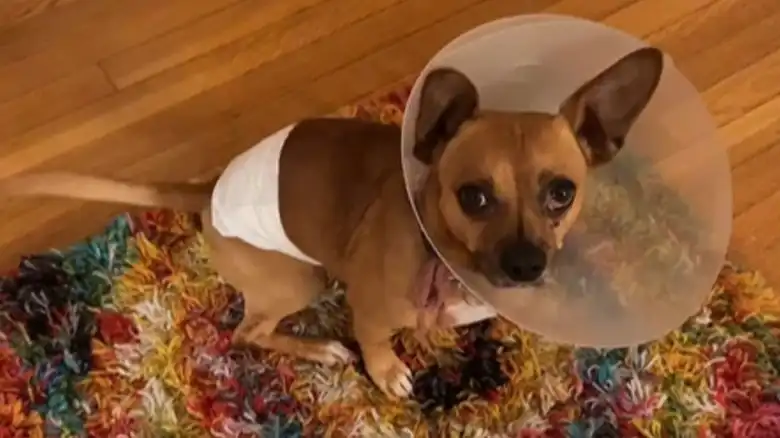
Foster Mom Realizing Her Rescue Dog Understands Spanish Has People Emotional
DogsDog BehaviorFoster Mom Realizing Her Rescue Dog Understands Spanish Has People EmotionalByCynthia AnayaNov. 11, 2025 9:25 am ESTthemobtrio / InstagramThere can be many unknowns when it comes to fostering a rescue dog. If the animal was rescued from the streets with no information about a previous owner, its former life might always be a mystery. Dogs obviously can't speak, but sometimes they give us clues about their past, including what language(s) they understand. A foster mom named Monica was pleasantly surprised when she learned that one of her foster dogs, a small Chihuahua mix named Nacho, understands Spanish. She shared proof of her discovery on TikTok in September 2025.In the clip, she asks, "¿Qué pasó?", which translates to "What happened?" Nacho's ears perk up, giving the first clue of understanding. After asking a few more questions — some in Spanish and some in English — she receives confirmation. He excitedly jumps down from the bed after she says, "¿Vamos afuera? ¡Vamos!" which means, "Are we going outside? Let's go!" The dog then starts wagging his tail, waiting to be taken outside. Before taking him, Monica gives him one more command in Spanish, "Ven," which means "Come." The dog responds by jumping back up on the bed.Comments from viewers have been pouring in, with one saying, "He is probably so relieved to be understood now." Another said, "He said you know my language. I'm so happy." Monice replied by saying she plans to continue speaking to him in Spanish so he'll feel "more at home." The discovery likely answered many of Monica's questions about the precious pup and gave her a little more peace of mind about his past and future.Nacho's rescue and where he is nowthemobtrio / InstagramMonica picked up Nacho from Wags & Walks Rescue in Los Angeles on September 29, a day before posting the video of her speaking Spanish to him. According to her TikTok post from that day, he had been at the shelter for a few weeks, and before that, he'd been roaming around the rescue facility for a few days. He was struggling to adjust to his new environment, so she agreed to foster him with hopes of helping him "come out of his shell." Her hopes became reality; he warmed up to her home and her other dogs within hours.October clips from Monica's TikTok account show Nacho enjoying window views, playing with his temporary canine siblings, and behaving during bath time. His last days in foster care were very emotional for her, as she'd gotten quite attached to the big-eared Chihuahua. He spent his last night in her home on October 23 before being transported to the Oregon Humane Society in Portland, where he was placed for adoption. A few days later, he found his furever home, thanks, in part, to Monica's videos.Interested in more rescue or adoption stories? Check out a dog stuck in a shelter for more than 2,000 days that has the most heartbreaking behavior, or a golden retriever that gets its forever home after a man comes to the shelter to adopt a different dog.
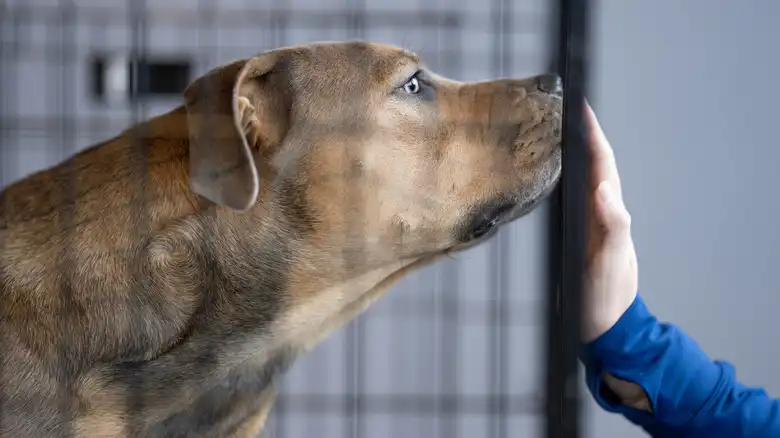
Major Red Flags That An Adopted Dog From A Shelter May Have Behavioral Problems
DogsDog BehaviorMajor Red Flags That An Adopted Dog From A Shelter May Have Behavioral ProblemsByAdam SymchukJuly 11, 2025 9:25 am ESTFatcamera/Getty ImagesWhen someone decides they're ready to adopt a dog, there are many questions to answer first, like what breed would suit their home and what supplies they need before bringing the dog into their life. In the step-by-step process of adopting a dog, one of the very first questions is whether to adopt from a shelter or a breeder.Adopting from a shelter can be a rewarding experience, providing a home to a dog in need, especially one that may have had a tough life. However, the shelter environment doesn't always reflect a dog's true personality, as the atmosphere, interactions with other dogs, and strict schedule differ from those of domestic life; it presents a whole new set of challenges to face. Every dog is one-of-a-kind, and shelters usually put their best foot forward with a staff who love pets. Still, some signs, such as staff unwilling to answer questions, or anxiety symptoms, should alert owners that there might be hidden behavioral issues they won't notice until they bring their new friend home.Staff is hesitant to answer questions and try to expedite the adoption processYiistocking/ShutterstockStaff at shelters should understand and be respectful of the adoption process, recognizing how profoundly life-changing it can be. Questions like where the dog came from, whether they have been with other families before, and, most straightforwardly, whether or not they have behavioral issues, are essential. Asking whether a dog has bitten or been aggressive toward a person is also an important question that should come with a clear answer from staff.There is a difference between not knowing and not disclosing. If shelter staff are hesitant to answer any questions, this can be a red flag that there are greater issues they are aware of. A potential owner needs to know as much as possible about a potential pet, particularly if they will be brought into a home with children or other pets.The adoption process should never feel rushed or pressured. Many shelters will conduct an interview with the owner, hold a meeting at the shelter with the pet and staff, and also follow up after the adoption is complete. The more care the shelter puts into the process, the more time an owner has to understand the level of commitment they are taking on and notice any behavioral issues.There is a lack of information on the dog and its historyandysavchenko/ShutterstockThere is a significant difference between adopting a senior dog from a shelter and a puppy, and factors such as breed can be potential indicators of common health or behavioral issues. A dog's past can also reveal a lot about how it will behave in specific environments.No shelter is the same, as each offers either open, limited, or managed intake and is managed by different organizations. Depending on the approach of the shelter, they may not have all the information on a dog in their care; age, breed, and past can be misrepresented when they are not 100% certain and are not provided with a background on all animals coming into their care.Whether it's not disclosing or simply not knowing, the clearer information a shelter can provide about adoption, the better. This way, an owner can assess potential challenges and determine if they can provide the proper resources and time. If you do bring home a pet with an unknown history, a vet visit or visit with an animal behaviorist, especially if you suspect any issues, can help.The dog already shows signs of anxiety, aggression, or fearAlexandra Jursova/Getty ImagesA dog's behavior in a shelter can reveal some signs of how it will behave at home. While this may seem straightforward, meeting the dog you dreamed of can lead to overlooking what is right in front of you. In a shelter situation, anyone looking to adopt can observe existing behavioral issues, including dog and human aggression, phobias, resource guarding, and other compulsive behaviors.Not all behaviors will be visible in a shelter due to the noise and presence of other animals, such as territorial aggression and separation anxiety. However, any issues observed in a shelter could lead to further problems at home; there is no guarantee that removing a pet from a shelter will resolve existing behaviors.When it comes to newly adopted dogs with behavioral issues, there are several types of manageable anxiety, but this will depend on the owner's willingness to train and patience. Additionally, aggression can also pose a challenge for inexperienced owners who may struggle to address it on their own.The shelter does not let you see the dog for an extended period of timeandysavchenko/ShutterstockAn important first step in meeting a potential pet is spending quality alone time with them; many shelters provide quiet zones for meet-and-greets. Creating an environment where you can spend one-on-one time with a dog will reveal a lot about its personality and whether it has any behavioral issues; many shelters even allow this time to meet existing pets as well. If a shelter does not offer these services for an adoption, it might be hiding potential problems the dog has or may not be as committed to finding the right match for it.People never really know how or if they will find their 'soul pet,' and such a lifelong connection can come from anywhere. It is wise to keep your heart open when searching for a furry friend, but also be aware of any red flags indicating behavioral or physical health issues that may become a burden after adoption. For both humans and canines, the ideal adoption comes from that perfect pairing that leads to an unforgettable friendship.Always consult your veterinarian before making changes to your pet's diet, exercise, or care. To find an accredited veterinarian in your area, you can search theAmerican Animal Hospital Association's online database.
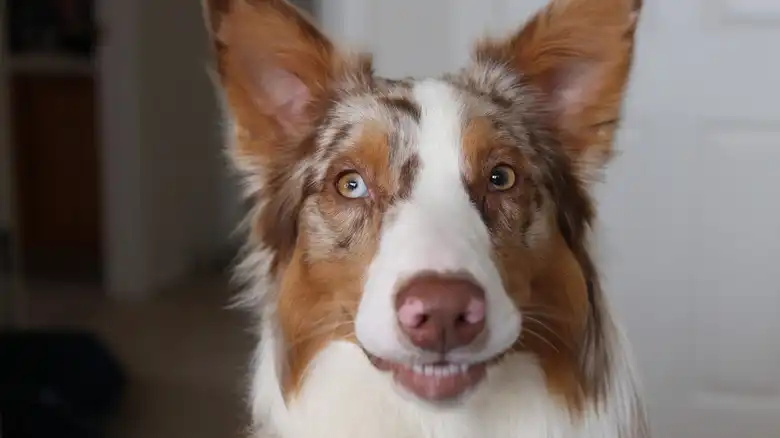
12 Facial Expressions Dogs Can Make (And What Each Might Mean)
DogsDog Behavior12 Facial Expressions Dogs Can Make (And What Each Might Mean)ByLisa BernardiFeb. 18, 2025 9:05 am ESTKRxMedia/ShutterstockEvery pet parent wishes they could talk to their pup, but many don't realize just how much dogs are able to communicate without words. Facial expressions are one of the primary forms of nonverbal communication dogs use to show their feelings, convey their needs, and ask questions. Learning to understand your canine's facial expressions can even help you spot medical issues before more serious symptoms appear, leading to earlier diagnosis and treatment.While dogs possess a series of natural facial expressions that trace back to their ancient wolf ancestors, they're also incredibly unique animals in that many more expressions have developed as a part of their more recent evolution as domesticated human companions. Scientific analysis of dogs' facial anatomy published in Biological Sciences shows a muscular structure that has changed to allow movement in ways that people are more likely to understand. An additional 2017 study concluded that dogs change and exaggerate their facial expressions depending on whether or not a human is watching. The next time you catch your canine making a goofy face, there's a good chance they're making it specifically for you.1. Grinning demurelyAlrandir/ShutterstockSome dogs appear to put on a sheepish smile while welcome their favorite person home or meeting new canine or human friends. This adorable gesture, called submissive grinning in dogs, is much more than a simple greeting. It's actually a defense mechanism canines use to defuse potential aggression from newcomers that likely traces back to their ancient ancestors' behavioral code.When a dog smiles submissively, their lips may either be closed or open to show their teeth. The latter can feel intimidating to humans who typically associate bared teeth with an aggressive snarl. But it's important to look at the pup's body language as a whole before jumping to conclusions about the intention behind their toothy grin. If a dog shows their teeth while relaxing their posture, closing their eyes or averting their gaze, or lifting a paw delicately, it's almost certainly a submissive gesture. However, visible teeth accompanied by stiff body language or intense staring, is more likely to stem from the dog feeling threatened and warrants caution in continuing to interact with them.If you're on the receiving end of a submissive grin from your favorite pup, you can likely interpret the behavior as them letting you know they respect your leadership and authority. Grinning from an unfamiliar dog means they'd like to make friends and are hoping to avoid provoking aggression. You can reassure them by lowering yourself towards the ground and giving gentle praise in a soft, soothing voice.2. Giving a sly winkWavetop/Getty ImagesIf you've ever glanced at your dog and caught them winking in your direction, you might be surprised to learn the behavior could mean exactly what you think it does. Although much of canine body language is misinterpreted by humans, winking is one of a handful of gestures scientists hypothesize dogs may have picked up simply by evolving alongside us for many millennia. Research published in the journal Animals showed that dogs' eyes are cornerstone in their attempts to express themselves and communicate with their human companions. Winking, it seems, is one of many nuanced expressions they've added to their vocabulary.Your dog might wink at you for a variety of reasons. One possibility is that they've seen you wink in the past and have learned to mimic your behavior. A 2001 study from the Journal of Comparative Psychology demonstrated that dogs are just as adept at interpreting human communication as young children, so seeing you wink at people you like enough times could lead them to repeat the gesture. They might also pick up habitual winking simply to elicit a positive response from you if you've reacted to the adorable gesture in the past.Occasional winking is a perfectly normal and adorable expression that you're welcome to encourage with as much praise as you see fit. However, persistent winking in the same eye that comes on suddenly is something you'll want your vet to take a look at, particularly if the eye seems irritated. This type of winking, called blepharospasm, can be a sign of a medical issue.3. Scrunching their noseSupalak K/ShutterstockNose scrunching is one of many canine facial expressions that can carry vastly different meanings depending on the context and the accompanying body language. The first and most common cause is sneezing. Dogs are able to sneeze both by blowing air out of their nose like humans and by sucking air in, or reverse sneezing. Your pup may experience this as a result of environmental irritants, allergies, or illness, not unlike the involuntary sneezes you're used to. But canines also sneeze in response to emotionally heightened experiences like playtime or as a way of communicating submission to other dogs.Further, nose scrunching can be a warning sign that a dog is feeling defensive and may be prepared to act out aggressively. This is most likely to be the case when accompanied by body language such as stiff posture, ears pinned back, raised hair on the back or neck, or direct staring. With this type of nose scrunching, it's best to back away and give the pup space to feel less threatened.4. Going cross-eyedJustin Paget/Getty ImagesEye crossing is a silly gesture that humans love to use when joking around. Unfortunately, this expression is one dogs aren't able to make intentionally and is most likely to be caused by a medical issue. The rapid onset of crossed eyes could even indicate a health emergency requiring immediate attention from a veterinarian.Strabismus, the medical term for crossed eyes in dogs, has many potential causes, some of which are more cause for concern than others. Specific breeds, including pugs, Boston terriers, Irish wolfhounds, shar-pei, akitas, and golden retrievers, are more susceptible to developing benign strabismus due to hereditary muscle weakness. Eye crossing that arises slowly and gradually worsens could be a symptom of one of several chronic conditions. It's worth bringing this to your vet's attention to rule out anything that could require treatment.If your dog's eyes begin to cross suddenly, especially following an injury or when accompanied by other symptoms of illness, it should be treated as a medical emergency. This may be a sign of a more serious problem like head trauma or neurological issues. Set up a vet appointment as soon as possible to get your pup a thorough examination.5. Raising their eyebrowsDebibishop/Getty ImagesDogs can move their eyebrows in a surprising number of ways. According to the experts, this might be exclusively for your benefit. Scientific analysis of canine facial anatomy has led to the discovery of a large muscle that exists with the sole purpose of controlling eyebrow movement – one that isn't shared with their ancient ancestors. "This muscle is absent in wolves, suggesting that it evolved specifically in domesticated dogs to enhance communication with humans," explains animal behaviorist Hanne Grice.There are a number of clues indicating why eyebrows have been so important in dogs' evolution over the course of their millennia-long relationship with humans. Eyebrow movement is a major component of nonverbal communication that people rely on to interpret others' emotions. Raised eyebrows in particular seem to elicit a nurturing instinct, a 2019 study suggests.Research published in PLOS One even showed that dogs with more expressive eyebrows are more likely to be adopted faster from shelters. The fact that canines make these expressions only when they know a person is looking at them further supports the theory that this is nature's way of ensuring they continue to be taken care of by their human companions. In other words, every time your pup sends a heart melting eyebrow waggle in your direction, you're actually getting a peek into natural selection at work.6. SquintingShaw Photography Co./Getty ImagesDogs squint for many of the same reasons as humans. On a bright, sunny day, eyes are biologically programmed to squint in order to protect ocular tissues from harmful UV rays. While people tend to throw on a pair of sunglasses for some relief, healthy dogs are unlikely to need protective eyewear unless recommended by a veterinarian. Cumulative sun exposure isn't much of a concern due to their shorter lifespans.If you notice your dog squinting habitually in dim lighting, however, there might be an underlying issue to investigate. Medical concerns like infections, injuries, and allergies should all be ruled out by a veterinarian. Squinting may also be a symptom of glaucoma, a condition related to eye pressure that also causes discharge and cloudy eyes in dogs and can lead to blindness if not treated promptly. While glaucoma can affect any breed, it's more common in cocker spaniels, basset hounds, chow chows, shar-peis, and huskies.7. Getting 'demon eyes'Manida Thiensiripipat/ShutterstockAmong dogs' unique physiological features is their third eyelid, a thin membrane that sits on the surface of their eye and closes outward from the inner corner. Though nearly invisible when your pup's eyes are open, the third eyelid serves many important purposes. It helps to protect the eye from irritants, covers a major tear duct, and keeps the eye's surface moist.In the middle of a deep sleep, your dog's outer eyelids might retract enough to expose the white- or pink-colored third eyelid, giving them a devilish expression. This is no cause for concern. It simply means they're getting some high-quality rest and are feeling extra relaxed.If the third eyelid becomes visible while your dog is awake, however, they may be suffering from a condition called cherry eye. In cases of cherry eye, the third eyelid typically appears swollen and turns darker red in color. This is most often the result of an issue with the underlying tear gland. Cherry eye frequently requires surgery and should be brought to your veterinarian's attention as soon as possible.8. Smacking their lipsGrace Chon/Getty ImagesIf you look over to see your dog smacking their lips while you prepare their dinner, it's easy to interpret what their hungry expression means. But dogs perform this action for many more reasons than asking you to hurry up with their food. Lip smacking is an incredibly diverse gesture that can communicate a variety of emotions and needs depending on the context.Dogs smack their lips when they produce excess saliva, an understandable response to seeing their favorite tasty snack. This also happens due to nausea and could mean they're feeling sick. Lip smacking during a car ride, for example, is a potential warning sign that your pup is experiencing car sickness and could vomit soon. Many illnesses and infections also cause nausea that often presents as lip smacking. These range from parasites and gastritis to chronic liver and kidney disease.Lip smacking can further be an indication of anxiety in dogs. This is typically accompanied by body language like an averted gaze, yawning, and stiffness. If your pup has a habit of smacking their lips while receiving hugs or wearing costumes, it likely means they're uncomfortable and would prefer to interact with you in less stressful ways.9. Having a staring contestJohnny Daniel Mejia Parra/ShutterstockIn the canine world, direct staring is an unnatural behavior that typically communicates aggressive intentions. Since dogs began to evolve with human companionship, however, staring has become a much more versatile behavior that can also signify trust. To tell the difference, you'll need to evaluate whether the dog in question is familiar to you and look for a few additional context clues.If a dog you're meeting for the first time is eyeing you intensely, they may be feeling threatened or afraid you might rob them of resources like food or a high-value toy. The best course of action in this scenario is to avert your gaze and move slowly in the opposite direction. This will communicate to them that you don't mean any harm and should quickly deescalate the situation.However, your own pup staring at you is more likely to mean they want your attention or are trying to tell you something. For example, they may be begging for food you have in your hand or letting you know they need to be let out to use the bathroom. A 2016 study in Biology Letters also showed that dogs have become incredibly adept at reading human emotions, so an unwavering gaze could simply indicate they're trying to connect with you and understand how you're feeling.10. Giving the side eyeMary Swift/ShutterstockA dog looking to the side is called whale eye due to the large portion of the whites of their eyes showing. When this facial expression is directed towards a person or object, it typically means the pup is feeling anxious or intimidated. The reasoning is that if a dog feels comfortable looking at something, they'll simply turn their head to face it directly. With whale eye, their head is pointed in a different direction, indicating a strong aversion to the subject's presence. However, the perception of a potential threat means they feel unable to take their eyes off of what they fear might pose a danger to them.If your dog is giving a lot of side eye in an unfamiliar situation, it likely means they're scared or extremely uncomfortable. If possible, try to remove them from the environment or take time to calm and reassure them. Behaviorists also warn that whale eye is a potential cautionary sign that a dog is prepared to act aggressively. When accompanied by additional body language like stiff posture and a wrinkled nose, it's best to keep your distance as a safety measure.11. Blinking rapidlyAiredale_marta/ShutterstockDogs blink much less frequently than humans do – about three to 10 times per minute compared to the human range of 16 to 42 times per minute. With that said, there are a few different reasons you might see your pup start to blink more rapidly. Repeated slow blinking is a sign they're relaxed or sleepy and getting ready for a nice nap. More rapid blinking, however, can be related to multiple causes, some of which require further attention.Blinking rapidly can be a way for dogs to avoid uncomfortable eye contact with a person or dog they feel intimidated by, indicating submission or anxiety. Try not to force your dog further into an uncomfortable situation when they're displaying this type of facial expression. They might be trying to communicate with you and let you know they're feeling overwhelmed.Eye irritation is another common cause of rapid blinking in dogs. Conjunctivitis, the type of inflammation humans call pink eye, typically presents in canine subjects as a combination of blinking, swelling, redness, and discharge. More frequent blinking can also be a symptom of blepharitis, or an inflamed eyelid. Whenever blinking is accompanied by additional signs of a potential infection, you should have your veterinarian take a look sooner rather than later.12. Sticking their tongue outkackaborovska/ShutterstockDogs stick their tongue out for many different reasons. First and most commonly, there's the obvious tongue lolling that accompanies panting. This is a perfectly normal behavior that your pup uses to regulate their body temperature. Unlike humans, dogs don't have sweat glands and instead use circulating air to cool themselves from the inside out.Dogs also let their tongues hang out as a characteristic part of a big, happy smile. They use their tongues to taste the air and increase their sensory abilities while sniffing. A pup who sleeps with their tongue out is experiencing deep relaxation, a sign they feel safe and protected in your presence.Older dogs sometimes experience hanging tongue syndrome, an umbrella term for a tongue that never retracts but hangs out of the mouth permanently. This may be a result of dental decay that comes with poor oral hygiene and age. However, it can be linked to more serious conditions as well. If your dog starts to experience hanging tongue syndrome, your veterinarian may want to conduct a thorough examination to rule out a few causes. Ultimately, they may simply recommend increased access to water a soft food diet. You can avoid hanging tongue syndrome by caring for your dog's teeth with regular brushing from a young age.
14 Tips For A Stress-Free Visit To The Dog Groomer
DogsDog Grooming14 Tips For A Stress-Free Visit To The Dog GroomerByLisa MaloneyMarch 22, 2025 9:05 am ESTantoniodiaz/ShutterstockWe may receive a commission on purchases made from links.Maybe you've adopted a long-haired dog you already know will need special grooming throughout its life, or perhaps your dog just won't sit still enough to let you trim its claws at home. Regardless of your exact situation, a professional dog groomer can — and should — become your and your pooch's best friend.That doesn't mean you have to blow your entire budget on grooming services, but if you notice your dog's fur becoming dull, matted, or tangled; its claws getting overly long; or evidence of parasites or impacted anal glands, you're finding clear indicators that it's time to seek a groomer's help. Some dogs genuinely need your help to keep their naturally long fur out of their eyes, too.Regardless of the reasons for your visit, the unfamiliar sights and sounds of a groomer's clinic, from buzzing clippers to roaring hair dryers and unexpected baths, can be stressful for both you and your dog. Thankfully, the following 14 tips can help the process go more smoothly. Practice makes perfect with dog groomingValeria Titarenco/Getty ImagesSome dog breeds are better than others at adapting to new experiences. Still, a groomer will be working around sensitive body parts like your dog's face, paws, belly, and hind end, all of which would make any pooch nervous if it's not been through the process before. You can help by gently desensitizing your dog to as much of the process as you're able to simulate at home. For example, practice bathing and brushing your dog, starting gradually and giving it lots of treats so it already has a positive association with some of the nuts and bolts of grooming before going for its first appointment. If that's too much, just practice handling its paws and, again, rewarding even a single moment of calmness with treats. Another element you can practice ahead of time is letting your dog be around the noise of a hair dryer and feeling the air currents on its fur. Don't reward whining and other acting out with treats, but do reward moments of calm and quiet. As long as you're using jackpot treats (whether especially nice ones or a more copious amount) that your dog loves, it should make the connection quickly. What if you have one of the rare pups who isn't terribly food-motivated? First, try a few different treats to make sure the food you're offering isn't the issue. If your dog still isn't interested, find out what else makes it tick, and use that as a reward. Often, dogs who aren't very food-motivated will respond favorably to praise or a short play session with a favorite toy.Start taking your dog to the groomer youngSeventyFour/ShutterstockYou won't always have the chance to desensitize your dog to handling when it's young, but puppies are cute little sponges designed to soak up new stimuli and experiences. So, the sooner you can introduce your pup to the basic elements of grooming and even take it to the groomer for the first time — all while taking care to be sure you're building bridges of positive associations between those new experiences — the easier it will be for it to accept that this is simply how the world works. Even if your puppy doesn't need to be groomed yet, it's good to help it get used to both the groomer and their tools before any needs become urgent.What if you're getting a late start? Better late than never, as they say, and both you and your dog will still benefit from starting desensitization as soon as possible. That early start also gives you the time to progress slowly at your dog's pace and to accommodate your own learning curve as you figure out how your dog prefers to be handled.Give your dog practice car rides, toomistahhh/ShutterstockUnless you find the rare mobile groomer that can come to you or you live in a place where you can get around by public transit, car rides are an inescapable element of the grooming process. And despite the positive cliché of dogs who freaking love going for car rides with their head hanging out of the car window, not all dogs love loading up for a ride. Although you may not convince a car-reluctant dog to truly enjoy a car ride, there's a lot you can do to help it make peace with the idea.The first trick up your sleeve is gentle, ongoing exposure that gives your dog an opportunity to develop positive associations with being in the car. As with everything else, progressing slowly is key. You might start simply with loading into and out of the car, accompanied by rewards. If there's a carrier involved, practice loading in and out of the carrier, too. Once you've accomplished that, get your dog used to being in the car with it running. Finally, try short trips, and gradually progress to longer ones.These practice runs also give you an opportunity to clue in to whatever might be causing your dog's discomfort. Perhaps your small dog's discomfort has nothing to do with being in the car but is all about its carrier. Or, maybe your big dog is fine with sitting in the car at a standstill but gets genuinely sick when the car is in motion. If that's the case, your vet might be able to prescribe anti-motion-sickness medication to help. Other tricks you can try to help make the car environment more comfortable include keeping the car interior cool, limiting food and water for a few hours before the trip, and giving your dog a good workout before you get in the car to help it rest.Know what to expect at your dog-grooming appointmentOscar Wong/Getty ImagesThis one is less about your dog and more about you: Have you ever been to a dog groomer or seen one at work? Do you understand the grooming procedures that your dog will need? The calmer you are, the calmer your dog will be. So, if you're feeling any stress or fear of the unknown, resolving it beforehand will be better for everybody involved.That can look a few different ways. It might mean asking a few questions over the phone or by email or meeting the groomer ahead of time to feel out their vibe and ask questions in person. You might also deep-dive into the topic, chasing down everything from how to pick the right brush for your dog to what makes it easier to trim your dog's nails. This sort of "pre-gaming" approach is also an opportunity to make sure you know what you need to bring to the grooming appointment. At a minimum, most groomers will want you to have your dog's leash and collar, a carrier if it's small, and proof of up-to-date vaccinations (especially rabies).Get your dog's zoomies out before your grooming appointmentOscar Wong/Getty ImagesYou can help your dog be on its best behavior at the grooming clinic — and make the process of getting there easy for yourself, too — if you help it get some energy out beforehand. Choose something you know that you and your dog can enjoy together, whether that be going for a long walk, having a nice play session, or even practicing training and obedience, to help tire it out so it'll be more mellow during the grooming appointment. Some pet owners use calming treats like the StrellaLab Calming Hemp Chews to help their dog mellow out, but even in that case, there's nothing like a good play session to take the edge off your pup's energy levels.Check in with your vet before taking your dog to the groomerLourdes Balduque/Getty ImagesIf you've checked all the boxes for training, acclimation, and treats but still can't help your dog relax enough to get through the grooming process, it's time to check in with your vet. They might be able to offer you medications to make the process easier or screen your dog for any physical conditions that might be making the grooming process more difficult. Seize the opportunity to make sure your dog is current on vaccinations, too, as showing up with an unvaccinated pet is a deal-breaker at many grooming clinics. Finally, if the vet gives your dog a clean bill of health but leaves you still hunting for solutions, consider consulting a dog trainer or behaviorist. Despite the moniker, dog trainers often spend a lot of their time training the human in the equation — you! — in how best to support your dog. If you've been unknowingly communicating your own stress about grooming appointments (or life in general) to your dog, a good trainer will be able to help you identify that and give you some cues on how to get everyone onto a more even keel.Start taking your dog to the groomer before it's urgentAmorn Suriyan/ShutterstockDon't wait until your dog is in dire need of a groomer's attention before you take it in. Ideally, you want to take your dog in for a gentle getting-to-know-you grooming appointment before it really needs anything so that it can build a positive association with the experience and the groomer. This is also an opportunity to expose your dog to the groomer's tools, including those noisy and notoriously scary hair dryers, without any of the pain and discomfort that might be associated with, say, clipping mats and tangles out of its fur.This quick, easy appointment is also an opportunity to see if the groomer and your dog are a good fit, as well as to get a solid idea of what sort of periodic grooming or ongoing home maintenance your dog may need. Be honest with your dog groomerIuliia Bondar/Getty ImagesOur pets are all perfect angels at home, of course, but navigating a new and stressful situation with a stranger handling your paws and face, bathing you, and probably even blow-drying you is enough to bring out the quirks in anyone. If you have any idea what those quirks might be for your dog — ranging from aggression to fearful reactivity and other stress-induced behaviors, including nipping — be open with your groomer so they know what to expect. Just as importantly, be honest with the groomer about your dog's grooming condition and which services it needs. You groomer will be able to figure it out, but you might be able to save everyone a lot of time. And if you're dealing with a rescue dog and don't have any idea of how it might react, be up front about that, too. A seasoned groomer will have dealt with almost any dog behavior you can imagine, but the more they know about your dog and its behaviors in advance, the more successful the encounter will be for everybody. Give the dog groomer some spacePixel-Shot/ShutterstockOur pets react differently when we're in their space as opposed to when they're on their own, and they especially tune in to any elevated stress on your part. Unless you're the calmest person on the planet (and possibly even then), it'll be easier for your dog if you resist the urge to check in on it during the grooming appointment. As helpful as that might feel for you, it can disrupt your dog's opportunity to bond with the groomer and might even lead to injuries if your presence inspires your dog to move around while the groomer is wielding sharp scissors. Being really anxious about leaving your dog could be an indicator that you haven't yet found the right groomer for your dog's needs.Take care of minor grooming at homeEmilija Manevska/Getty ImagesOnce your dog's grooming appointment is complete, the groomer might send you home with some instructions for upkeep between appointments. Odds are good that daily or near-daily brushings will be on the list because it's one of the best ways to prevent mats and tangles. Let those snarls take hold in your dogs fur, and you might find it destined for a full shave instead of the cute trim you were looking forward to.Your groomer might also send you home with a list of things not to do. One of the most likely no-go items is giving your dog frequent baths, as they can dry out its skin to the point of hair loss in extreme cases. But the groomer might also instruct you to not clean your dog's ears on your own or to not trim around its face due to the hazard of using sharp scissors near your pup's eyes (or scissors that aren't sharp enough to cut cleanly through your dog's fur).Be on time for your dog-grooming appointmentDomoyega/Getty ImagesThis might seem like a no-brainer, but being on time is one of the most-frequent requests you'll see from groomers. Think about it: A timely drop-off and pick-up is less stressful for you, your dog, and your groomer, as it ensures your dog gets the full appointment time you paid for and minimizes the time it spends waiting for its turn in a carrier, crate, or pen. And, of course, dropping your dog off on time increases your odds of making a timely pick-up, too.Even if you're hoping for a quick, in-and-out experience, you should make sure your dog is toileted just before you go to the groomer. That'll make the whole experience more comfortable for your dog and reduce the chances of your groomer having to deal with a messy accident if your pup gets too nervous while on the grooming table. Be specific in your dog-grooming requestsAYO Production/ShutterstockHave you ever gone in to the barber or hairdresser with a clear picture of what you want in your mind's eye and then walked back out with something very different on your head? The same breakdown in communication can happen with your dog groomer, so help them help you by being very specific about what you want done to your dog. If you're not entirely sure what that entails, start by asking questions. Your groomer should be able to offer you a menu of procedures that your pet might need done depending on its breed and condition, such as shaving fur around the mouth and eyes for particularly thick-coated dogs or, in what is absolutely not every groomer's favorite task, expressing your dog's anal glands. Lastly — and this is very important — if you want a specific cut or look, bring pictures of that look with you to help everyone be on the same page before the scissors and clippers come out. This better ensures that your dog's new hairdo will actually be what you were hoping for.Research the dog groomer in advanceAYO Production/ShutterstockNot every groomer is going to be the right fit for every dog, and since you're the one with Internet access, it's up to you to research to find the best fit. That could include reading online reviews, researching which services the groomer offers, or calling, emailing, and even brainstorming up some questions to ask the groomer before you leave your dog with them. Always check with the groomer before paying an in-person visit since not all of them will welcome this, but if you do manage a quick meet and greet, that is one of the best ways to make sure the groomer's vibes and working space mesh with your dog's needs. You get major bonus points if you can bring your dog along for the visit, as its reaction to the groomer will tell you everything you need to know. Also, this is an opportunity for the groomer to give you an estimate of which services your dog needs and their accompanying costs.Get ahead of the dog-grooming gameAYO Production/ShutterstockCongratulations on making it through the landmark experience of getting your dog groomed. That said, this sort of thing is rarely a one-and-done experience. Instead, have a chat with your groomer about what sort of continuing care your dog needs, and make advance grooming appointments to help you stay ahead of any issues or upkeep needs. You'll have to balance your dog's needs with the costs of grooming appointments, but don't forget that there are options for saving money on dog grooming, including not neglecting ear care at home and seeking out local groomers rather than ones at nationwide chains. Moreover, some dogs just need more (or less) upkeep than others. Either way, your spidey sense should clue you in pretty quickly as to whether the groomer is really describing a genuine need or just trying to sell you a package of appointments. In general, and to whatever extent your means allow, having slightly more frequent but easier grooming appointments is preferable to waiting until the next appointment becomes a stressful — and potentially traumatizing — endeavor.
Bernese Mountain Dog Gets Overtaken With Joy When Spotting Owner At The Park
DogsDog BehaviorBernese Mountain Dog Gets Overtaken With Joy When Spotting Owner At The ParkByCynthia AnayaUpdated: Dec. 2, 2025 12:03 pm ESTemmahayee / InstagramBetween a dog at a dog park and a child at a playground, it's tough to determine which one has the most fun. They both run around, explore, and play with their friends, but sometimes, they might also feel a pinch of concern when they lose sight of their parents. A woman brought her Bernese mountain dog named Baloo to a spacious dog park in New Haven, Connecticut, and witnessed this very thing while she was recording him. "He thought he lost me at the dog park...his face when he sees me is literally my entire reason for existence," her TikTok caption reads.The clip begins with Baloo prancing in one direction through the park, passing other dogs and their owners. Then he stops and looks around, as if wondering to himself, "Where the heck did my human go?" He changes direction, and moments later, he spots his mother, Emma, and begins happily running toward her. From the wagging tail to the quickened pace, these are classic signs that your dog loves you. Shared in August of 2025, the video has received more than 9,200 comments and 446,000 likes (and counting)."The unfiltered love in those leaps and bounds," one viewer commented. Another said, "He couldn't get to you fast enough." The clip can easily be added to this list of 21 dogs who are so ridiculously happy to see you. Whether it's Baloo at the park or your own dog jumping for joy when you come home from work, have you ever wondered why dogs seem to always be happy to see their owners?Why dogs are so happy to see their ownersAleksandarnakic/Getty ImagesMost people interact with more than a dozen other people in some capacity over the phone, online, or in person daily, and many have multiple interactions every day. You might be someone who sees dozens of people within just an eight-hour time period at work or out in public. But for some dogs, the only other living beings they interact with daily are their owners. For these pets, their humans are their entire world — their reason for getting up every day, and the one thing they look forward to throughout the day.A 2015 study conducted at Emory University found there's a scientific reason that dogs are so happy to see their owners, and it's the one we pretty much already knew. Researchers used fMRI scans to show that dogs' temporal lobes respond more strongly to human and dog faces than to objects, suggesting that they have a face-selective brain region. This means that dogs exhibit genuine social enjoyment of human company. "...dogs love their humans — and not just for food," one of the researchers shared in an interview with Gizmodo. Put simply, dogs are happy to see their owners because they love them and take pleasure in being around them.Want to read more stories about Bernese mountain dogs? Check out the one about a Bernese mountain puppy whose eyes went wide the first time it met a big dog.
The First Thing You Should Check If Calming Dog Treats Aren't Working For Your Pup
DogsDog BehaviorThe First Thing You Should Check If Calming Dog Treats Aren't Working For Your PupByMorrison ChanteshaAug. 29, 2025 9:25 am ESTMaya Shustov/Getty ImagesCalming treats can be a gentle way to help a nervous dog, but sometimes they don't seem to make much of a difference. Before deciding they aren't worth using, though, pause to see if the amount given matches what's on the package. This is the first thing you should check, and it often goes unnoticed. Many calming treat packages include dosage guidelines based on your pet's weight. After all, a large shepherd might need more than the small dog breeds of the world. It's just like human children requiring smaller dosages of medication than adults — size plays a big role in getting things just right.Understanding how to administer calming treats in the right dosages can help strike the right balance — enough to have an effect without causing unwanted side effects. Many formulas use ingredients like L-theanine, chamomile, or valerian root, which often work best when the serving matches a dog's size and metabolism. Paying attention to those details when you read the label makes it easier to adjust the amount to your dog's needs and see a real difference. Just make sure to consult your veterinarian before making any dosage changes.Dogs' calming treats work best with other methodsLuiza Kamalova/ShutterstockThe right calming chew won't do much if your dog's environment is working against it. A dog facing a thunderstorm, a long car ride, or an unfamiliar guest may need more than just a treat to feel at ease. Pairing these chews with extra comforts can help create the right mood for relaxation. For some dogs, that comfort comes from plug-in diffusers or gentle calming sprays, which fill the space with familiar scents that bring a sense of security.Others respond better to dog calming products that also give them a healthy outlet for extra energy. For example, puzzle feeders can keep their minds busy with a slow trickle of treats, while scent-based games tap into natural foraging instincts and replace nervous pacing with focused sniffing. Some dogs also find comfort in a long-lasting chew toy, which keeps their mouths busy and their minds engaged.Following that with a walk before a stressful event may burn off extra energy, making it easier for them to settle down afterward. Blending mental exercises for dogs, environmental changes, and gentle activity with calming treats is often more effective for some dogs than relying on any single method.What to do when calming treats aren't enough for your dogMomo Productions/Getty ImagesSometimes, the right serving size and a supportive environment still aren't enough to calm an anxious dog. When that happens, it may point to something deeper, such as discomfort, pain, or an undiagnosed medical condition. In these cases, visiting the vet can open the door to solutions that go beyond over-the-counter remedies.A veterinarian can look for underlying health issues and, if needed, recommend prescription options, such as antidepressants or anti-anxiety medications. These often work best alongside behavior training that addresses the dog's specific triggers. For instance, if a dog's anxiety is tied to loud noises, its training could focus on gradual desensitization and counterconditioning. Keeping track of when and where your pup's anxious behavior happens can reveal patterns and early signs that your dog is stressed. This can make it easier to step in before the anxiety builds and help your dog feel safe again. With the right mix of veterinary care, consistent routines, and calming strategies, life may become more predictable and reassuring for everyone at home.Always consult your veterinarian before making changes to your pet's diet, exercise, or care. To find an accredited veterinarian in your area, you can search theAmerican Animal Hospital Association's online database.
Tiny 5-Pound Pomeranian Shows No Fear Chasing Black Bear Out Of His House
DogsDog BehaviorTiny 5-Pound Pomeranian Shows No Fear Chasing Black Bear Out Of His HouseBySheri RadfordOct. 21, 2025 9:25 am ESTGlobal News / YouTubeWe've all heard tales of loyal dogs defending their owners from bears. Tom Smith, a bear biologist at Brigham Young University in Utah, shared with Kinship that this happens only about 20% of the time when pet dogs encounter black bears, brown bears, or polar bears in the wild. However, Kayla Kleine knows exactly what it's like to have her pet bravely chase away a bear — but from inside her house. What makes Kleine's story even more unusual is the fact that her fearless protector, Scout, is a Pomeranian weighing all of 5 pounds. A typical black bear tips the scales somewhere between 200 and 600 pounds. In a TikTok video shared in August 2025 that's been viewed more than 7 million times, a black bear is seen entering Kleine's house. At first, the bear strolls around the living room nonchalantly. Commenter Susanxl observes, "Why's that bear so casual about like? Like it's going through an open house looking at the furniture." It's only after the black bear ventures into Kayla Kleine's kitchen that Scout springs into action. "He came sprinting around the corner and I just saw the bear running out of our kitchen and he chased it out of the house," Kleine told a reporter from Global News. The video cuts to an outdoor view showing Scout chasing the furry intruder through the yard and into nearby green space. Kleine's follow-up video on TikTok shows Scout guarding the backyard with newfound — and utterly adorable — self-confidence. This little floof isn't letting any other creatures intrude upon his domain.Are Pomeranians typical guard dogs?Nikola Spasenoski/Getty ImagesWithout a doubt, Pomeranians are one of the cutest small dog breeds in the world. Weighing in at 3 to 7 pounds, and standing just 6 or 7 inches tall, these friendly little balls of fluff are the ultimate portable dogs, easy to carry in purses and small bags. Like many small dogs, Pomeranians have a long lifespan, usually living for 12 to 16 years. They tend to stay lively and playful for so long that it's like owning a puppy forever.Similar to many pocket-sized pooches, Pomeranians can suffer from what's been nicknamed small-dog syndrome. It happens when a tiny pup acts like a diva — or a dictator: yapping and whining non-stop, barking at other dogs, jumping on people, frequently growling or snapping, begging for food incessantly, peeing everywhere inside the house, and exhibiting constant anxiety and hyperactivity. Of course, these negative behaviors can be exhibited by large dogs as well, but tiny dogs are often coddled and might not receive proper training because they're viewed as cute and unthreatening.Scout, on the other hand, seems like a small dog who doesn't realize how small he actually is. Kayla Kleine told the Global News reporter, "He just likes to assert his dominance. Like, we'll call him the alpha dog." His bravery certainly paid off.
What It Means When Your Dog's Jaw Is Quivering (And How To Fix It)
DogsDog HealthWhat It Means When Your Dog's Jaw Is Quivering (And How To Fix It)ByAdam SymchukApril 1, 2025 9:25 am ESTOlga Pankova/Getty ImagesWe may receive a commission on purchases made from links.Those who have welcomed a dog into their hearts and homes will be familiar with the many curious actions and gestures it performs to the delight of its owners. While many of these behaviors, such as snoring, licking our hands when pet, or barking can be commonplace, some, such as a quivering jaw, can be more perplexing for pet parents when they occur.There are several reasons why a dog's jaw may begin to quiver: arthritis or fracture of the jaw, mental struggles like separation anxiety, fear, or other stressors, gastrointestinal issues, a natural response to pheromones for a dog looking for a partner, a byproduct of seizures, or, in rare cases, inflammation from an ear infection or other muscles around the jaw. However, dental pain or discomfort, which can include a broken tooth, an abscess, or inflammation of the gums, is the most common cause behind a dog with a quivering jaw.A vet visit is important for figuring out the cause of a quivering jaw, but additional signs can help pinpoint the cause. A quivering jaw related to your dog's teeth or gums may show signs such as bad breath, excessive drooling, or difficulty eating. Gastrointestinal issues can be suspected if the jaw quiver comes with symptoms like vomiting. A jaw fracture will show additional signs of swelling around the affected area, and arthritis effects can be visible in multiple joints beyond the jaw. If a dog is having a seizure, there are other steps you should take before worrying about a quivering jaw. Behavioral issues that lead to a quivering jaw can be addressed through training, but suspected medical issues should be brought to the attention of a veterinarian.Dental care can help address jaw issuesKali9/Getty ImagesIf your dog's jaw has been quivering, dental issues may be to blame. Around 80% to 90% of dogs over the age of three show signs of some periodontal disease. If left unchecked, dental issues can increase the chances of more severe issues like heart and kidney disease. A veterinarian can determine the root cause of any discomfort around the mouth and help devise a plan to tackle dental problems or other health conditions causing the issue. If your pup's jaw quivering checks out otherwise healthy, but your pup has some minor dental disease, these at-home steps can help. Learning how to brush your dog's teeth is an essential first step to proper dental care. Pet parents can start using a Virbac C.E.T. Oral Hygiene Kit and get their dogs used to brushing using a toothbrush or finger brush. Treats like Greenies Original Regular Natural Dog Dental Care Chews can promote proper dental care.Natural ways to support a dog's teeth include probiotics like PetLab Co. Probiotics for Dogs, which also promotes proper gut health, and bone broth, like Brutus Bone Broth for Dogs, which also supports joints, both of which can help address other jaw-quivering causes, such as GI upset or arthritis, too. Adequate cleaning and support of a dog's teeth will help address problems before they happen. Importantly, regular at-home dental care will allow owners to look for potential problems before other signs of dental discomfort caused by inflammation or disease appear. Addressing behavioral issues that cause quivering jawsMiniseries/Getty ImagesBefore jumping to behavioral causes, a veterinarian should first rule out any other potential medical issues, such as arthritis, seizures, or ear inflammation, for proper treatment and medication. If a pet parent suspects a behavioral issue such as separation anxiety, fear, or excitement, these methods can help.While there are available products and veterinary-prescribed medications to help relieve anxiety, stimulation and exercise can be a simple step to help alleviate the nervousness of a pooch; a tired dog is a happy dog. For low-energy dogs who won't exercise, mental stimulation with a toy like the KADTC Dog Chess Puzzle Toy can also help relieve any pent-up anxiety and offer distraction. Behavioral therapy with a trained behaviorist to redefine for your dog what being alone means can also help overcome anxiety.For a fear response, a combination of desensitization and counterconditioning during training can help address a chattering mouth caused by nerves. This training gradually addresses and lowers a dog's fear response to a particular stimulus and can be worked on with a professional dog trainer. If your pup's jaw quivering is from excitement when smelling pheromones, there is not much an owner can do other than be aware that it could preface some unwanted behavior, such as running away in search of a mate. A furry friend with a quivering jaw may be an unexpected and worrying reaction for an owner. However, being attentive to potential health concerns and possible behavioral issues can help address the problem with less stress.Always consult your veterinarian before making changes to your pet's diet, exercise, or care. To find an accredited veterinarian in your area, you can search theAmerican Animal Hospital Association's online database.
Corgi's Dramatic 'Alarm' Howl Is Cracking People Up
DogsDog BehaviorCorgi's Dramatic 'Alarm' Howl Is Cracking People UpByMorrison ChanteshaOct. 17, 2025 9:25 am ESTjodythecorgi / InstagramWith their energetic nature, corgis have never been known for quiet mornings. Their bold personalities and sharp instincts mean that silence simply isn't in their vocabulary. The internet's latest laugh comes from a cardigan Welsh corgi named Jody, whose wake-up call is anything but subtle. One deep breath, and the dog lets loose a howl worthy of center stage. Ready to go, Jody seems determined to make sure nobody oversleeps. Viewers said they'd happily wake up to this kind of alarm every morning, even if it meant skipping snooze altogether.Moments like this may be hilarious, but dogs howl and bark for all kinds of reasons. Some think it's a throwback to their wolf ancestors, while for others, it's a way to alert the household or simply ask for attention. That's what makes clips like this so appealing — the funniest dog behaviors often come with hidden meaning. What comes across as comedy on camera often has its roots in natural canine communication. This particular corgi may not have had a serious message in mind, but the instinct to raise its voice is deeply ingrained.Are all corgis dramatic and playful?Nataba/Getty ImagesCorgis are quite outspoken, and the TikTok video puts that trait on full display. With their expressive faces, sharp voices, and theatrical timing, corgis are natural performers. It's one reason the breed is so loved online; they rarely just react quietly. Instead, they lean into the drama,and every yip, grumble, or side-eye feels like a performance made for an audience.Away from TikTok, pet parents may notice this streak of exaggeration in a corgi's everyday routines. A corgi might plant itself by the food bowl, stare down the clock, or flop dramatically when asked to wait. Fans of the breed know that these bursts of noise or over-the-top reactions are part of what makes them so memorable. That playful corgi defiance, or rather, intelligence, often shows up during training, too. That intelligence and drama is what makes them more determined (and a little stubborn) during positive reinforcement training. What Jody the corgi in the viral video delivered to the internet, many corgi parents hear often in their own homes.
Golden Retriever Climbs All The Way Up 4 Flights Of Stairs For A Hilarious Reason
DogsDog BehaviorGolden Retriever Climbs All The Way Up 4 Flights Of Stairs For A Hilarious ReasonBySheri RadfordNov. 28, 2025 9:25 am ESTnycgolden / TikTokMany dog owners learn to understand what their dog is trying to say via specific grunts, barks, or facial expressions and become quite skilled at reading this nonverbal communication. Sarah Newlon is usually pretty adept at interpreting what her 5-year-old golden retriever, Bowie, is trying to tell her. In a TikTok video that's been viewed more than 838,000 times, Bowie climbed four flights of stairs — unusual for him — to find Newlon. He seemed to be asking her for a treat.After an adorable exchange in which Bowie appeared to understand everything Newlon asked him and responded to her accordingly with barks and grumbles, she followed the determined golden retriever downstairs. Bowie led her to a table and stared at it intently until Newlon realized a single dog treat had been left on it.Many commenters on the TikTok video praised Bowie for his cute vocalizations, his good manners, and his unwavering resolve to get that one tiny treat. One commenter described Bowie as "A little gentlepup who knows what he wants." Another joked, "Walking up all that way?? You need to get him a phone so he can text you for treats." Everyone agreed on one thing: Bowie is a very good boy who deserves all the treats.The appetites of golden retrieversnycgolden / TikTokThe voracious appetites of goldens are legendary, and stories abound of these dogs eating rocks, garbage, socks, and other inedible items, along with more prosaic food intended for humans. Many commenters on TikTok shared stories of their own food-motivated golden retrievers. "Meanwhile, my dog just stole a Biscoff OUT OF MY HAND while I was watching this video," one person commented. "My Lab stole half my sandwich off my plate today," another wrote, while yet another documented a golden snatching and gobbling up an entire plate of French toast. However, it's best to stick to dog food only, as too many people foods or other inedible items can become a serious problem.Unfortunately, golden retrievers and other large dog breeds are at higher risk of health conditions such as obesity. Owners need to take special care to feed goldens a healthy diet — with not too many treats — and ensure their pups get plenty of exercise. Perhaps walking up and down four flights of stairs for a single treat isn't actually a bad idea? The internet can't get enough stories about golden retrievers, whether they're letting a baby koala ride on their back, patiently waiting to show off a new toy, or perhaps even living on a cruise ship and holding a very important job.
Dogs Are Even Better At Understanding Our Words Than We Thought
DogsDog BehaviorDogs Are Even Better At Understanding Our Words Than We ThoughtByAdam SymchukMay 23, 2025 9:25 am ESTWestend61/Getty ImagesWe may receive a commission on purchases made from links.Dog owners will tell you that their beloved pets understand them, from the cute perking up of ears with an adorable head tilt to an enthusiastic tail waggle when calling a pet by its name or hinting at a potential outdoor outing. Communication between a pet and its owner is one of the few signs of a dog's love for its favorite human, but there are still limitations in understanding exactly how a beloved pet receives our words. That is why, even to this day, discoveries are still being made about how humans and dogs communicate.A study in conjunction with Jean Rennet, Sussex, and London Universities, published in the April 2025 issue of Animal Cognition, showed that dogs can understand key words even when spoken in monotone. Previously, intonation and specific cues were thought to be essential in catching a dog's attention with particular commands or agreeable language. This study showed that while purposely stimulating a dog with enthusiasm or gestures makes it react more, it does not translate to a deeper understanding of the words. Notably, dogs listened to recordings of their owners talking in a monotone voice. Researchers then recorded the timing and duration of the dog's gaze, finding it stared in the direction of the recording at key terms.What does this say about our beloved pets? Taking a dog on its favorite outdoor activity beyond a morning walk, showing enthusiasm, grabbing supplies it recognizes means it's time to go, and saying those special words will catch its attention. However, common words like "park," "sit," "yes," or "no" will still pique its interest when used in casual conversation. This understanding is even more impressive considering the size of some dogs' vocabularies.The surprising number of words that dogs can learnMary Swift/Getty ImagesWe know that dogs can understand us, regardless of whether we are speaking directly to them or not. But how much of our language can they comprehend? A 2002 study published in Applied Animal Behaviour Science showed that the number varies drastically based on the canine, with an average of 89 but a range between 15 and 215 words. This broad scope depended on both the dog's breed and if the dog had a job, with the smartest dog breeds, such as the border collie, and working dogs having a more extensive vocabulary.Police dogs, which are often trained using German to ensure they don't get confused by others, learn up to 36 specialized commands, beyond their natural comprehension of everyday language. A dog that makes its living acting also needs to know a large number of commands and be able to adapt to specific requirements for particular scenes. One remarkable pooch, the TikTok-famous Bunny the sheepadoodle, has also learned to communicate with her owner using a FluentPet Speak Up button mat to speak around 100 words. There are certainly remarkable dogs that can comprehend a wider range of human language, but there is still much to learn about how they communicate and interpret ours. Still, knowing that an attentive pooch listens in on our regular conversations paints a charming picture of just how much it loves being a part of its owner's life.
Is Your Dog Happy? 15 Signs Of A Pleased Pup
DogsDog BehaviorIs Your Dog Happy? 15 Signs Of A Pleased PupByAsia MayfieldOct. 5, 2025 9:05 am ESTCatherine Falls Commercial/Getty ImagesIt's obvious that your dog can make you happy. Research by the National Institutes of Health shows that interacting with a pet can reduce stress, improve your mood, and make you feel more social. Just looking at a little furry face can make you smile. But is your pup equally pleased? Dogs experience basic emotions like anger, fear, and happiness. Anger comes with snarls and bristling fur, fear causes timidity, and happiness expresses itself in tail wags and happy wiggles.You know your dog better than anyone, and you're likely accustomed to planning meals and walks that promote physical health. Knowing how to interpret your dog's feelings helps you take care of their mental well-being, too. You can pay attention to what makes your dog happy and strengthen your bond while creating a home that works for the whole family, furry members included. A happy dog can spread delight in every room it enters, whether you're entertained by cheerful antics or warmed by the affection that happiness inspires.Your dog shares its toys with youLourdes Balduque/Getty ImagesHas your dog ever rushed over to you and plopped a toy on your lap or at your feet? Congratulations, you're living with a happy dog that loves you. That old stuffed animal or brightly colored squeaky ball may not mean much to you, but your dog's toys are its prized possessions. Only a happy and relaxed dog is willing to share something that's so important. Dogs that feel scared or uncertain about their surroundings might try to hide their toys or use them for comfort.Dogs presenting toys to their humans is a common theme on the r/Dogs Reddit. One poster shared that when they're sick, their old English shepherd puppy "goes and gets it out of her crate and brings it to me. She has a ton of toys she loves, but she only brings out Snuggle Puppy when a human is feeling bad." It's as though the dog knows that the toys make her happy, and she wants those around her to feel the same way.Your dog cuddles with youkapinon.stuio/ShutterstockHappy canines revel in human attention. They lap up your adoring looks and sweet murmurs, but often what they really long for is the moment when they can curl up in your arms. Cuddling is one of the purest expressions of love that you can share with an animal. You demonstrate that you trust each other, and you both experience a surge in oxytocin, a hormone associated with positive emotions.While cuddling is usually the action of a contented pup, you should know that it isn't always the case. Sometimes, dogs need extra affection when they're feeling ill or a bit sad. To figure out why your dog is cozying up to you, pay attention to the rest of its behavior. Does your dog have unusually low energy or seem uninterested in its surroundings? Those are classic signs that something's wrong. Happy cuddling may involve more energy. Your dog might stretch itself across your legs while you scratch its ears, or nestle as close to you as possible.Your dog has a relaxed, open-mouth smileAnita Kot/Getty ImagesYour friends and family announce their glee with happy smiles. Sometimes, dogs do too! If you look at your dog's cute face and see a relaxed, open-mouth smile with curved lips or exposed teeth, there's a strong chance your pup is pleased at that moment. This gentle look is quite different from the teeth-baring, angry expression that you witness when dogs are feeling upset or defensive.Canine smiles indicate happiness and love, but they're not exactly the same as human grins. Dogs may have started smiling because they realized that smiles made humans soften toward them and give them treats and praise. A pooch that knows how to read your body language may even smile back at you whenever your lips curl up in joy. You might also witness your dog smiling when they sense your anger and want to appease you. When submissive behavior causes the smile, expect to see more teeth and a lowered head and tail.Your dog's tail wagging is a whole-body movementItoraino Floyd / 500px/Getty ImagesThink about how your dog wags its tail. Does the tail move alone, or does your dog's entire body wag along with it? Dogs are physical creatures, and when they're feeling pumped, the excitement is sometimes expressed through their bodies. Tail-wagging that's more than just a wiggle happens when your dog is especially excited and gleeful. Perhaps you've been away for hours and your dog is finally seeing you again, or maybe you're holding a new toy or delicious snack.Unlike some of the more ambiguous entries on this list, energetic, full-bodied tail wagging almost always signifies elation. Of course, dogs have individual quirks, and your furry friend may wag its tail in a milder way. That doesn't mean that your dog is unhappy or bored, though an apprehensive dog may wag their tail more slowly. Many merry pups only exhibit a few of the behaviors on this list. What matters is that you learn how your dog expresses joy.Your dog can look into your eyes without stressOliver Rossi/Getty ImagesFor your dog, eye contact is a big deal. A direct stare may be viewed as a threat, especially if you're looking at a dog you're not familiar with. When your own dog looks you in the eye, it's showing how much it trusts you. Your dog realizes that it doesn't have to be on its guard because you're a safe presence. This immense trust is built on happiness. Depressed dogs might stare at the floor instead and avoid your gaze.By contrast, cheerful dogs may stare at you all the time and delightedly exchange direct eye contact. A dog that can focus on you enough to stare is one that's primed for training. Focused dogs take direction more easily and can learn to respond to signals. If your dog is too timid for eye contact, some pet owners posting in r/Dogtraining say that they've been able to help their dogs look them in the eye by connecting the action to treats, such as by teaching the "Look at me" command, which can help with trust and bonding.Your dog breaks out into zoomies during moments of joyfizkes/ShutterstockYour dog can't join a dance team, but it may like to gleefully move its feet. Sometimes, dogs feel so overjoyed and eager for what comes next that they can't sit still. Instead, they enjoy a wild bout of movement. Researchers refer to these episodes as frenetic random activity periods (FRAPs), but most people call them the zoomies. Your dog may run frantically from room to room, jump on and off furniture, and tear into its toys.Just watching the rapid activity may make you want to get involved, too. It's not necessary, however. Dogs can enjoy zoomies by themselves, with you, or with other trusted animals. A popular video on Facebook features a little girl in pink laughing as she watches a boxer with zoomies race from one side of the room to the other. To make sure that your dog's movements are the happy kind, look closely at its posture when it zooms by. If your dog looks tense, is hanging its head, or has its tail tucked between its legs, it may be exhibiting a fear or anxiety response rather than giddy zoomies.Your dog occasionally takes a bowMary Swift/ShutterstockYou don't have to go to a theater to watch someone take a bow. Your dog may be perfectly willing as long as it's playtime! Happy dogs aren't afraid that you'll hurt them, so they'll adopt submissive positions during play. One example of this habit is the play bow. During a romp, your dog might lower its chest to the floor while raising its rear end to the ceiling (and you might even spot a wiggly, happy body, too). The resulting position looks exactly like a canine bow.These play bows have nothing to do with deep respect or admiration. Instead, your dog's bow is an invitation to play. Your pup wants to tussle with you or perhaps chase you around the room. The play bow is another behavior that generally only pops up in happy dogs. Unhappy dogs may not want to play with others, while sick pups might not have the energy for it.Your dog greets you at the door with excitement and energyTony Anderson/Getty ImagesWhat happens when you get home from running errands? Do you open the door to find your dog already sitting there, tail wagging frantically and body quivering with excitement? A happy dog can't help but dance excitedly when confronted with its favorite humans. If you've had a bad day, or it has been a while since you saw your furry friend, the over-the-top greeting can make you feel like you're not alone in the world. You can easily go from driving home in traffic and feeling stressed about the day's events to melting at the overwhelming sweetness of your dog's hello.Even better, your dog can have the same reaction every time you come home, no matter how often it happens. Actions that may become boring for you can have endless appeal for your dog. If your dog stays happy, you don't have to worry about the enthusiasm of your dog's greetings tapering due to anything besides age or illness.Your dog loves to lick youNazar Rybak/Getty ImagesPet parents posting on r/Dogs describe how much their dogs love to lick their faces and hands. One shared that "One of mine will only dole out a lick if she's especially happy or excited." Some say that their eager pups would spend all day licking them if it were possible. Your dog only needs to exhibit a mild interest for it to make sense for you to consider licking as a sign of happiness. There are a couple of reasons why a canine might lick a human, but happiness is the biggest. Dogs tend to amplify their good feelings by sharing them with others. When your dog licks you, you're sharing a special moment.If you notice excessive licking to the point where you feel raw, it could potentially mean that your dog is experiencing anxiety rather than unadulterated happiness. Excessive licking can also be a symptom of medical conditions, such as allergies and flea infestations. These conditions cause the dog to lick itself repeatedly, and that action can carry over to you if you're near. However, if it's just a happy lick in the morning when you wake or come in the door, your pup is likely happy to see you.Your dog rolls over and exposes its bellyKali9/Getty ImagesIt only takes one rough swipe of a claw to damage an exposed belly. That's why dogs only show their stomachs when they feel completely comfortable and content with their surroundings. When your dog does reveal its stomach, that's usually a prime opportunity to give it some belly rubs and have a mini-cuddle session, something both you and your dog can agree on helps promote relaxation and strengthens your bond.Be careful, however. While most dogs love belly rubs, there are plenty who do not. There are dogs that trust you enough to show you their belly, but not enough to let you touch the area. There are also dogs that dislike the sensation of a belly rub. Regardless of whether you give belly rubs, if you're seeing your dog's exposed belly all of the time, you can feel pretty confident that you're living with a pleased pup.Your dog has a healthy appetiteGalina Zhigalova/Getty ImagesDogs can struggle to eat for many reasons, but depression is a common cause. Unhappy dogs often show less interest in their meals, no matter what's being offered. Happy dogs behave in a very different way. Barring any medical or age-related issues, when your dog feels good about its environment, it will have a healthy appetite and eat well at mealtimes.In fact, Dr. Joshua Smith, a veterinarian in Meridian, Idaho, told Newsweek that when your dog is in a good mood, it may perform a "contentment ceremony" after a meal. This will look different for every dog, but common displays of contentment include rolling on the floor and having dancing feet that constantly move. It's also normal if your full and happy dog would rather go to sleep after a big meal or snuggle up by your side. For some dogs, mealtimes are the most thrilling parts of the day, and they don't have the energy for a zany moment right after eating.Your dog listens to your commandsGary Yeowell/Getty ImagesA cheerful dog is one that's part of a pack. If your dog listens to your commands with no struggle, it signifies that the dog understands and enjoys its role. However, this is an appreciation that grows over time. If you adopt an untrained puppy, you may need to train the little fluffball for weeks or months before it starts gaining satisfaction from obedience. Certain breeds are also more likely to enjoy training. For instance, German shepherds are typically highly trainable and happy to follow a command. Fluffy corgis can be stubborn and difficult to train. However, with a little patience, any dog can learn to work together with you. You can get a sense of how your dog feels by paying attention to its response speed after commands. A dog that leaps up to obey you, tail wagging, is having fun, while the dog that starts standing up but loses interest halfway either needs more training or has limited interest in obeying.Your dog nudges you gently to ask for attentionCarol Yepes/Getty ImagesSome dogs stare, some take a bow, and others gently nudge you with their noses when they want attention. There are so many different methods because getting your attention is one of your dog's primary goals, particularly when things are going well. In your dog's ideal world, you would spend most of your time hanging out together. When you're in the same room but are paying attention to something else, a soft nudge on your leg or arm can be enough to bring your gaze back to your pup.A few pet parents posting about their Great Pyrenees on r/Greatpyrenees say that their dogs will keep nudging them until they physically get up. One shared, "My pyr will nose but my phone right out of my hand. [Or] if I'm looking at my phone he will put his nose under my hand to get my attention lol." Nudging behavior points to a contented pup, unless it's too persistent. If your dog grows demanding with its nudging, it could mean that it's bored or stressed.Your dog gets plenty of sleepKohei Hara/Getty ImagesYour dog's sleeping habits may give you a clue about its happiness. A healthy and contented adult dog will sleep about 10 to 16 hours a day on average. That's how much sleep your pup needs to function at its best. Dogs that get less than the recommended amount of sleep may become restless and easily stressed. They may even develop health issues, as sleep affects the immune system. All of these problems can make your dog seem less happy than usual.When sleep is problem-free, dogs can flourish. They can devote all of their energy to getting through the day instead of struggling to fall asleep at night. An affectionate pup may decide to deepen its happiness by sleeping next to you and enjoying the sweet cuddles. On nights when your pup sleeps alone, you can gauge its happiness by looking at the clock. Your dog's 10 to 16 hours of sleep will typically be divided into two sections. Each one should be relatively calm. If your dog is tossing and turning, it could lead to stress.Your dog enjoys exploring new placesOlga Pankova/Getty ImagesIs your dog eager to explore new places on walks? A dog can only be confident and fearless when it's happy. A dog that's unsure of the people around it may be too timid to explore an unknown situation. A dog that's injured or ill may also feel cautious. Plunging into unexplored areas requires a willingness to face potential dangers. This doesn't mean you should place your brave canine in a legitimately dangerous situation. To your dog, just entering a new dog park can be a stressful experience.If your dog avoids new places, it can still be a happy homebody. Exploring uncharted locations is a sign of happiness for outgoing dogs that are natural adventurers. A calm, tiny lap dog might get enough excitement at home. In this case, exploring new places might turn into experimenting with fresh toys and games. Here, too, you can see the signs of happiness.
'Dramatic' Pyrenees Puppy Fakes Paw Injury For Pets And It's Too Sweet To Resist
DogsDog Behavior'Dramatic' Pyrenees Puppy Fakes Paw Injury For Pets And It's Too Sweet To ResistByMorrison ChanteshaOct. 14, 2025 9:25 am ESTjunebshoot / TikTokLiving with a dog often means living with a little drama. When they don't get their way, some pups sigh loudly, others flop to the floor like they've given up on the world, and almost every owner has seen the raised paw trick. The gesture can mean many things, sometimes a real sting or scrape, sometimes a silent request for comfort. Either way, it's a move that never fails to get a person's attention, which is likely the point.A Great Pyrenees puppy recently gave TikTok its version of the funny dog behavior of showing off a paw. In the clip, the young farm dog sits with her paw lifted, gazing at her owner with just enough gravity to make it seem serious. As it turns out, the paw, and pup, are fine!The sheer personality behind it is amusing, with a fluffy puppy learning that a little exaggeration guarantees attention. The performance has already captured hundreds of thousands of views, not because viewers were fooled, but because they recognized the cleverness at play. This Pyrenees may not need a bandage, but she clearly understands the power of a well-placed gesture.How dogs get our love and attentionABO PHOTOGRAPHY/ShutterstockThe traits that make this puppy so entertaining stem from the breed's character. Great Pyrenees were bred to live alongside livestock, protecting sheep and goats through long nights in the pasture. That history left them with a reputation for being self-reliant and occasionally aloof. They often fall into the group of dog breeds that like their personal space, and are comfortable making decisions on their own without constant direction — which is why it's so adorable to see one seeking so much attention.As opposed to quietly keeping her distance, this pup chose the spotlight, raising a paw and holding it there until she got the attention she wanted. Theatrics aside, the behavior is really a show of affection. Independence may define the Pyrenees in the field, but at home, they look for connection in their own creative ways. All that drama ends in snuggles anyway, showing just how affectionate dogs can be. For this puppy, pretending to be injured wasn't about tricking her owner for long. It was a playful way of saying she wanted closeness, and it worked because she got the hugs, the laughs, and the spotlight, all while displaying the soft side of this serious guardian dog breed.
Mini Schnauzer Puppy Barking For The First Time Is Guaranteed To Make You Smile
DogsDog BehaviorMini Schnauzer Puppy Barking For The First Time Is Guaranteed To Make You SmileByCynthia AnayaDec. 6, 2025 9:25 am ESTminnieandme11 / InstagramPuppies are a lot like babies. They whine to communicate, and they love to play and explore the world around them. During their first few months, they also encounter dozens of things for the very first time, including their reflection in a mirror. Babies can recognize it at around 18 months of age, but puppies? Well, that time never comes; while dogs can recognize an animal in the mirror, they don't realize it's them. Instead, they react as if they're facing another dog. A mini schnauzer named Minnie had a precious reaction to her reflection in October 2025. According to her human, the dog barked at the mirror, making it her first "woof" at 15 weeks of age.Minnie's owner shared the moment on TikTok and Instagram. "What's that? Look [at] it," Minnie's mom says in the video while pointing at the mirror. The pup sits down for a moment to process what she sees. Then, she approaches her reflection, shakes her head, huffs, and stomps her paw, as if upset about the intruder. She then quickly transitions from play mode to confusion mode before hilariously scooting sideways away from the mirror. Minnie returns moments later and has the same reaction, only this time, she lets out her toughest puppy bark.It was the first time her human heard Minnie bark, but whether or not it was truly her first time, we'll never know. Just like babies, not all puppies have their "firsts" at the same age, but unless someone is watching or filming them 24/7, there's no way to know for sure when the real "first time" is.When do dogs typically bark for the first time?Daniela Della Penta/ShutterstockMost puppies start vocalizing within days of their birth, but it's usually whimpering and crying sounds. For the first several weeks, all they want is their mother's milk and a warm, comfy place to sleep, but at the 8-week mark, things start to change. This is typically when they can start forming bonds with their humans, and when many bark for the first time. On social media, owners of different types of schnauzers compared notes on the topic of first barks. One Reddit user said theirs started at around 2 months — about seven weeks sooner than Minnie. Another Reddit user in the same thread said, "Ours really came into her barking as she reached over a year old." A third shared that even after 2 years of age, the barking "hasn't really started."Several other owners said their adult schnauzers don't really bark much, but this is atypical for these dogs; the American Kennel Club describes the schnauzer as a "very vocal" breed. Some owners on Facebook consider it a "training issue," though, while several claim their schnauzers bark a lot, only when they have a good reason to, like if someone rings the doorbell or they hear another dog barking. However, if every bark sounded as cute as Minnie's first bark, chances are, nobody would mind. Want to read more schnauzer stories? Check out this miniature schnauzer that went viral for the most adorable reason.
Puppy Sleeps Sitting Up Her First Night After Rescue For A Heartbreaking Reason
DogsDog BehaviorPuppy Sleeps Sitting Up Her First Night After Rescue For A Heartbreaking ReasonByMorrison ChanteshaSept. 11, 2025 9:25 am ESTVladimircizmar / 500px/Getty ImagesWhen Kaiko arrived at her new home, her first night revealed just how much she had endured. In a TikTok video posted on August 17, 2025, the 9-month-old rescue pup was captured drifting into sleep while still sitting upright, her body too tense to relax into the softness around her.Kaiko had spent nearly her entire young life without the comforts most pets receive. Not once had this adorable dog ever called a house a home or even been named. What's worse, she'd been left outdoors since she was just 2 months old. In Kaiko's case, a life without safety or routine meant lying down to rest wasn't an instinct she could trust right away.Shared by her adopter, the clip quickly went viral, with more than 700,000 TikTok users pausing to take in her fragile posture. Some users commented their own rescue experiences, others offered words of support, and many admitted they were moved to tears. Remarkably, in such a vulnerable moment, Kaiko's presence radiated sweetness, reminding everyone watching that the road from neglect to belonging begins with the smallest, most tender steps.Why Kaiko the golden retriever couldn't let her guard downkayleemakenz / TikTokKaiko's sitting-up slumber wasn't just uncommon; it was also a glimpse into the survival habits she had carried with her. Dogs that spend their early lives isolated or exposed to stress often stay alert long after they're safe. Remaining upright may have been her way of bracing for the world she once knew, one where closing her eyes too deeply could mean missing food or warmth.Viewers who had adopted before knew this behavior well. Some explained that their dogs resisted sleep to soak up every second of affection, afraid that if they drifted off, the kindness might vanish. "She didn't want to close her eyes just in case she was dreaming," one user commented. "Somebody hug her til she stops doubting," another wrote.Adjusting to a new family takes time, and moments like this reflect how traumatic it is for a dog to change owners. Still, when a better life begins, memories of instability can linger in the body. Kaiko's first night home was one of those in-between moments — no longer neglected, not yet fully secure. The simple act of learning to rest was another step in her healing, showing that trust unfolds gradually.Adopting a dog like Kaiko can help it heal through patience and lovekayleemakenz / TikTokKaiko's story is so moving not only because of how she slept, but also how her new family responded. Her adopter described her as an "angel," showering her with affection while giving her the steady care she'd always lacked. That consistency is what helps a dog shift from survival mode into comfort, one evening at a time.Rescue dogs often need weeks or months before they can truly unwind. Knowing how long it takes a rescue dog to warm up helps families set realistic expectations. With patience, a pup that once curled into watchfulness begins to sprawl across a bed, snore softly on the couch, or nap without fear of being left behind.Kaiko's viral moment also connects her to countless others who have endured rough beginnings. Across shelters and rescues, there are many heartwarming stories of humans coming to animals' aid that show the same transformation: fear slowly being replaced by trust and restlessness turning into deep, peaceful sleep. For Kaiko, the journey is just beginning, but her story underscores what adoption can do. The nights ahead will bring comfort instead of tension, and her days will be filled with the certainty that love is no longer something she has to stay awake to keep.
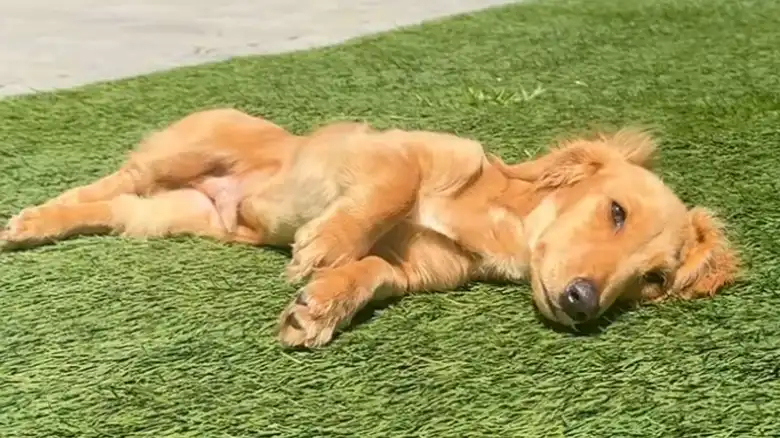
Man Leaves To Go On Bike Ride, But His Sneaky Mini Dachshund Has Other Plans
DogsDog BreedsMan Leaves To Go On Bike Ride, But His Sneaky Mini Dachshund Has Other PlansByMorrison ChanteshaOct. 10, 2025 9:25 am ESTlillukeandowen / TikTokDachshunds generally have long bodies and short legs, but it's their sharp minds that leave the biggest mark. They approach challenges like puzzles, trying one solution after another until something works. That persistence can be frustrating, especially during training sessions, yet it's also what makes the breed so entertaining to live with.The unique personality traits of dachshunds shine through in these everyday battles of will, as cleverness and determination come together in surprising ways. They are small dogs with a knack for trying, and succeeding, at getting their way. Owen, a miniature dachshund with a growing TikTok following, demonstrates this perfectly. His dad only wanted to head out for a bike ride, but Owen decided to change the plan. Rather than stepping aside, he jumped in with a series of antics that made the ride impossible to start. In true dachshund fashion, after a few belly rubs, Owen gladly grinned at the camera.Why our dogs don't want us to leavelillukeandowen / TikTokDogs often react strongly to the signs that their favorite human is about to leave, whether that's the sound of keys or the sight of certain shoes. Watching Owen stretch out in front of the door invites the bigger question: are these antics just clever attention-seeking, or do they show something deeper? Some behaviors, like waiting by the door or pawing for extra scratches, line up closely with the signs that your dog misses you when you're gone.A 2011 study in Applied Animal Behavior Science found that dogs don't track hours the way people do, but they do respond differently depending on how long they're left alone. Longer absences led to bigger bursts of excitement when owners returned, suggesting dogs sense duration through routine cues rather than clock time. The study also found that heart rates climb when a reunion happens, and changes in routine can spark stress behaviors such as whining or pacing. Some dogs even make tearful sounds, reinforcing the idea that dogs cry because they miss you.Short separations can feel just as weighty to a dog as long ones in some cases. A quick bike ride, a work shift, or a trip to the store may all read the same in their world: a break in connection. That helps explain why Owen rolled out his best tricks to keep his dad home — and to score a few extra belly rubs.

Golden Retriever Has An Adorably Confused Reaction To Discovering Ring Camera
DogsDog BehaviorGolden Retriever Has An Adorably Confused Reaction To Discovering Ring CameraByCynthia AnayaSept. 19, 2025 9:25 am ESTotsphoto/ShutterstockThanks to in-home cameras with audio, pet parents can do more than just spy on their furry friends while they're home alone — they can talk to them, too. Countless dog owners have caught their pups mid-mischief and tried to lay down the law through the speaker. The only problem? Dogs have no clue how audio tech works, so they don't know why their humans' voices are coming from small boxes. A golden retriever named Rosie made her confusion adorably clear when her owner's voice came out of one such box — a Ring camera — and yes, it was caught on camera and shared on TikTok on August 18, 2025.According to the video, Rosie was "supposed to be in her" metal dog crate, but the door fell off, allowing her to freely roam the house. The camera was positioned near the crate, and as soon as her owners saw her walking around, they told her she had some 'splaining to do through the camera. They're heard telling her to go to her crate, asking her what she's doing, and asking how she escaped. Rosie reacts to their voices with bewilderment, tilting her head right to left — a captivating move that many dogs make.Viewers relished the video and were quick to share their thoughts. One commented, "The head tilts are taking me out." Others offered suggestions for what Rosie was probably thinking. "So this is where you go every day? In this tiny box??" one viewer wrote. Another said, "Are you my conscience?" It doesn't get much cuter than that!Why dogs like Rosie tilt their headsrosie.the.golden.girl / TikTokIf you have a dog, you probably have your own hilarious head-tilting memories to share, but have you ever wondered about the reason behind this behavior? There are actually several reasons, depending on the circumstances that precede the tilting. Sometimes, dogs do it to hear better, as tilting their heads helps dogs reposition their ear flaps for clearer sound detection and to estimate how far away the sound is. Dogs can also tilt their heads to prove to their human friends that they're listening. You might see your dog tilt its head when you say specific words, such as familiar words they want to hear, like "Do you want to go for a walk?" or "Go get your toy!" This is based on the results of a 2021 study published in Animal Cognition. In the study, 40 dogs were observed during object-label knowledge tests. The results revealed that dogs that know the names of certain objects are more likely to tilt their heads when hearing a human say those names. As Rosie demonstrated, saying your dog's name through a camera can also cause a dog to tilt its head.Dogs probably don't know when they're being cute, but they're certainly good at it, just like Rosie the golden retriever with her adorable head-tilting. Want to see more cute pups now? Check out these 16 dogs that will brighten your day with their funny faces.
Horse Meets Golden Retriever Puppy For The First Time And Their Bond Is Instant
Other Cute AnimalsHorse Meets Golden Retriever Puppy For The First Time And Their Bond Is InstantByCynthia AnayaUpdated: Sept. 26, 2025 3:05 pm ESTwalterthegoldenboy / InstagramMost dogs are used to seeing animals somewhat close to their own size, like cats, rabbits, squirrels, and other dogs, in passing, from a distance, or through a window. Seeing a significantly larger animal, like a horse, isn't something dogs typically experience. However, one pet parent — also a horse owner — decided to film the precious moment her fluffy golden retriever puppy, Walter, met her horse, Lottie, through an open car window. She shared the adorable video on TikTok.It's unclear from the video, but it seems that Walter was being brought home for the very first time — hence the introduction. With the car parked and the window down, Lottie is seen standing next to the car. She gently pokes her head inside, curious about the new arrival. Equally intrigued, Walter inches closer, bravely reaching out until his nose nearly touches her muzzle. Lottie pulls back for a few moments before leaning in even farther, an unexpected move that sends the pup scurrying back toward the safety of his human's side.Despite the brief moment of fear, the connection that Walter and Lottie make is undeniable. Although no other videos of Lottie have appeared on the channel account at the time of this article, we can only hope that the pair have become BFFs. After all, goldens are one of the most loving dog breeds, so it's probably easy for any domesticated animal to befriend one.Exploring the canine and equine bondwalterthegoldenboy / TikTokThis heartwarming moment between a puppy and a horse is just one of many you can find on the internet. At first glance, a dog and a horse might seem like an odd pair. One is either a lap warmer or "as big as a horse" (but really, not even close), and the other is a majestic, half-ton creature. Despite the size difference, many dogs and horses can form deep, trusting bonds. These cross-species relationships often blossom through daily activities together, a pinch of curiosity, or the desire to play. A dog might get the zoomies around a paddock while a horse gently trots alongside, and they can both enjoy the interaction. Researchers have also observed these animals using similar body language during play, like the classic "play bow" and relaxed facial expressions, hinting at a universal language of fun. A 2020 study in Behavioral Processes documented these interactions of mirrored expressions and play between horses and dogs. The unexpected bond between a dog and a horse is a testament to animals' ability to connect and even like each other, despite being different species. Of course, any dog with a horse as a friend likely thinks its canine buddy is an odd, oversized member of its pack, but it probably doesn't mind.Interested in reading about other unlikely animal bonds? Check out 16 interspecies friendships that are too pure for this timeline or the cutest pet friendships of all time that are making us cry from joy.
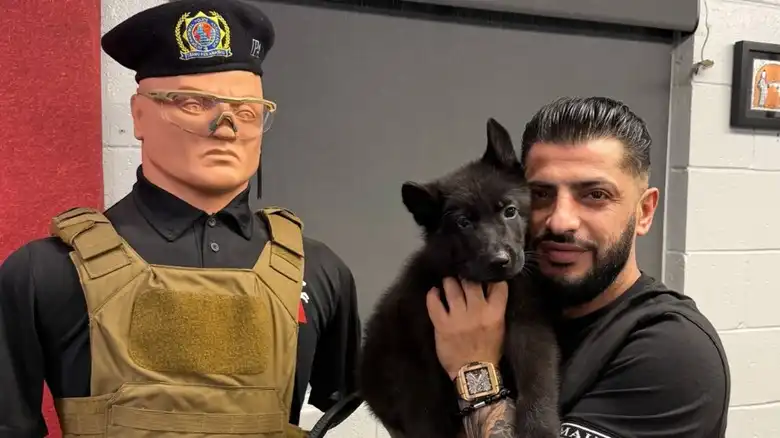
German Shepherd Puppies Starting Their K-9 Journeys Are As Fierce As They Are Cute
DogsDog TrainingGerman Shepherd Puppies Starting Their K-9 Journeys Are As Fierce As They Are CuteBySheri RadfordUpdated: Dec. 12, 2025 12:42 pm ESTDelta K9 Academy / InstagramSome dogs live a life of undeniable leisure, spending the majority of their time cuddling, lounging, and sleeping on the sofa. Other dogs, though still part of the family, are also expected to contribute to the household, often by protecting the human inhabitants. Delta K9 Academy in North Hollywood, California, offers obedience training as well as protection training. The company recently shared a TikTok video — which has been viewed more than 503,000 times — of a couple of German shepherd puppies, one of the most loyal dog breeds around, who are having so much fun chasing, jumping, and biting the trainer's padded arm that it's easy to miss the fact that groundwork is being laid for protection training.Viewers couldn't get enough of how cute the puppies looked, even as they were learning some serious skills. "It's so hard to take those uncontrollable ears, the feet too big for their body and that little baby bark seriously," one viewer commented. "I volunteer to be a bad guy to help train these floof officers 😍," another added. Many viewers also shared stories of their own extremely pampered, inept, or just downright silly dogs who wouldn't be cut out for protection work. "My Cane Corso watches Paw Patrol. He's not about the working dog life," one wrote.Why German shepherds make good guard dogsdeltak9academy / TikTokGerman shepherds are practically synonymous with guard dogs. They're one of the strongest dog breeds in the world, often used by police and military to track criminals and patrol areas. These intelligent, confident, highly trainable animals display natural protective instincts, and they have the strength and the stamina to chase the perpetrator of a crime without tiring. Not easily distracted, German shepherds can also become adept at scent work, learning to sniff out bombs, drugs, avalanche survivors, and cadavers. If you're ready to start training your own pampered pooch — whether to be a protection dog or just to stop snatching potato chips off the kitchen counter — be sure to learn the proper dog training terminology first and choose a qualified trainer. Avoid dog trainer red flags, such as those who are secretive about their training methods or who use physical punishment. Instead, look for professionals who employ positive reinforcement training. And, above all else, make sure your dog is having fun during the whole process.